
Table of Contents
Turnkey EV Charging Solutions | End-to-End EPC, Grid & CSMS Operations
The rapid expansion of electric mobility across public transit, commercial logistics, corporate fleets, and private commuter sectors has shifted charging hardware from simple amenities to mission-critical energy infrastructure. However, executing an electric vehicle supply equipment (EVSE) project involves navigating complex multidisciplinary challenges.
A common pitfall in EV charging deployment is vendor fragmentation. When site hosts contract civil builders, high-voltage electrical wiremen, hardware original equipment manufacturers (OEMs), software vendors, and utility liaisons independently, project execution frequently suffers. Fragmented handoffs lead to delayed utility load approvals, mismatched transformer sizing, software communication drops, and uncoordinated maintenance.
Selecting EV charging turnkey solutions eliminates vendor friction by consolidating Engineering, Procurement, Construction (EPC), software integration, and managed Operations & Maintenance (O&M) under a single contractual framework. This manual details the technical, operational, and financial blueprints required to execute commercial and industrial EVSE turnkey projects.
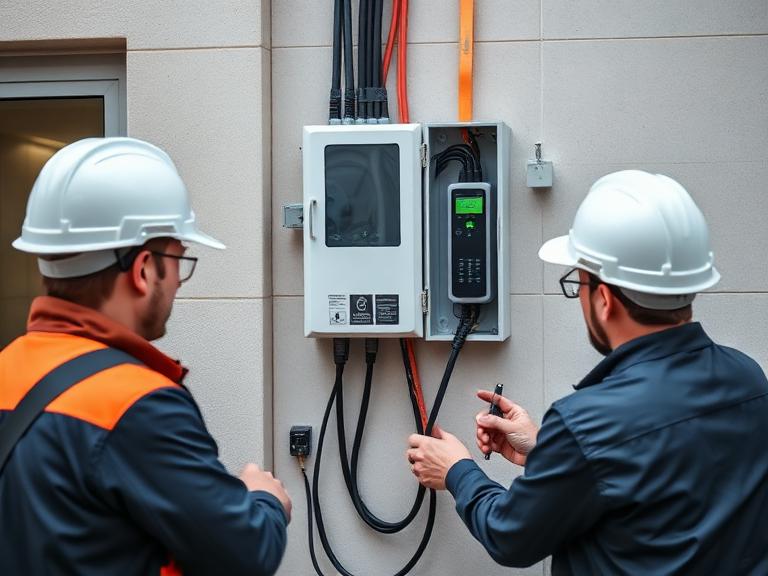
1. The 4 Strategic Pillars of Turnkey EV Charging Solutions
A full-stack turnkey solution operates across four interdependent functional pillars. If any single pillar is compromised, station uptime, safety, and profitability drop significantly.
┌─────────────────────────────────────────────────────────────────────────────┐
│                 THE 4 PILLARS OF TURNKEY EVSE INFRASTRUCTURE                │
├─────────────────────────────────────────────────────────────────────────────┤
│  PILLAR 1: ENGINEERING & UTILITY GRID INFRASTRUCTURE                        │
│  • Feasibility audits, kVA transformer sizing, single-line diagrams (SLDs). │
│  • High-voltage (11kV/33kV) substations, switchgear, chemical earthing.    │
│                                                                             │
│  PILLAR 2: CERTIFIED HARDWARE PROCUREMENT                                   │
│  • Level 2 AC Wallboxes (7.4kW-22kW) to Ultra-Fast DCFCs (30kW-400kW+).│
│  • Liquid-cooled CCS2/MCS dispensers, IP65 enclosures, BESS integration.    │
│                                                                             │
│  PILLAR 3: SOFTWARE & CLOUD ORCHESTRATION                                   │
│  • Native OCPP 1.6J / 2.0.1 / 2.1 CSMS backend, automated billing.    │
│  • Dynamic Load Management (DLM), fleet telematics, mobile driver apps.│
│                                                                             │
│  PILLAR 4: MANAGED OPERATIONS & 24/7 SLA MAINTENANCE                        │
│  • 24/7 NOC remote telemetry, automated self-healing firmware resets.│
│  • Quarterly preventive maintenance, rapid field response, CEA compliance. │
└─────────────────────────────────────────────────────────────────────────────┘
Strategic Comparison: Pillar Capabilities
| Infrastructure Pillar | Technical Scope | Key Risk Mitigated | Turnkey Deliverable |
| Pillar 1: Engineering & Grid | Load audits, utility approvals, step-down transformers, switchgear panels | Mains circuit breaker trips, transformer burnout, utility grid rejection | Utility-approved grid sanction & commissioned 11kV/415V substation |
| Pillar 2: Hardware Procurement | Selection of BIS/CE/UL-certified AC/DC chargers, liquid-cooled cables | Thermal derating, connector latch failures, hardware incompatibility | Pre-tested, mounted, and dual-earthed charging dispensers |
| Pillar 3: Software Management | OCPP cloud CSMS, dynamic load balancing, driver apps, payment gateways | Payment gateway dropouts, demand charge penalties, software lockouts | Fully operational white-label management software platform |
| Pillar 4: Managed O&M | 24/7 telemetry monitoring, scheduled field audits, fast repair dispatch | Unplanned offline downtime, driver churn, revenue loss | Guaranteed 99.0%+ network availability SLA |
2. Detailed Engineering & Utility Grid Lifecycle
Electrical grid power planning represents the foundation of any commercial EV charging deployment. Sizing switchgear or transformers incorrectly can cause nuisance trips or force expensive infrastructure retrofits after installation.
┌─────────────────────────────────────────────────────────────────────────────┐
│                 HIGH-VOLTAGE SUBSTATION & GRID FEED ARCHITECTURE            │
├─────────────────────────────────────────────────────────────────────────────┤
│  Utility 11kV / 33kV High-Voltage Feed Line                                 │
│     │                                                                       │
│     v                                                                       │
│  Outdoor Vacuum Circuit Breaker (VCB) / Ring Main Unit (RMU)                │
│     │                                                                       │
│     v                                                                       │
│  Dedicated Step-Down Transformer (e.g., 315 kVA 11kV/415V)                   │
│     │                                                                       │
│     v                                                                       │
│  Main Low-Tension (LT) Switchboard (MCCB + Class I+II SPDs + TOD Meter)     │
│     │                                                                       │
│     ├───► Feeder Breaker 1 ──► 120kW DC Fast Charger Cabinet 1              │
│     ├───► Feeder Breaker 2 ──► 120kW DC Fast Charger Cabinet 2              │
│     └───► Feeder Breaker 3 ──► Auxiliary Panel (Lighting, Cooling, BESS)    │
└─────────────────────────────────────────────────────────────────────────────┘
High-Precision Transformer Sizing Formula
To calculate the necessary step-down transformer capacity for a multi-charger plaza, turnkey engineers apply the following formula:
$$S_{\text{transformer}} = \frac{\sum P_{\text{chargers}}}{\eta_{\text{rectifier}} \times \text{PF}} \times \text{SF}$$
Where:
- $\sum P_{\text{chargers}}$ = Sum of maximum DC charging output power across all dispensers ($\text{kW}$).
- $\eta_{\text{rectifier}}$ = AC-to-DC conversion efficiency of internal rectifier modules ($\approx 0.94$).
- $\text{PF}$ = Power Factor of active Power Factor Correction (PFC) stages ($\approx 0.98$).
- $\text{SF}$ = Continuous Load Safety Factor ($\approx 1.20$, per National Electrical Code / CEA rules requiring a 125% circuit rating).
Sample Calculation for a 240kW DC Fast Charging Plaza:
Consider a commercial site deploying two 120kW dual-gun DC fast chargers ($\sum P = 240\text{ kW}$):
$$S_{\text{transformer}} = \frac{240\text{ kW}}{0.94 \times 0.98} \times 1.20 = \frac{240}{0.9212} \times 1.20 \approx 260.5\text{ kVA} \times 1.20 \approx 312.6\text{ kVA}$$
Engineers select the standard industrial step-down transformer size: 315 kVA 11kV/415V transformer.
3. Hardware Architecture & Microgrid Integration
Modern turnkey solutions select charging hardware based on site dwell times, vehicle battery voltages (400V vs 800V architectures), and available grid capacity.
┌─────────────────────────────────────────────────────────────────────────────┐
│                 MICROGRID & HYBRID BESS BUFFER TOPOLOGY                     │
├─────────────────────────────────────────────────────────────────────────────┤
│  Grid Feed (415V AC)  ───┐                                                 │
│                          ├───► AC/DC Power Bus ──► Battery Energy Storage   │
│  Solar PV Canopy      ───┤                          System (BESS Buffer)    │
│                          │                               │                  │
│                          └───────────────────────────────┼──────────────────┤
│                                                          v                  │
│                                                Dual CCS2 Ultra-Fast Guns    │
│                                                (180kW - 400kW Dispenser)    │
└─────────────────────────────────────────────────────────────────────────────┘
Hardware Product Classifications
- Commercial AC Smart Wallboxes (7.4kW to 22kW):
- Use Cases: Workplace parking garages, multi-family residential communities, long-stay hotel bays.
- Key Features: Type 2 socket/gun, RFID reader, Wi-Fi/Ethernet/4G, ISO 15118 readiness, dynamic load balancing capability.
- Compact Urban DC Fast Chargers (30kW to 60kW):
- Use Cases: Commercial retail centers, auto dealerships, urban parking plazas.
- Key Features: Dual CCS2 connectors with dynamic power splitting, liquid-free air-cooled cables, 7-inch LCD interface, 94%+ efficiency.
- High-Power Plaza Chargers (120kW to 240kW):
- Use Cases: Public fast-charging hubs, corporate fleet depots, logistics parks.
- Key Features: Hot-swappable 30kW/40kW modular rectifiers, internal busbar protection, advanced air filtration, integrated credit card/UPI terminals.
- Ultra-Fast Liquid-Cooled Systems (350kW to 400kW+):
- Use Cases: Highway transit corridors, commercial e-bus terminals, heavy logistics corridors.
- Key Features: Liquid-cooled charging cables capable of delivering up to 500A continuous current to 800V EV platforms.
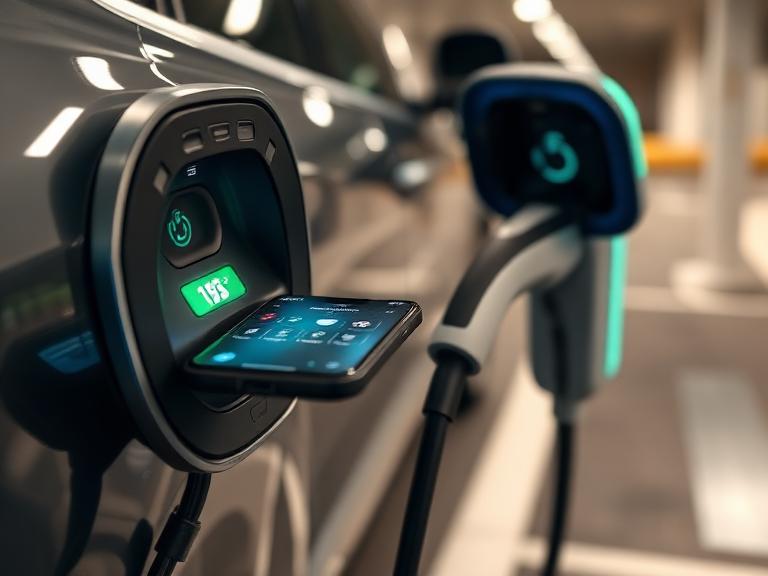
4. Software Orchestration: OCPP CSMS & Dynamic Energy Management
Software acts as the brain of an EV charging network. Native implementation of Open Charge Point Protocol (OCPP 1.6J or 2.0.1/2.1) ensures interoperability, preventing vendor lock-in and supporting long-term network expansion.
┌─────────────────────────────────────────────────────────────────────────────┐
│                 ENTERPRISE CSMS SOFTWARE ARCHITECTURE                       │
├─────────────────────────────────────────────────────────────────────────────┤
│  MOBILE DRIVER APP / WEB PORTAL                                             │
│  • Station discovery, live connector status, remote session start/stop.     │
│  • Wallet management, UPI / Credit Card payments, digital invoicing.        │
│                                                                             │
│  CENTRAL CSMS CLOUD DASHBOARD (OCPP 1.6J / 2.0.1 / 2.1)              │
│  • Real-time telemetry monitoring, automated error code logging.     │
│  • Dynamic tariff configuration (Time-of-Use / Peak Demand rates).          │
│  • Automated self-healing algorithms & remote firmware updates.     │
│                                                                             │
│  DYNAMIC ENERGY MANAGEMENT ENGINE                                           │
│  • Real-time transformer load balancing (DLM).                       │
│  • Vehicle-to-Grid (V2G) & Solar PV self-consumption optimization.    │
└─────────────────────────────────────────────────────────────────────────────┘
5. Turnkey Execution Sequence
Executing an enterprise turnkey EV charging project follows a structured engineering sequence from initial survey through live operation:
1.Technical Site Survey & Utility Load Assessment:Phase 1: Feasibility & Grid Audit.
Engineers conduct on-site soil resistivity testing, evaluate existing building electrical switchboards, perform 3D CAD layout planning, run solar PV shadow analysis, and submit formal grid expansion applications to local utility power companies.
2.Electrical SLD & Civil Construction Blueprints:Phase 2: Detailed Engineering Design.
Draft comprehensive Single-Line Diagrams (SLDs), size low-tension feeder breakers, design dual chemical earthing systems (< 5.0 Ω), map cable trenching routes, and generate structural blueprints for concrete mounting plinths and canopy structures.
3.Concrete Plinth Casting & Cable Conduit Troughs:Phase 3: Civil Construction & Trenching.
Excavate cable trenches, install heavy-duty concrete cable troughs with steel covers, pour reinforced M30 concrete mounting plinths elevated 200mm above grade, install steel protective bollards, and build canopy shading structures.
4.Substation, Transformer & LT Panel Installation:Phase 4: High-Voltage & Switchgear Erection.
Erect the outdoor step-down transformer (e.g., 100 kVA to 500 kVA+), install HT Vacuum Circuit Breakers (VCBs), mount main LT distribution switchboards fitted with Class I+II Surge Protection Devices (SPDs) and 4-pole MCCBs, and mount utility meters.
5.Charger Dispenser Mounting & Chemical Earthing:Phase 5: Hardware Mounting & Cabling.
Anchor AC wallboxes or DC fast-charging cabinets to concrete plinths. Lay multi-core XLPE armored copper/aluminum cables on GI ladder trays, perform precision glanding and lug crimping, drill chemical pipe earth pits, and terminate dual equipotential earthing bonds.
6.CEA/National Safety Inspection & CSMS Integration:Phase 6: Inspection & Cloud Commissioning.
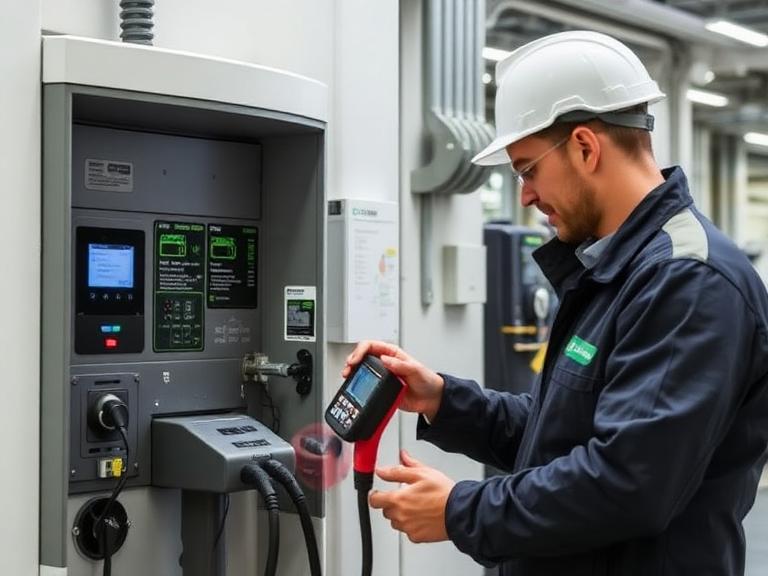
Perform 1000V DC megohmmeter insulation resistance tests and fall-of-potential earth impedance tests. Pass statutory electrical safety inspectorate audits, establish secure OCPP 2.1 WebSocket cloud connectivity, execute live test charging sessions, and hand over the operational site.
6. Business & Financial Models
Turnkey EV charging infrastructure supports various commercial ownership structures to align with different risk profiles and capital allocation strategies.
┌─────────────────────────────────────────────────────────────────────────────┐
│                 COMMERCIAL INFRASTRUCTURE BUSINESS MODELS                   │
├─────────────────────────────────────────────────────────────────────────────┤
│  MODEL 1: DIRECT CAPITAL PURCHASE (CapEx Buildout)                          │
│  • Asset owner funds 100% of engineering, hardware, and construction costs.  │
│  • Asset owner retains 100% of charging session revenue and carbon credits. │
│                                                                             │
│  MODEL 2: CHARGING-AS-A-SERVICE (CaaS / EaaS - OpEx Model)                  │
│  • Turnkey provider funds 100% of upfront capital and construction costs.   │
│  • Site host pays a fixed monthly service fee or per-kWh utility rate.      │
│                                                                             │
│  MODEL 3: REVENUE-SHARE PPP / FRANCHISE (FOCO / COCO)                       │
│  • Joint partnership model combining host real estate with CPO software.    │
│  • Net charging session revenues are split based on capital contributions.  │
└─────────────────────────────────────────────────────────────────────────────┘
Financial Payback Model: Commercial 120kW Dual-Gun DCFC Site
┌─────────────────────────────────────────────────────────────────────────────┐
│                    CAPITAL EXPENDITURE (CapEx Outlay)                       │
├─────────────────────────────────────────────────────────────────────────────┤
│  • 120kW Dual CCS2 DC Fast Charger Cabinet: $45,000                         │
│  • 150 kVA Transformer & Utility Grid Service Connection: $22,000          │
│  • Civil Concrete Plinths, Trenching, Canopy & Signage: $12,000             │
│  • Main LT Distribution Switchgear, XLPE Cabling & Testing: $11,000         │
│  • Total Turnkey CapEx Outlay: $90,000                                      │
├─────────────────────────────────────────────────────────────────────────────┤
│                  OPERATIONAL REVENUE & CASH FLOW (Monthly)                  │
├─────────────────────────────────────────────────────────────────────────────┤
│  • Daily Utilization Rate: 22% (5.2 hours active charging / day)            │
│  • Daily Energy Dispensed: 624 kWh / day                                    │
│  • Monthly Energy Dispensed: 18,720 kWh                                      │
│  • Public Driver Tariff Rate: $0.42 / kWh                                   │
│  • Utility Wholesale Input Power Cost: $0.16 / kWh                          │
│  • Net Gross Operating Margin per kWh: $0.26 / kWh                          │
│  • Monthly Gross Revenue Margin: $4,867                                      │
│  • Less: Monthly CSMS Software, Telemetry & Maintenance: (-$650)            │
│  • Monthly Net Operating Income: $4,217 ($50,604 / year)                    │
├─────────────────────────────────────────────────────────────────────────────┤
│  FINANCIAL RETURN METRICS                                                   │
│  • Simple Financial Payback Period: 21.3 Months (1.77 Years)                 │
│  • 5-Year Net Present Value (NPV @ 10% Discount Rate): $112,450             │
│  • 5-Year Internal Rate of Return (IRR): 44.6%                              │
└─────────────────────────────────────────────────────────────────────────────┘
7. Frequently Asked Questions (15 Detailed FAQs)
1. What are EV charging turnkey solutions, and what do they include?
EV charging turnkey solutions represent a single-source, end-to-end delivery framework where a master provider manages every phase of electric vehicle infrastructure development. The scope encompasses site feasibility audits, utility grid power planning, civil and high-voltage electrical engineering (EPC), hardware procurement (AC and DC fast chargers), OCPP cloud software integration (CSMS), statutory safety compliance certification, and 24/7 managed operation and maintenance (O&M).
2. Why is a turnkey EPC delivery model superior to multi-vendor fragmentation?
Fragmented multi-vendor deployments force asset owners to coordinate separate civil contractors, electrical engineers, hardware OEMs, software vendors, and utility representatives. This creates interface risks, finger-pointing during equipment failures, cost overruns, and delayed commissioning. Turnkey delivery establishes a single point of contractual accountability, reducing project execution timelines by 30% to 40% while guaranteeing performance SLAs.
3. What is the typical execution timeline for a commercial turnkey DC fast charging plaza?
A standard turnkey DC fast charging plaza (e.g., four 120kW dual-dispenser units) requires 8 to 14 weeks from initial site contract to commercial operation: 2 to 4 weeks for utility grid load sanctions and engineering designs, 3 to 4 weeks for civil plinth curing and cable trenching, 2 weeks for transformer and switchgear erection, 1 week for charger mounting, and 1 to 2 weeks for testing, safety compliance certification, and CSMS cloud onboarding.
4. How does power planning and grid capacity sizing work in a turnkey project?
Turnkey engineers calculate total connected load by accounting for charger output ratings, rectifier conversion efficiencies (~94%), power factor (~0.98), and a 20% continuous load safety factor. For example, a 240kW DC fast charging load draws approximately 260 kVA, requiring a dedicated 315 kVA 11kV step-down transformer and custom LT distribution switchgear.
5. What hardware charger levels are deployed in enterprise turnkey solutions?
Turnkey providers deploy Level 2 AC smart wallboxes (7.4kW to 22kW) for long-dwell office or residential charging, compact DC fast chargers (30kW to 60kW) for urban retail, high-power DC fast charging cabinets (120kW to 240kW) for commercial plazas and fleet depots, and ultra-fast liquid-cooled systems (350kW to 400kW+) for highway transit corridors.
6. What software protocol is required for interoperability in turnkey EVSE setups?
Open Charge Point Protocol (OCPP)—specifically version 1.6J or 2.0.1/2.1—is mandatory. OCPP ensures hardware-agnostic communication between charging hardware and the central cloud Charge Point Management System (CSMS), enabling remote monitoring, dynamic tariff management, automated billing, and firmware updates without vendor lock-in.
7. How does Dynamic Load Management (DLM) protect electrical infrastructure from overloading?
DLM software uses smart current transformers (CTs) installed at the main electrical switchboard. As facility building power demand shifts throughout the day, the DLM controller dynamically throttles individual charger power outputs, keeping site consumption below utility load limits and avoiding demand penalties.
8. Can turnkey EV charging solutions be integrated with solar PV and Battery Energy Storage Systems (BESS)?
Yes. Turnkey microgrid engineering integrates rooftop or canopy solar PV arrays, hybrid solar inverters, and LFP battery storage buffers (BESS). BESS buffers grid demand during high-power ultra-fast charging sessions, lowers utility peak demand charges, and provides emergency backup power.
9. What electrical safety and earthing standards are enforced in a turnkey build?
Turnkey solutions enforce strict national safety codes: (1) Dual chemical pipe earthing pits maintaining ground loop resistance strictly below 5.0 Ohms (< 1.0 Ohm for high-power DC hubs), (2) 4-Pole MCCBs with Type B Residual Current Devices (30mA trip), (3) Class I+II Surge Protection Devices (SPD), and (4) Emergency Stop isolation switches.
10. How do turnkey solutions support commercial fleet depot electrification?
Turnkey fleet solutions provide specialized depot layout engineering, automated overnight charging schedules, vehicle telematics sync, pantograph or heavy-duty cable dispensers, and energy management algorithms that prioritize vehicle readiness while minimizing utility demand charges.
11. What ongoing maintenance support is included in managed turnkey contracts?
Turnkey O&M contracts include 24/7 remote Network Operations Center (NOC) telemetry monitoring, automated self-healing firmware algorithms, quarterly preventive site maintenance (filter cleaning, thermal imaging, busbar torquing, earth pit reconditioning), and guaranteed field technician SLAs (e.g., 2-hour response).
12. What business models are available for turnkey EV charging installations?
Turnkey solutions support multiple commercial models: (1) Capital Purchase (CapEx) where the asset owner owns the site outright, (2) Charging-as-a-Service (CaaS) / Energy-as-a-Service (EaaS) with zero upfront cost, (3) Revenue-Share PPP models, and (4) White-Label Franchise (FOCO/COCO) setups.
13. How is billing and revenue settlement managed in public turnkey stations?
The turnkey CSMS handles driver access via mobile app, RFID card, credit card terminal, or Plug & Charge (ISO 15118). Transactions are processed automatically through integrated payment gateways (UPI, Stripe, merchant accounts), with automated tariff billing and daily revenue distribution.
14. What civil engineering works are involved in setting up an outdoor charging plaza?
Civil engineering scope includes casting reinforced M30 concrete mounting plinths elevated 150mm–300mm above grade, excavating cable trenches with concrete troughs, erecting protective steel bollards, installing lighting and canopy shelters, and applying anti-skid floor markings with ADA/accessibility compliance.
15. What is the expected ROI and financial payback period for a turnkey public charging site?
A commercial 120kW dual-dispenser DC fast charging plaza operating at a modest 20% to 25% daily utilization rate generates a simple financial payback within 21 to 28 months, yielding a 5-year Internal Rate of Return (IRR) exceeding 42%.

Leave a Reply