
Table of Contents
EV Charger Dealers in Hyderabad | Buying Guide
As electric mobility expands, more individuals and businesses in Hyderabad are exploring the purchase of electric vehicle charging equipment. Homeowners may want a convenient way to charge their cars overnight, apartment associations may need shared charging facilities, and commercial operators may be planning charging stations for customers or fleets.
Finding suitable EV Charger Dealers in Hyderabad is an important step in choosing the right equipment. Buyers need to consider more than the advertised price. Charger compatibility, power rating, electrical requirements, installation arrangements, warranty conditions and after-sales support can all affect the long-term value of a purchase.
Different applications also require different solutions. A home charging setup may be well suited to an AC charger, while a public charging location or fleet operation may require DC fast-charging equipment. Selecting a charger without understanding these differences can lead to unnecessary expenditure or an unsuitable installation.
This guide explains how to evaluate EV charger dealers, compare charging equipment, understand common cost factors and prepare for installation in Hyderabad.
For information about EV charging infrastructure and related solutions, visit ZyCharge Energies. Confirm current equipment availability, dealer arrangements and service coverage directly with the company.
What Do EV Charger Dealers Offer?
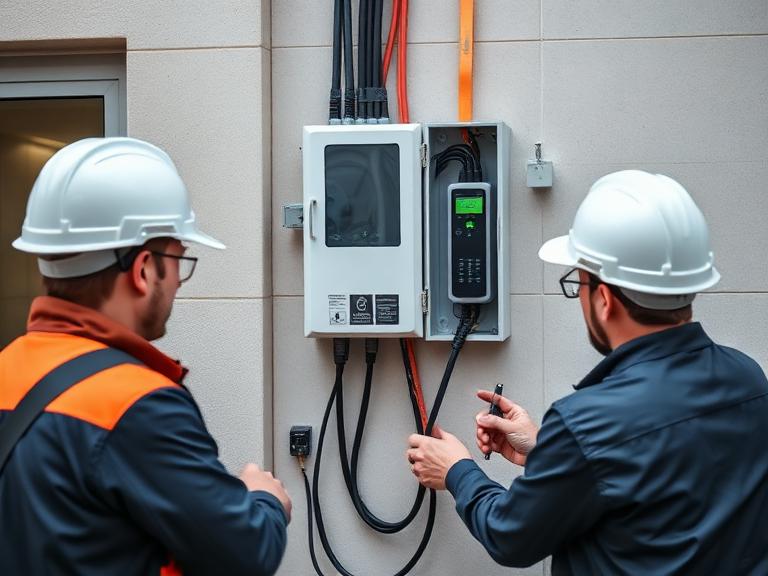
EV charger dealers typically sell charging equipment and provide information about product specifications, compatibility and purchasing options. Depending on their business model, they may also coordinate installation, commissioning, warranty support or maintenance.
The exact services differ between dealers. Some focus on equipment sales, while others work with installation partners or provide broader charging infrastructure solutions.
Before purchasing, confirm whether the dealer offers:
- AC and DC charging equipment appropriate for your application
- Product documentation and technical specifications
- Compatibility guidance for your electric vehicle
- Installation coordination or referrals to qualified professionals
- Warranty information and assistance with claims
- Spare parts or access to manufacturer support
- Smart charging or network-connected equipment, where required
- Maintenance services or technical troubleshooting
- Commercial or multi-charger project planning
Do not assume that every dealer provides all these services. Ask for a written description of the products and support included in the quotation.
Types of EV Chargers You Can Compare
The first step in selecting equipment is understanding the major charger categories and where each may be suitable.
1. AC EV chargers
AC chargers supply alternating current to the vehicle. The vehicle’s onboard charger converts this power for battery charging, and the achievable charging rate depends on the vehicle, charger rating and available electrical supply.
AC chargers are commonly considered for:
- Private homes and individual parking spaces
- Apartment complexes
- Office and employee parking
- Hotels and hospitality properties
- Commercial premises where vehicles remain parked for extended periods
For example, a car parked at home overnight may not require the same charging arrangement as a vehicle that must return to service quickly. Buyers should compare the expected charging window with the vehicle’s supported AC charging rate.
2. DC fast chargers
DC fast chargers supply direct current to the vehicle’s battery system, subject to its supported charging specifications. They are often considered for public charging facilities, fleet operations and locations where shorter charging stops are important.
Potential applications include:
- Public charging stations
- Highway service locations
- Taxi and mobility fleets
- Commercial vehicle depots
- High-usage charging facilities
DC charging installations can require more substantial electrical infrastructure and higher project investment. Actual charging speed depends on the charger’s output, vehicle capability, battery condition, temperature and other operating factors.
Before selecting a DC charger, obtain a site assessment and confirm the required electrical connection, equipment compatibility and installation scope.
3. Smart EV chargers
Smart chargers may support features such as scheduled charging, access management, charging-session records, remote status monitoring and energy management.
These features can be useful for apartment associations, businesses and operators managing multiple charging points. However, available functions vary by product and software platform.
Ask dealers whether the equipment requires an internet connection, whether software fees apply, how usage data can be accessed and whether the system supports your intended operating arrangement.
4. Chargers for multiple vehicles
Some buyers need several chargers at one location rather than a single unit. These installations require coordinated planning for electrical capacity, cable routing, protective devices, parking arrangements and simultaneous charging demand.
Where supported, load management can help distribute available charging power across multiple vehicles. It does not eliminate the need for an appropriate electrical assessment.
How to Choose Reliable EV Charger Dealers in Hyderabad
A dealer should help you make an informed equipment decision rather than simply recommend the most expensive or highest-powered model.
1. Check product compatibility
Start with the vehicle or vehicles you intend to charge. Verify the supported charging method, connector type, maximum charging capability and any manufacturer-specific requirements.
If you operate several EV models, prepare a list of vehicles before requesting quotations. A dealer can then identify suitable equipment based on documented compatibility.
Do not rely on broad claims that a charger works with every EV. Confirm the exact model and connector requirements before purchasing.
2. Request complete technical specifications
Ask for the charger’s datasheet and installation requirements. Relevant details may include:
- Rated charging power
- Input voltage and phase requirements
- Supported connector and charging standards
- Enclosure and environmental protection ratings
- Operating temperature range
- Communication and connectivity options
- Electrical protection requirements
- Warranty conditions
- Applicable safety standards and certifications
Check that certifications or compliance claims apply to the exact product being offered. Product documentation should be clear enough for the installer to determine whether the equipment suits the proposed location.
3. Compare equipment quality, not just price
A low purchase price may not represent the best overall value if installation requirements, warranty support or operating costs are unclear.
Compare products based on their specifications, suitability, documented warranty coverage, support arrangements and expected usage. Ask whether the quotation includes accessories, installation materials, commissioning and any required software.
A fair comparison uses the same project scope for every quotation.
4. Understand installation responsibilities
Some dealers supply equipment only. Others may provide installation directly or coordinate with third-party electrical contractors.
Ask who will inspect the site, determine electrical requirements, install the charger, conduct testing and handle faults after commissioning.
Installation should be carried out by appropriately qualified electrical professionals in accordance with applicable regulations and manufacturer instructions.
5. Review warranty and after-sales support
Before placing an order, request the written warranty terms. Check the coverage period, exclusions, process for reporting faults and responsibility for labour, replacement components and transport where applicable.
For commercial sites, ask how service requests are handled and whether maintenance arrangements are available. Do not assume that a product warranty automatically includes all installation and repair costs.
6. Check the dealer’s product sourcing
Ask who manufactures the equipment, whether the product is supplied through an authorised distribution channel and how warranty claims are validated.
Where relevant, request documentation confirming the product model and its source. This helps buyers distinguish between verified equipment supply and unsupported marketing claims.
7. Evaluate suitability for Hyderabad’s conditions
Hyderabad’s outdoor installations may experience high temperatures, dust, rain and direct sunlight. Equipment should be appropriate for the intended environment and installed according to the manufacturer’s requirements.
Discuss enclosure protection, mounting location, ventilation, cable management and protection against accidental impact. A qualified installer should determine the necessary electrical and environmental safeguards.
EV Charger Dealers for Different Buyers
The most suitable equipment depends on the property, charging habits and operating model.
Homeowners
Homeowners typically prioritise compatibility, ease of use, installation safety and predictable charging routines.
Before buying, consider where the vehicle will be parked, how long it remains there, the home’s electrical capacity and the cable route to the charging point.
Ask the dealer whether the proposed charger supports your vehicle’s charging capability and what electrical work may be required. Avoid choosing equipment based solely on the highest advertised power rating.
Apartment associations
Apartment projects often involve shared parking spaces, common electrical infrastructure and multiple residents.
A dealer should be able to explain equipment options and identify the information needed for a site assessment. The association may also need to decide how electricity use will be measured, how installation costs will be allocated and who will manage maintenance.
For larger communities, phased installation and future expansion planning may be more practical than installing a large number of chargers immediately.
Offices and IT parks
Workplaces may install EV chargers for employees, visitors, company vehicles or a combination of users.
The appropriate setup depends on parking duration, expected utilisation, available electrical capacity and whether charging is free, paid or restricted to authorised users.
Networked chargers may help manage access and usage records, provided those functions are supported by the chosen equipment and software.
Hotels, shopping centres and commercial properties
Commercial property owners should consider customer demand, parking duration, charger visibility, accessibility and ongoing operating costs.
AC chargers may suit destinations where vehicles remain parked for longer periods. DC fast chargers may be considered where rapid charging is a central requirement and the site can support the necessary electrical infrastructure.
The decision should be based on the property’s operating model rather than assumptions about customer preferences.
Fleet operators
Fleet buyers need to align charging capacity with vehicle schedules and energy requirements. A fleet with long overnight parking windows may have different needs from vehicles that operate throughout the day.
Before purchasing equipment, evaluate fleet size, daily distance, charging windows, available power and the impact of charger downtime. Multiple charging points may benefit from load management and monitoring.
What Determines EV Charger Prices in Hyderabad?
EV charger prices vary by product, power rating, manufacturer, features and installation requirements. There is no single price that applies to every residential or commercial project.
Common cost factors include the following.
Charger type: AC charging equipment and DC fast chargers have different technical and infrastructure requirements.
Power rating: Higher-power equipment may require a more substantial electrical connection and additional supporting infrastructure.
Connectivity and software: Smart charging features may involve communication hardware, software platforms or recurring subscription charges.
Installation complexity: Cable routes, mounting arrangements, trenching and civil work can affect the total project cost.
Electrical upgrades: The existing distribution system or available electrical load may need to be upgraded.
Number of charging points: Multi-charger installations may require coordinated distribution equipment and load management.
Maintenance arrangements: Warranty terms and ongoing technical support can affect long-term expenditure.
Accessories and protection: Additional electrical components, mounting hardware, protective barriers or other site-specific materials may be required.
When requesting quotations, ask dealers to separate the equipment price from installation, electrical upgrades, software charges, taxes and maintenance costs. Confirm which items are included and which are excluded.
Questions to Ask Before Buying an EV Charger
Use these questions when comparing EV charger dealers in Hyderabad.
- Is this charger compatible with my vehicle’s charging system?
- What is the charger’s rated power, and what charging rate can my vehicle support?
- What electrical supply and protective devices are required?
- Is installation included in the quotation?
- Who performs site assessment, installation and commissioning?
- What warranty applies to the equipment and its components?
- Are software, connectivity or network charges applicable?
- Can the charger be monitored remotely?
- Is the equipment suitable for the proposed indoor or outdoor location?
- Can additional chargers be integrated later?
- Who should I contact if the charger develops a fault?
- Are product documentation and compliance details available?
Clear answers make it easier to compare products and identify missing costs before committing to a purchase.
Safe Installation and Commissioning
EV chargers must be integrated appropriately with the property’s electrical system. Incorrect wiring, inadequate protection, poor earthing or overloaded circuits can create serious safety risks.
A typical installation process involves:
- Site assessment: Inspect the parking area, electrical supply, proposed charger location and cable route.
- Equipment confirmation: Verify compatibility, power rating, mounting requirements and environmental suitability.
- Electrical planning: Determine circuit requirements, cable sizing, earthing and appropriate protective devices.
- Installation: Fit the equipment and supporting components in accordance with the approved design.
- Testing: Verify the electrical installation and required safety functions.
- Commissioning: Confirm that the equipment operates correctly with the intended vehicle or approved test procedure.
- Handover: Explain operation, warranty terms, maintenance and fault-reporting procedures.
Requirements vary by equipment and site. Electrical work should be performed by qualified professionals, and any required approvals should be confirmed before installation.
Common Mistakes When Buying EV Chargers
Buyers can avoid unnecessary problems by looking beyond the headline price and checking the full requirements.
Common mistakes include:
- Purchasing a charger without confirming vehicle compatibility.
- Assuming every vehicle can use the same charging speed.
- Selecting equipment without checking available electrical capacity.
- Ignoring installation and electrical-upgrade costs.
- Failing to clarify warranty exclusions.
- Assuming that every dealer offers installation and maintenance.
- Overlooking software or connectivity fees.
- Buying equipment that is unsuitable for outdoor conditions.
- Failing to plan for additional charging points.
- Accepting unsupported claims about product certifications or performance.
A structured comparison reduces uncertainty and helps ensure that the equipment meets the actual needs of the user.
How ZyCharge Energies Fits Into Your EV Charging Search
ZyCharge Energies operates in the EV charging infrastructure sector and describes solutions involving AC chargers, DC fast chargers, charging station setup, installation, maintenance and Charge Point Operator services.
If you are exploring EV charging equipment in Hyderabad, you can contact the company to discuss the requirements of your proposed project. Confirm directly whether the specific charger model, sales arrangement, installation support and after-sales services you need are available.
When making an enquiry, share the intended application, vehicle models, number of charging points, approximate installation location and expected charging schedule. For commercial projects, include details about site power availability and planned future expansion if known.
Visit https://zycharge.in/ for company information and enquiries.
Compare the proposed solution with other suitable options using the same technical and commercial criteria before making a purchasing decision.
Frequently Asked Questions
1. Where can I find EV charger dealers in Hyderabad?
You can research EV charging equipment companies and dealers serving Hyderabad, then compare product documentation, compatibility, installation arrangements and warranty terms. Confirm the dealer’s current location, stock and service coverage directly.
2. What should I check before buying an EV charger?
Check vehicle compatibility, connector type, power rating, electrical requirements, safety documentation, installation costs, warranty coverage and maintenance arrangements.
3. Do EV charger dealers sell both AC and DC chargers?
Some suppliers offer both AC and DC equipment, while others specialise in particular charger categories. Confirm the available product range and suitability for your application.
4. How much does an EV charger cost in Hyderabad?
Prices vary depending on charger type, power rating, product features, installation complexity and electrical upgrades. Request an itemised quotation for your specific site.
5. Can I buy an EV charger for home use?
Yes, if the equipment is compatible with your vehicle and the home’s electrical system can support the installation. A qualified professional should assess the proposed connection and any necessary upgrades.
6. Are EV chargers available for apartment complexes?
Charging equipment can be installed in suitable apartment developments, subject to electrical capacity, parking arrangements, permissions and community requirements. Multi-charger installations may need load management and a clear billing process.
7. What is the difference between a dealer and an installation provider?
A dealer primarily sells equipment, while an installation provider handles the electrical and physical work required to install it. Some businesses offer both services, so confirm the exact scope before ordering.
8. Can one charger work with different electric vehicle models?
Potentially, provided the connector, charging standard and power requirements are compatible. Verify each vehicle’s specifications before purchasing equipment for multiple models.
9. Should I choose an AC charger or a DC fast charger?
The choice depends on the vehicle, charging time available, intended use and site infrastructure. AC charging is commonly considered for longer parking periods, while DC fast charging may suit locations requiring higher-power charging.
10. Do dealers provide EV charger installation?
Some do, while others supply equipment only or work with installation partners. Ask who will perform the site assessment, electrical work, testing and commissioning.
11. What warranty should an EV charger have?
Warranty terms vary by manufacturer and model. Review the coverage period, exclusions, claims procedure and whether labour or replacement components are included.
12. Can businesses install multiple EV chargers?
Yes, where the site and electrical infrastructure support the installation. Planning should account for simultaneous demand, power availability, cable routes and future expansion.
13. Are smart EV chargers worth considering?
Smart chargers may be useful when scheduling, access management, monitoring or energy management is needed. Evaluate the supported features, connectivity requirements and recurring fees before deciding.
14. Can EV chargers be installed outdoors in Hyderabad?
Outdoor installation may be possible when the selected equipment is rated for the environment and installed according to manufacturer instructions. Heat, dust, rain, sunlight and accidental impact should be considered during site planning.
15. What affects the installation cost of an EV charger?
Costs may depend on cable length, electrical capacity, distribution equipment, protective devices, mounting arrangements, civil work and any required electrical upgrades.
16. Do EV chargers require regular maintenance?
Maintenance requirements depend on the manufacturer’s instructions, operating conditions and usage. Follow the recommended inspection schedule and arrange professional servicing if damage or faults occur.
17. Can I expand my charging setup later?
Expansion may be possible if the existing electrical infrastructure, available capacity, charger compatibility and site layout support it. Ask for future expansion to be considered during the initial planning process.
18. What should commercial buyers ask an EV charger dealer?
Commercial buyers should ask about charger specifications, electrical requirements, installation scope, monitoring features, warranty, maintenance, operating costs and scalability. Request a written proposal based on the site’s needs.
19. What is a Charge Point Operator?
A Charge Point Operator manages the operation of EV charging stations. Depending on the arrangement, this may involve charger monitoring, maintenance coordination, access management and operational support.
20. How can I enquire about EV charging solutions from ZyCharge Energies?
Visit https://zycharge.in/ to review the company’s information and submit an enquiry. Confirm product availability, service coverage, installation arrangements and support terms directly.
Conclusion
Choosing among EV Charger Dealers in Hyderabad requires a clear understanding of your vehicle, charging requirements, installation site and long-term support needs. Residential buyers may focus on convenient home charging, while apartment associations, businesses and fleet operators need to consider shared infrastructure, electrical demand and operating arrangements.
Compare product specifications and complete project costs rather than relying on purchase price alone. Confirm warranty coverage, clarify who will perform the installation and ensure that all electrical work is handled by qualified professionals.
ZyCharge Energies is one option to investigate when exploring EV charging infrastructure. Discuss your requirements with the company and verify current product and service availability before making a decision.

Leave a Reply