
Table of Contents
Residential EV Charger in Hyderabad: Complete Home Setup Guide
Hyderabad has firmly established itself as one of India’s premier hubs for technology, infrastructure, and sustainable urban living. Driven by forward-thinking initiatives like the Telangana Electric Vehicle & Energy Storage Policy, the streets of Cyberabad, Gachibowli, Jubilee Hills, and Secunderabad are seeing an unprecedented influx of electric vehicles (EVs). From high-performance electric sedans to affordable family SUVs and commuter two-wheelers, the transition to electric powertrains is accelerating rapidly.
However, the true catalyst for seamless EV ownership isn’t public infrastructure; it is the convenience of charging where your vehicle spends most of its time—at home. Installing a dedicated residential EV charger in Hyderabad changes how you manage personal transportation. It eliminates range anxiety, cuts running costs by up to 80% compared to fossil fuels, and ensures your vehicle is fully charged and ready every morning.
Deploying a residential charging solution requires balancing local electrical frameworks, property management rules, and regional climate factors. Whether you reside in an independent villa in Gandipet or a high-rise apartment complex in Kondapur, this definitive guide provides the technical, regulatory, and financial insights needed to set up a safe, high-speed, and future-proof home EV charging station.
2. Electrical Infrastructure: Grid, Phasing, & Sanctioned Load Management
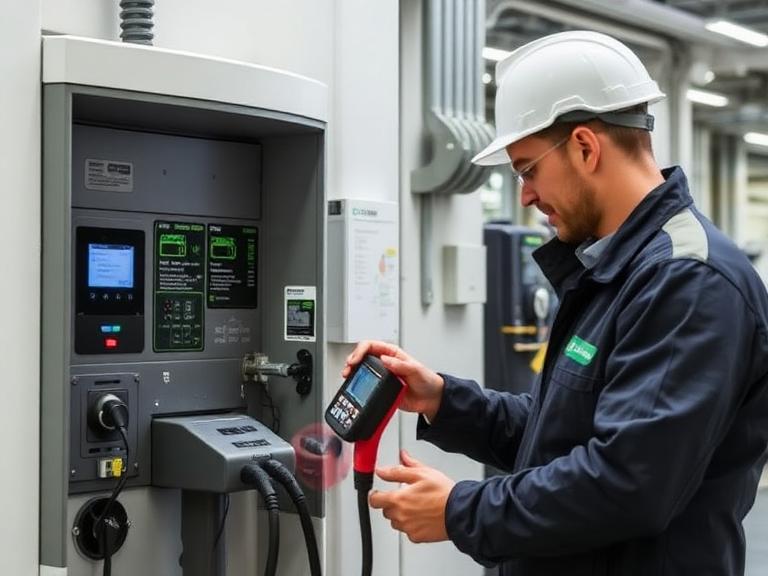
Before purchasing hardware, you must understand your home’s electrical foundation. In Hyderabad, domestic power is supplied primarily by the Southern Power Distribution Company of Telangana Limited (TSSPDCL). Your residential charging speed and installation architecture depend entirely on your existing supply lines.
Single-Phase vs. Three-Phase Residential Power
Most independent houses and older apartment structures operate on a 230V Single-Phase AC distribution network. This configuration typically supports standard household appliances and can safely power entry-level EV smart sockets or wallboxes delivering up to 3.3 kW or 7.4 kW.
In contrast, modern premium villas and luxury gated communities feature a 400V Three-Phase AC electrical supply. A three-phase grid allows you to deploy high-output residential wallbox chargers capable of delivering 11 kW to 22 kW of alternating current, significantly reducing charging times for larger traction battery packs.
Navigating Sanctioned Load Limits with TSSPDCL
Every domestic connection in Telangana has a defined Sanctioned Load (measured in kilowatts), which represents the maximum simultaneous power you are legally permitted to draw from the public grid. If your home has a sanctioned load of 5 kW and you connect a 7.4 kW Level 2 wallbox charger alongside air conditioners and water heaters, the sudden current draw will instantly trip the main circuit breaker and risk damaging the service line.
To avoid infrastructure failures, you must calculate your baseline peak demand. If your total household demand plus the new EVSE exceeds your current allotment, you must file a formal application for a load upgrade via the official TSSPDCL web portal or visit your local sub-divisional office. Operating a dedicated home charger safely requires keeping your system well within legal and functional limits.
3. Hardware Tiers & Charging Speeds for Domestic Use
Residential EV chargers are categorized by power delivery, connector interfaces, and installation styles. Selecting the right hardware tier prevents overpaying for unnecessary capacity while ensuring your vehicle charges efficiently within your typical parking windows.
Level 1: Basic Portable Chargers (3.3 kW to 3.6 kW)
Level 1 charging relies on portable AC cables that typically come standard with your vehicle. These devices plug directly into a heavy-duty, industrial 16A domestic three-pin socket wired to a dedicated circuit. Delivering up to 3.6 kW, these units feed electricity to the onboard vehicle charger at a measured pace.
While safe and highly accessible, Level 1 chargers require 12 to 15 hours to fully replenish a standard 40 kWh EV battery. They are best suited for two-wheelers, plug-in hybrids, or drivers with short daily commutes who can leave their vehicles plugged in for long periods.
Level 2: High-Speed Wallbox Chargers (7.4 kW to 22 kW)
Level 2 chargers represent the standard for dedicated residential installations. These wall-mounted enclosures feature dedicated internal circuit boards, built-in safety relays, and tethered cables utilizing universal Type 2 or NACS connector standards.
- 7.4 kW Wallbox (Single-Phase / 32A): The most popular choice for urban homes in Hyderabad. It charges a standard electric vehicle from 10% to 100% in 6 to 8 hours overnight, making optimal use of standard domestic grid allocations.
- 11 kW to 22 kW Wallbox (Three-Phase): High-capacity systems that can charge compatible vehicles in 2 to 4 hours. These are ideal for multi-EV households or owners who require quick charging turnarounds during the day.
4. Hardware Selection Matrix for Hyderabad Residences
| Charger Type & Output | Electrical Requirements | Approx. Price Range (INR) | Best Suited For | Charging Time (40 kWh Battery) |
| Smart Socket / Portable AC (3.3 kW – 3.6 kW) | 230V Single-Phase, 16A Dedicated Line | ₹5,500 – ₹15,000 | Electric 2-wheelers, small hatchbacks, long overnight charging windows | 11 – 13 Hours |
| Standard Smart Wallbox (7.4 kW) | 230V Single-Phase, 32A Input Line | ₹30,000 – ₹50,000 | Independent houses, dedicated apartment spots, mid-range SUVs | 5 – 6 Hours |
| High-Output Premium Wallbox (11 kW – 22 kW) | 400V Three-Phase Grid, Industrial Subpanel Line | ₹40,000 – ₹75,000 | Luxury villas, multi-EV garages, commercial-grade home charging | 2 – 4 Hours |
5. Critical Electrical Safety Protocols & Earthing Standards
EV charging involves sustained high-amperage current drawing continuously for multiple hours. Without strict adherence to professional electrical safety standards, installations risk overheating, localized component failure, or serious electric shock hazards.
The Importance of Dedicated Chemical Earthing
Standard household earthing networks are often shared across multiple domestic appliances and can degrade over time. An EV charging circuit requires a dedicated, independent chemical earthing pit to guarantee safety.
Installers use specialized copper-bonded steel electrodes surrounded by highly conductive carbonaceous backfill compound to maintain low resistance. The measured earth-to-neutral voltage drop must consistently register below 2V AC, and electrical resistance must remain under 5 Ohms. If an insulation breakdown occurs inside the vehicle, the dedicated earth path safely routes stray current into the ground, preventing the car’s metallic chassis from becoming electrically live.
Essential Circuit Protection Components
Every residential charging station installation must include a weatherproof, dedicated distribution box (DB Box) positioned between the main meter and the charger unit. This box must contain:
- Miniature Circuit Breaker (MCB): Sized precisely at 125% of the charger’s rated current capacity to protect cabling from sustained overcurrent conditions.
- Residual Current Circuit Breaker (RCCB): A Type-A or Type-B RCD capable of detecting subtle milliampere current leaks to the ground, instantly cutting off power to prevent electric shocks.
- Surge Protection Device (SPD): Protects the sensitive electronic control boards inside the charger and the vehicle from transient voltage spikes caused by lightning or local grid instability.
6. Technical Installation Challenges in Apartments & Gated Communities
While installing a charger in an independent home is straightforward, residential apartments in areas like Madhapur, Manikonda, and Hitech City present distinct logistical, structural, and political challenges.
Securing Resident Welfare Association (RWA) Approvals
To install a private charging unit in an assigned basement parking bay, you must first secure a formal No Objection Certificate (NOC) from your community’s Resident Welfare Association (RWA) or building management board. Common concerns raised by boards include structural safety, aesthetic disruption, and fire risks.
To streamline the approval process, point out the Central Ministry of Power’s consolidated guidelines, which explicitly state that private residents have the right to charge their vehicles using their existing domestic connections. In 2026, the Telangana government is also developing updated regulatory frameworks to make EV charging infrastructure a standard requirement in all high-density residential properties.
Long Conduit Cable Runs from Meter Vaults
In massive multi-story apartment complexes, the distance from your centralized residential meter room in the sub-basement to your assigned parking spot can exceed 100 meters. This requires routing thick armored copper or aluminum cabling along overhead cable trays spanning the garage ceiling.
Engineers must carefully calculate structural cross-sectional sizes to minimize voltage drop across long distances, ensuring it stays well within the 3% limit required to keep charging speeds consistent. Cabling must also be enclosed in fire-retardant, low-smoke (FRLS) conduits to comply with modern fire safety regulations.
Smart Meters & Shared Charging Networks
If running individual lines from separate household meters is structurally impractical, communities can install a centralized commercial subpanel dedicated to EV charging. Individual users authenticate their sessions via RFID cards or mobile applications linked to smart meters. The cloud system tracks exact power usage per tenant and automatically pushes the cost to the resident’s monthly maintenance bill, simplifying community utility accounting.
7. Smart Charging Features, Software Integration, & App Connectivity
Modern home EV chargers have evolved from simple power plugs into intelligent, internet-connected devices that maximize grid efficiency and lower charging costs.
Mobile App Control & Scheduling
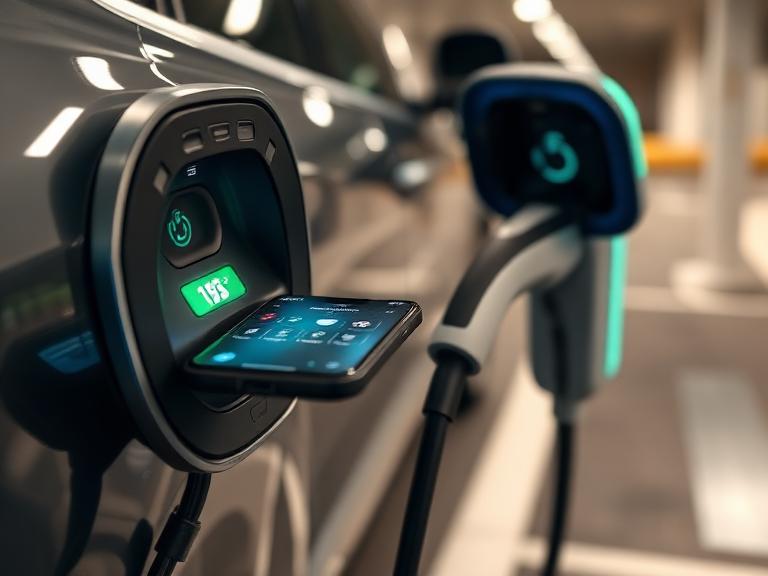
Equipped with internal Wi-Fi, Bluetooth, or cellular SIM cards, smart chargers sync with dedicated mobile applications. These apps allow homeowners to monitor real-time charging metrics, track energy expenditure, and configure automated charging schedules. Scheduling features let you defer charging sessions to overnight hours, helping reduce peak strain on the local grid architecture.
Dynamic Load Balancing
Advanced residential wallboxes utilize integrated Current Transformers (CT clamps) installed at the home’s primary electrical intake panel to enable dynamic load balancing. The system monitors the home’s total live power consumption in real time. If high-draw appliances like heavy-duty air conditioners or kitchen systems switch on, the smart charger instantly scales back its own power delivery to prevent overloading the main fuse. Once household appliance demand drops, the charger automatically ramps back up to maximum output.
Solar Integration (Eco-Charging Modes)
With solar rooftop installations rapidly expanding across residential sectors in Telangana, modern smart chargers feature advanced eco-routing configurations. The charge controller communicates directly with your solar inverter, calculating surplus generation that would otherwise feed back into the public grid. The system can then throttle charging rates to match this real-time surplus, allowing you to power your vehicle using 100% clean, locally generated solar energy.
8. Cost Parameters: Equipment, Installation, & Electricity Tariffs
Structuring a detailed budget for your home EV charging station project requires breaking down equipment procurement, civil work, and ongoing operational costs.
Upfront Infrastructure Costs
A typical home installation involves the following cost components:
- Equipment Procurement: Entry-level smart sockets cost around ₹5,500, standard 7.4 kW smart wallboxes range from ₹30,000 to ₹45,000, and premium three-phase units go up to ₹75,000.
- Cabling and Civil Logistics: Armored electrical cabling costs approximately ₹150 to ₹350 per meter depending on wire gauge thickness. Weatherproof DB boxes, custom steel brackets, and PVC conduits add roughly ₹3,000 to ₹7,000 to the budget.
- Labor and Engineering Services: Professional certification, chemical earthing installation, and mechanical mounting generally range between ₹4,000 and ₹12,000 depending on the complexity of the site layout.
Understanding Local Residential Electricity Tariffs
In Hyderabad, running an electric car at home is highly cost-effective compared to petrol or diesel alternatives. Under the domestic electricity framework, billing follows standard progressive consumption slabs (ranging from roughly ₹5.00 to ₹10.00 per unit based on total monthly household use).
Charging a standard EV with a 40 kWh battery pack costs between ₹200 and ₹380 for a full charge. This delivers a real-world driving range of approximately 250 to 300 kilometers, translating to an ultra-low operational cost of roughly ₹1.00 to ₹1.30 per kilometer—offering clear long-term savings for daily commuters.
9. Step-by-Step Deployment Framework for Homeowners
1.Physical Evaluation & Load Audit:Step 1.
Examine your residential parking bay’s location relative to your main service meter panel. Check your electricity bill to confirm your current sanctioned load allocation, and consult a qualified technician to determine if a load increase is necessary.
2.Securing RWA & Property Approvals:Step 2.
If living in a shared apartment complex, submit a formal request layout plan to your Resident Welfare Association board. Highlight compliance with fire safety guidelines and clarify that electricity will be drawn directly from your personal meter line.
3.Hardware Sourcing & Procurement:Step 3.
Select an EVSE hardware unit that matches your vehicle’s maximum onboard charging capacity (e.g., a 7.4 kW single-phase wallbox for most modern electric SUVs). Ensure the chosen hardware features robust dust and water resistance ratings (such as IP65 or IP66).
4.Civil Trenching & Chemical Earthing:Step 4.
Bore a dedicated earth pit in the ground near the electrical service intake. Install a copper-bonded electrode plate alongside chemical grounding compound, verify that resistance levels are below 5 Ohms, and run a dedicated earth wire up to the parking bay.
5.Cable Routing & Distribution Box Mounting:Step 5.
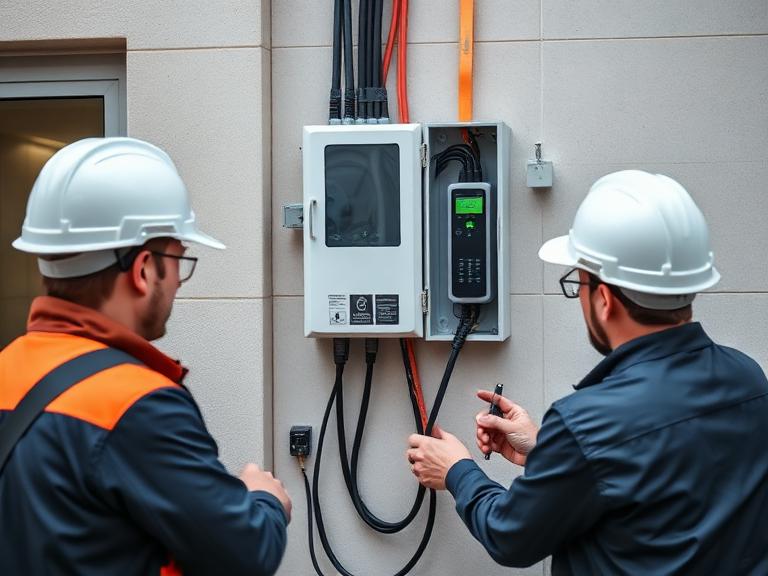
Mount a weatherproof, lockable DB box near your designated parking spot. Route heavy-duty armored copper cabling through FRLS conduits from the main billing meter to the DB box, and install the required MCB, RCCB, and SPD units.
6.Wallbox Installation & Commissioning:Step 6.
Securely mount the charger enclosure to the wall or a structural pedestal column. Connect the power lines, turn on the circuit breaker, connect the unit to your home Wi-Fi network, and test the system with an EV to confirm safe, stable current delivery.
10. Conclusion: Future-Proofing Your Home for the EV Era
Setting up a residential EV charger in Hyderabad is an investment that enhances both your daily transportation experience and the long-term value of your property. By choosing quality hardware, establishing proper safety systems, and utilizing smart connectivity features, you create a reliable charging setup that will serve your home for years to come.
As Hyderabad continues to build out its green energy infrastructure, having a dedicated home charging station positions you ahead of the curve. It ensures you enjoy the full economic and environmental benefits of electric driving, offering a cleaner, more efficient way to power your daily commute.

Leave a Reply