
Table of Contents
Comprehensive Guide to Pregnancy Screening for First Time Mothers
Navigating your very first pregnancy is a journey filled with excitement, anticipation, and naturally, a few questions. Among the most important milestones on this path is understanding pregnancy screening for first time mothers (often referred to medically as primigravidas).
Because your body is experiencing gestation for the first time, your healthcare provider will establish a personalized prenatal roadmap. This comprehensive guide covers everything first-time mothers need to know about pregnancy screening tests, including when to get them, why they matter, how to prepare, and how to interpret your results with confidence.

What Is Pregnancy Screening?
Prenatal screening consists of a series of non-invasive tests—primarily blood tests and ultrasound scans—designed to assess the health of both mother and baby.
For first-time mothers, screenings provide a critical baseline. Unlike women who have previously carried a pregnancy to term, your clinical team does not yet have historical data on how your body responds to gestation (such as blood pressure trends, cervical resilience, or glucose tolerance). Early screening helps establish your personal maternal health profile.
Screening vs. Diagnostic Testing: What’s the Difference?
Understanding the distinction between a screening test and a diagnostic test helps relieve unnecessary anxiety:
- Screening Tests: Assess probability and risk levels. They tell you whether your baby has a higher or lower chance of having a specific condition (such as Down syndrome, spina bifida, or gestational diabetes). Screening tests carry zero risk to your pregnancy.
- Diagnostic Tests: Provide a definitive confirmation. If a screening test indicates a higher risk, diagnostic procedures (such as Chorionic Villus Sampling or Amniocentesis) can confirm whether a condition is actually present.
Timeline of Pregnancy Screenings for First-Time Mothers
                            PRENATAL SCREENING ROADMAP
                               (First-Time Mothers)
                                         │
        ┌────────────────────────────────┼────────────────────────────────┐
        │                                │                                │
        ▼                                ▼                                ▼
  1ST TRIMESTER                    2ND TRIMESTER                    3RD TRIMESTER
  (Weeks 1 – 13)                  (Weeks 14 – 27)                  (Weeks 28 – 40)
┌─────────────────┐              ┌─────────────────┐              ┌─────────────────┐
│ • Early Dating  │              │ • Quad Screen   │              │ • OGTT Glucose  │
│   Ultrasound    │              │   (15-22 Wks)   │              │   (24-28 Wks)   │
│ • Initial Blood │              │ • Level II      │              │ • Rh Factor /   │
│   & Urine Panel │              │   Anatomy Scan  │              │   Antibodies    │
│ • NIPT / cfDNA  │              │   (18-22 Wks)   │              │ • Group B Strep │
│   (10+ Wks)     │              │ • Cervical      │              │   Swab (35-37W) │
│ • Combined NT   │              │   Length Check  │              │ • Growth Scans  │
│   (11-13+6 Wks) │              │                 │              │   (If needed)   │
└─────────────────┘              └─────────────────┘              └─────────────────┘
Below is the complete screening schedule across all three trimesters designed specifically for first-time mothers.
First Trimester Screenings (Weeks 1 – 13)
The first trimester lays the foundation for your entire pregnancy journey. Initial appointments focus on establishing your baseline health and ruling out early chromosomal or developmental concerns.
1. Initial Intake Blood & Urine Panel (Weeks 6 – 10)
During your very first prenatal visit, your doctor will order a comprehensive maternal blood and urine panel to establish key baselines:
- Blood Type & Rh Factor: Determines whether you have Rh-positive or Rh-negative blood.
- Complete Blood Count (CBC): Checks hemoglobin levels to screen for anemia, which is common in pregnancy.
- Immunity Status: Tests for rubella (German measles), varicella (chickenpox), and Hepatitis B immunity.
- Infectious Disease Screening: Standard testing for HIV, syphilis, and hepatitis C to prevent perinatal transmission.
- Urinalysis & Culture: Screens for asymptomatic urinary tract infections (UTIs) and baseline protein/glucose levels.
2. Early Dating & Viability Ultrasound (Weeks 6 – 9)
For first-time mothers, confirming exact gestational age is essential for timing future tests accurately.
- What it does: Uses ultrasound to confirm a heart sound, verify that the pregnancy is located inside the uterus (ruling out an ectopic pregnancy), and measure the embryo’s Crown-Rump Length (CRL) to set your official estimated due date (EDD).
3. Non-Invasive Prenatal Testing (NIPT / cell-free DNA) (Week 10+)
- What it is: A simple blood draw from the mother’s arm starting as early as week 10.
- How it works: It isolates tiny fragments of fetal cell-free DNA floating in the maternal bloodstream.
- What it screens for:
- Trisomy 21 (Down Syndrome) – Detection rate > 99%
- Trisomy 18 (Edwards Syndrome)
- Trisomy 13 (Patau Syndrome)
- Sex chromosome variations (e.g., Turner syndrome, Klinefelter syndrome)
- Fetal sex (optional)
4. First Trimester Combined Screening (Weeks 11+0 – 13+6)
If you opt out of NIPT or combine screening options, this test evaluates two key components:
- Nuchal Translucency (NT) Scan: A specialized ultrasound measuring the clear fluid space at the back of the baby’s neck. Increased fluid thickness can indicate an elevated risk for chromosomal variances or structural heart defects.
- Maternal Blood Markers: Measures levels of PAPP-A (Pregnancy-Associated Plasma Protein A) and Free Beta-hCG.
Second Trimester Screenings (Weeks 14 – 27)
Second-trimester screenings transition from microscopic/chromosomal markers to physical, anatomical structure and organ development.
1. Quad Screen / Maternal Serum Screening (Weeks 15 – 22)
- Best Time: Weeks 16 to 18 (can be performed up to week 22).
- Target Population: Recommended if first-trimester screening was missed or as part of a sequential screening program.
- What it measures:
- Alpha-Fetoprotein (AFP): High levels screen for Open Neural Tube Defects such as Spina Bifida and Anencephaly.
- Unconjugated Estriol (uE3): Low levels aid in risk calculation for chromosomal conditions.
- Human Chorionic Gonadotropin (hCG): Abnormally high or low values provide key diagnostic clues.
- Inhibin A: Evaluates Down syndrome risk when combined with the other three markers.
2. The Detailed Fetal Anatomy Scan / Level II Scan (Weeks 18 – 22)
Often called the “20-Week Scan,” this ultrasound is an exciting milestone for first-time parents. A sonographer conducts a systematic evaluation of your baby’s anatomy:
| System / Area | What the Sonographer Inspects |
| Brain & Skull | Ventricles, cerebellum, cisterna magna, and intact skull structure |
| Face & Profile | Upper lip and palate continuity (checking for cleft lip/palate) |
| Spine & Back | Vertebral alignment from neck to sacrum, checking skin coverage |
| Heart & Chest | Four chambers, left/right outflow tracts, 3-vessel trachea view |
| Abdomen | Stomach cavity, bladder, kidneys, and umbilical cord insertion point |
| Limbs | Arms, legs, hands, feet, long bone lengths (femur/humerus) |
| Maternal Organs | Placental location (ruling out placenta previa), amniotic fluid levels, cervical length |
3. Cervical Length Screening (Weeks 18 – 22)
Because first-time mothers do not have a prior pregnancy history to verify cervical strength, measuring cervical length during your anatomy scan is vital. A short cervix (under 25 mm) can indicate an increased risk for premature labor, allowing your doctor to take preventive measures (such as progesterone therapy or a cerclage).
Third Trimester Screenings (Weeks 28 – Birth)
Third-trimester screenings monitor maternal metabolic health and prepare your body for safe delivery.
1. Oral Glucose Tolerance Test (OGTT) (Weeks 24 – 28)
- Purpose: Screens for Gestational Diabetes Mellitus (GDM), a form of high blood sugar that develops during pregnancy due to placental hormone interference.
- How it works: You will drink a concentrated glucose drink, and your blood will be drawn after a set waiting period (1 hour for a screening test, or at 1, 2, and 3 hours for a full diagnostic tolerance test).
2. Rh Antibody Screen (Week 28)
If your initial blood panel showed that you are Rh-negative, your doctor will re-screen your blood for Rh antibodies at week 28. You will likely receive an injection of RhoGAM (Rh immunoglobulin) around this time to prevent your immune system from forming antibodies against your baby’s blood.
3. Group B Streptococcus (GBS) Swab (Weeks 35 – 37)
- Purpose: Checks for Group B Strep, a natural bacterium found in the vagina or rectum of about 1 in 4 healthy women.
- Why it matters: While harmless to adults, GBS can be passed to a newborn during a vaginal birth, leading to serious infections like sepsis or pneumonia.
- Procedure: A quick, painless swab of the outer vagina and rectum. If positive, you will be given intravenous antibiotics during active labor to protect your baby.
Essential Summary Table of Screening Tests
| Gestational Age | Screening Name | Primary Focus / Condition | Modality |
| Weeks 6 – 10 | Initial Maternal Panel | Blood type, anemia, infections, immunity | Maternal Blood & Urine |
| Weeks 6 – 9 | Early Dating Scan | Heartbeat, gestational age, due date | Transvaginal Ultrasound |
| Week 10+ | NIPT (cell-free DNA) | Down syndrome, trisomies, fetal sex | Blood Draw |
| Weeks 11 – 13+6 | Combined 1st Trimester Screen | Nuchal translucency + blood markers | Ultrasound + Blood |
| Weeks 15 – 22 | Quad Screen | Neural tube defects, spina bifida, trisomies | Blood Draw |
| Weeks 18 – 22 | Detailed Anatomy Scan | Fetal organ systems, placenta, cervical length | Abdominal Ultrasound |
| Weeks 24 – 28 | Glucose Tolerance Test | Gestational Diabetes (GDM) | Blood Draw (Fasting/Post) |
| Week 28 | Rh Antibody Screen | Rh factor incompatibility check | Blood Draw |
| Weeks 35 – 37 | Group B Strep (GBS) | Bacterial infection risk prevention | Vaginal / Rectal Swab |
How First-Time Mothers Can Prepare for Screenings
- Keep a Symptom & Cycle Diary: Note the exact date of your Last Menstrual Period (LMP), as well as any early pregnancy symptoms or spotting.
- Verify Family Medical Histories: Talk with both your partner and your own parents about any genetic conditions, congenital defects, or chronic illnesses in your family trees.
- Check Health Insurance Coverage: While most standard screenings (like ultrasound scans, GBS swabs, and glucose tests) are routine coverage items, advanced screening options like NIPT may have specific insurance criteria depending on maternal age or risk factors.
- Stay Well-Hydrated: Drink plenty of water before ultrasound scans (a full bladder helps push the uterus into clear view in early pregnancy) and blood draws (hydration makes veins easier to find).
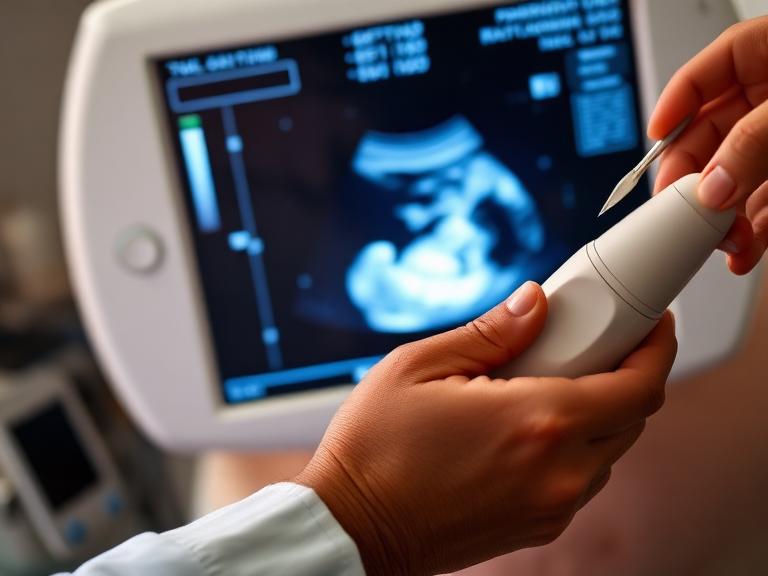
Frequently Asked Questions
Are pregnancy screening tests safe for my baby?
Yes, absolutely. Prenatal screening tests (including blood draws, urine tests, and ultrasounds) are non-invasive and carry zero physical risk to you or your developing baby.
What happens if my screening test shows a high-risk result?
First, take a deep breath. A high-risk result does not mean your baby has a health condition; it simply means the chance is higher than the average population. Your healthcare provider will guide you through next steps, which typically include genetic counseling and the option of a diagnostic test (such as Amniocentesis or CVS) for a clear, definitive answer.
Do I have to take every pregnancy screening test offered?
No. All prenatal screening tests are voluntary. You have full control over your care and can choose the tests that align best with your personal values, beliefs, and preferences after discussing them with your midwife or obstetrician.
Is NIPT recommended for all first-time mothers?
Modern medical guidelines (such as those from the American College of Obstetricians and Gynecologists) recommend that cell-free DNA screening (NIPT) be offered to all pregnant women, regardless of age or baseline risk level, as it is the most accurate non-invasive screening option available for common trisomies.


Leave a Reply