
Table of Contents
EV Charging Plaza Setup Madhapur | Turnkey Commercial EPC & Grid Sanctions
Madhapur forms the commercial, cultural, and technological nerve center of Cyberabad. Positioned directly adjacent to HITEC City, HUDA Techno Enclave, Sri Sai Nagar, and the Durgam Cheruvu Cable Bridge highway corridor, Madhapur exhibits high traffic density. The micro-market hosts thousands of technology companies, luxury hotels, retail plazas, high-rise residential complexes, and corporate transit fleets.
Establishing a commercial EV charging plaza setup Madhapur requires disciplined technical engineering. High-power Direct Current Fast Chargers (DCFCs)—ranging from 60kW to 240kW+—represent massive, continuous non-linear electrical loads. Setting up a high-utilization charging plaza requires high-voltage electrical engineering, dedicated grid load approvals from TGSPDCL (Telangana Southern Power Distribution Company Limited), statutory safety clearances from CEIG (Chief Electrical Inspectorate to Government), reinforced civil construction, and cloud-based software management.
┌─────────────────────────────────────────────────────────────────────────────┐
│                 MADHAPUR EV CHARGING PLAZA INFRASTRUCTURE                   │
├─────────────────────────────────────────────────────────────────────────────┤
│  1. REGULATORY & UTILITY GRID ENGINEERING                                   │
│     [ TGSPDCL HT-IX Concessional Tariff ] [ CEIG High-Voltage Clearance ]   │
│                                                                             │
│  2. HIGH-VOLTAGE SUBSTATION & CIVIL EPC                                     │
│     [ 11kV/33kV Step-Down Transformer ] [ M30 Reinforced Plinth Pad ]       │
│                                                                             │
│  3. HARDWARE PROCUREMENT & DISPENSER ERECTION                               │
│     [ 60kW–240kW+ Dual CCS2 DCFCs ] [ Dual Chemical Earthing < 1.0 Ω ]      │
│                                                                             │
│  4. CLOUD SOFTWARE ORCHESTRATION & MANAGED O&M                              │
│     [ OCPP 2.1 CSMS Cloud ] [ UPI / RFID Billing ] [ Dynamic Load Management]│
└─────────────────────────────────────────────────────────────────────────────┘
This engineering manual delivers the regulatory frameworks, grid integration formulas, civil-electrical execution sequences, and financial models required to build commercial-grade EV charging plazas across Madhapur and the Greater Cyberabad region.
1. Regulatory Framework: TGSPDCL HT-IX Tariffs, TGREDCO & CEIG Safety Norms
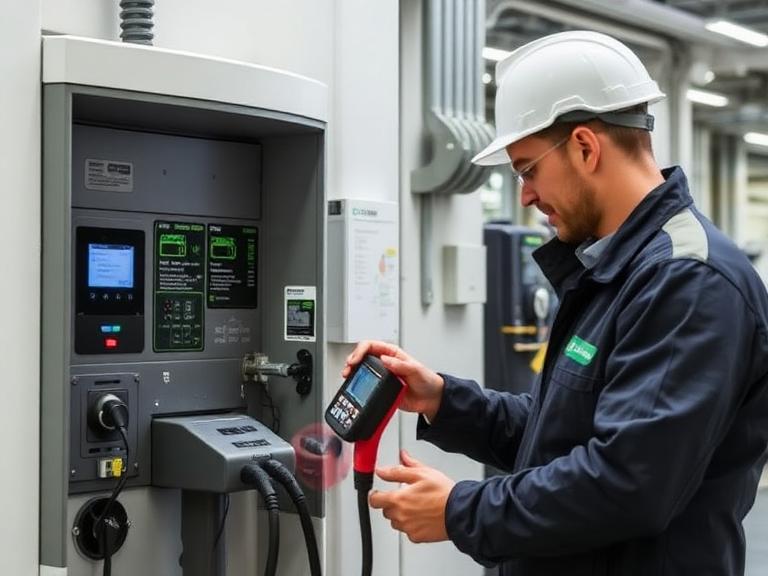
Deploying commercial charging infrastructure in Madhapur requires strict adherence to statutory utility policies and electrical safety regulations in Telangana.
┌─────────────────────────────────────────────────────────────────────────────┐
│                   TELANGANA REGULATORY & UTILITY COMPLIANCE                 │
├──────────────────────┬──────────────────────────┬───────────────────────────┤
│ Governing Agency     │ Primary Strategic Scope  │ Key Statutory Mandate     │
├──────────────────────┼──────────────────────────┼───────────────────────────┤
│ TGSPDCL              │ Power Distribution       │ HT-IX Tariff Category;    │
│                      │ Utility Operator         │ Concessional Base Energy  │
├──────────────────────┼──────────────────────────┼───────────────────────────┤
│ TGREDCO              │ State Nodal Agency (SNA) │ CPO Empanelment; PPP Land │
│                      │ & Policy Facilitator     │ Leases & TSEV App Sync    │
├──────────────────────┼──────────────────────────┼───────────────────────────┤
│ CEIG Telangana       │ High-Voltage Electrical  │ Ground Impedance < 1.0 Ω; │
│                      │ Safety Inspectorate      │ Safety Clearance > 650V   │
└──────────────────────┴──────────────────────────┴───────────────────────────┘
TGSPDCL Concessional Tariff Architecture (TGERC Approved)
Under the orders approved by the Telangana Electricity Regulatory Commission (TGERC):
- Dedicated EV Tariff Slabs (LT-IX & HT-IX): Commercial EV charging stations operate under dedicated non-telescopic utility tariff slabs. The base energy rate is fixed at ₹6.00 per unit (kWh) plus 6 paise per unit statutory Electricity Duty.
- Contracted Load Limit Enhancement: TGERC guidelines allow Low Tension (LT-IX) EV service connections up to 150 kW (201 HP). For multi-dispenser charging plazas exceeding 150 kW connected load, the site transitions to High Tension (HT-IX) supply at 11kV or 33kV.
- Concessional Demand Charges: Demand charges under the dedicated HT-IX EV tariff are reduced to ₹100 per kVA per month (compared to ₹500/kVA/month for standard commercial C&I consumers), lowering monthly fixed operating overheads for plaza operators.
2. High-Voltage Substation Engineering & Transformer Capacity Formulas
Commercial DC fast chargers present continuous non-linear electrical loads that demand careful substation sizing.
┌─────────────────────────────────────────────────────────────────────────────┐
│                 HIGH-VOLTAGE SUBSTATION FEED TOPOLOGY                       │
├─────────────────────────────────────────────────────────────────────────────┤
│  TGSPDCL 11kV / 33kV Utility Line (Subterranean / Overhead Feed)           │
│     │                                                                       │
│     v                                                                       │
│  Outdoor Vacuum Circuit Breaker (VCB) / Ring Main Unit (RMU)                │
│     │                                                                       │
│     v                                                                       │
│  Dedicated Step-Down Transformer (e.g., 315 kVA 11kV/415V ONAN)             │
│     │                                                                       │
│     v                                                                       │
│  Main LT Switchboard (4-Pole MCCB + Class I+II SPDs + TOD Meter)            │
│     │                                                                       │
│     ├───► Feeder Breaker 1 ──► 120kW Dual CCS2 DC Fast Charger Cabinet 1    │
│     ├───► Feeder Breaker 2 ──► 120kW Dual CCS2 DC Fast Charger Cabinet 2    │
│     └───► Feeder Breaker 3 ──► Auxiliary Panel (Lighting, Cooling, BESS)    │
└─────────────────────────────────────────────────────────────────────────────┘
High-Precision Transformer Capacity Sizing Formula
To determine the required step-down transformer kVA rating for a commercial fast-charging plaza, turnkey engineers apply the following calculation:
$$S_{\text{transformer}} = \frac{\sum P_{\text{chargers}}}{\eta_{\text{rectifier}} \times \text{PF}} \times \text{SF}$$
Where:
- $\sum P_{\text{chargers}}$ = Sum of maximum DC charging output power across all dispensers ($\text{kW}$).
- $\eta_{\text{rectifier}}$ = AC-to-DC conversion efficiency of active rectifier power modules ($\approx 0.94$).
- $\text{PF}$ = Power Factor of active Power Factor Correction (PFC) circuitry ($\approx 0.98$).
- $\text{SF}$ = Continuous Load Safety Factor per Indian Standards / CEA rules ($\approx 1.20$, requiring a 125% circuit margin).
Sizing Example for a 240kW Charging Plaza in Madhapur:
Consider a site deploying two 120kW dual-gun DC fast chargers ($\sum P = 240\text{ kW}$):
$$S_{\text{transformer}} = \frac{240\text{ kW}}{0.94 \times 0.98} \times 1.20 = \frac{240}{0.9212} \times 1.20 \approx 260.5\text{ kVA} \times 1.20 \approx 312.6\text{ kVA}$$
Engineers select the standard industrial outdoor step-down transformer capacity: 315 kVA 11kV/415V transformer.
3. Grounding, Dual Pipe Chemical Earthing & CEA Safety Norms
Rock formations across Cyberabad demand engineered chemical earthing systems to ensure user safety and satisfy CEIG inspection criteria.
┌─────────────────────────────────────────────────────────────────────────────┐
│                 DUAL PIPE CHEMICAL EARTH PIT CROSS-SECTION                  │
├─────────────────────────────────────────────────────────────────────────────┤
│  Finished Grade Level                                                       │
│  ═════════════════════════════════════════════════════════════════════════  │
│  [ Concrete Inspection Chamber 300mm x 300mm with Removable Cover ]         │
│     │                                                                       │
│     ├── Removable Testing Busbar Link (50mm x 6mm Copper Strip)             │
│     │                                                                       │
│  [ 150mm Borehole Filled with Conductive Bentonite Backfill Compound ]       │
│     │                                                                       │
│     └── 50mm x 3000mm Copper-Bonded Steel Electrode (250-Micron Coating)   │
│                                                                             │
│  * Target Earth Impedance: Strictly < 1.0 Ω for DC Fast Charging Plazas     │
└─────────────────────────────────────────────────────────────────────────────┘
Safety & Protection Technical Mandates
- Dual Maintenance-Free Chemical Earth Pits: High-power DC fast chargers require two independent chemical earthing pits connected in parallel to establish redundant fault paths.
- Earth Loop Impedance Thresholds:
- AC Commercial Wallboxes: Ground resistance must measure strictly $< 5.0\ \Omega$.
- DC Fast Chargers (30kW to 240kW+): Ground resistance must measure strictly $< 1.0\ \Omega$ to prevent neutral float errors and protect sensitive controller boards.
- Residual Current Protection: Every charging circuit must incorporate a 4-pole Type B Residual Current Device (RCD) capable of detecting both AC and smooth DC leakage currents, tripping within 30 milliseconds at 30mA fault thresholds.
4. Micro-Market Deployment Matrix Across Madhapur Zones
Selecting hardware configurations and deployment layouts varies across different micro-locations within Madhapur:
┌─────────────────────────────────────────────────────────────────────────────┐
│                 MICRO-MARKET DEPLOYMENT STRATEGY MATRIX                     │
├─────────────────────┬──────────────────────────┬────────────────────────────┤
│ Madhapur Node       │ Target Driver Segment    │ Recommended Hardware Setup │
├─────────────────────┼──────────────────────────┼────────────────────────────┤
│ Cyber Towers        │ Corporate cabs, IT       │ Dual 60kW / 120kW DCFCs +  │
│ Junction / Sri Sai  │ employees, visitor EVs   │ 22kW AC Smart Wallboxes    │
│ Nagar Corridor      │ (Dwell: 30–60 mins)      │ (High-volume plaza layout) │
├─────────────────────┼──────────────────────────┼────────────────────────────┤
│ Inorbit Mall        │ Retail shoppers, dining  │ Dual 60kW / 120kW DC Fast  │
│ Road & Cable Bridge │ visitors, leisure EVs    │ Plazas with RFID / UPI     │
│ Expressway          │ (Dwell: 1–3 hours)       │ (Valet parking integration)│
├─────────────────────┼──────────────────────────┼────────────────────────────┤
│ HUDA Techno Enclave │ Corporate shuttle cabs,  │ 120kW Heavy-Duty Depot     │
│ & Image Hospitals   │ commercial e-vans        │ Cabinets + Sequential      │
│ Belt                │ (Dwell: Overnight / 1hr) │ Smart Charging Control     │
├─────────────────────┼──────────────────────────┼────────────────────────────┤
│ Metro Station Nodes │ Transit commuters, metro │ 7.4kW / 22kW AC Wallboxes  │
│ (Madhapur Metro /   │ feed e-3Ws, park-and-ride│ + 30kW Compact DC Fast     │
│ Durgam Cheruvu)     │ (Dwell: 2–8 hours)       │ (High volume turnover)     │
└─────────────────────┴──────────────────────────┴────────────────────────────┘
5. Step-by-Step Implementation & Commissioning Workflow
Setting up a commercial EV charging plaza follows a structured engineering lifecycle:
1.Site Survey, Load Assessment & SLD Preparation:Phase 1: Feasibility & Grid Audit.
Engineers evaluate site switchgear, measure TGSPDCL transformer kVA capacity, analyze soil resistivity for chemical earthing, perform 3D CAD layout planning, and draft As-Built Single-Line Diagrams (SLDs).
2.TGSPDCL Load Sanction & TGREDCO Filing:Phase 2: Licensing & Utility Sanction.
Submit formal service connection applications to TGSPDCL under LT-IX or HT-IX tariff categories. Secure utility approval for dedicated transformer installation and file site plans with TGREDCO.
3.Concrete Plinth Casting & Cable Troughs:Phase 3: Civil Construction & Trenching.
Excavate cable trenches, lay pre-cast concrete troughs with steel covers, pour reinforced M30 concrete mounting plinths elevated 200mm above grade, erect protective steel bollards, and build canopy structures.
4.Substation, Transformer & LT Panel Erection:Phase 4: High-Voltage Electrical Setup.
Erect the outdoor step-down transformer (100 kVA to 500 kVA), install HT Vacuum Circuit Breakers (VCBs), mount the main LT busbar distribution switchboard, fit Class I+II SPDs, Type B RCD switches, and TOD utility meters.
5.Chemical Earth Pits & Dispenser Erection:Phase 5: Earthing & Charger Installation.
Drill boreholes and install dual chemical pipe earth pits (< 1.0 Ω). Lay XLPE armored copper cables on GI ladder trays, perform glanding and crimping, anchor DC fast-charging cabinets, and connect dual earth bonds.
6.CEIG Safety Clearance & CSMS Cloud Integration:Phase 6: Inspection & Go-Live.
Perform 1000V DC megohmmeter insulation resistance tests and fall-of-potential earth impedance tests. Secure statutory Chief Electrical Inspectorate (CEIG) safety clearance, establish secure OCPP 2.1 WebSocket cloud connectivity, and launch commercial operations.
6. Software Architecture: OCPP CSMS & Dynamic Load Management (DLM)
Hardware performance depends on cloud-based Charge Point Management Software (CSMS) built on open standards (OCPP 1.6J and OCPP 2.0.1/2.1).
┌─────────────────────────────────────────────────────────────────────────────┐
│                 ENTERPRISE CSMS SOFTWARE FUNCTIONAL LAYERS                  │
├─────────────────────────────────────────────────────────────────────────────┤
│  LAYER 1: DRIVER INTERFACE (Mobile App / Web Portal)                        │
│  • Real-time map navigation, station reservation, plug type filtering.     │
│  • Integrated UPI (PhonePe, Paytm, Google Pay) and credit card payments.    │
│                                                                             │
│  LAYER 2: CPO NETWORK OPERATIONS CENTER (NOC)                               │
│  • Real-time station telemetry, session power curves, fault code logging.   │
│  • Automated tariff management, peak/off-peak pricing rules, billing split.│
│                                                                             │
│  LAYER 3: DYNAMIC ENERGY MANAGEMENT (DLM)                                   │
│  • Real-time building main panel load balancing using current CT clamps.    │
│  • Solar PV self-consumption tuning and TGREDCO app telemetry data feeds.   │
└─────────────────────────────────────────────────────────────────────────────┘
7. Financial ROI, CapEx/OpEx Breakdown & Payback Model
Investing in a commercial DC fast charging plaza in high-density corridors like Madhapur or Sri Sai Nagar yields a strong financial return driven by steady EV traffic.
Financial Model: 60kW Dual-Gun DC Fast Charging Plaza in Madhapur
┌─────────────────────────────────────────────────────────────────────────────┐
│                    CAPITAL EXPENDITURE (CapEx Outlay)                       │
├─────────────────────────────────────────────────────────────────────────────┤
│  • 60kW Dual CCS2 DC Fast Charger Cabinet: ₹7,50,000                           │
│  • 100 kVA Step-Down Transformer & TGSPDCL Grid Connection: ₹4,50,000       │
│  • Civil Concrete Plinth, Trenching, Canopy & Signage: ₹2,20,000            │
│  • LT Distribution Panel, Cabling, Earthing & CEIG Audit: ₹2,30,000          │
│  • Total Initial CapEx Investment: ₹16,50,000                               │
├─────────────────────────────────────────────────────────────────────────────┤
│                  OPERATIONAL REVENUE & CASH FLOW (Monthly)                  │
├─────────────────────────────────────────────────────────────────────────────┤
│  • Daily Utilization Rate: 22% (5.2 hours active charging / day)            │
│  • Daily Energy Dispensed: 312 kWh / day                                    │
│  • Monthly Energy Dispensed: 9,360 kWh                                       │
│  • Driver Tariff Charged: ₹21.00 / kWh                                      │
│  • TGSPDCL HT-IX Base Power Cost: ₹7.50 / kWh (incl. duty/losses)          │
│  • Net Operating Gross Margin per kWh: ₹13.50 / kWh                         │
│  • Monthly Gross Revenue Margin: ₹1,26,360                                   │
│  • Less: Monthly Maintenance, CSMS Software & Network Fees: (-₹18,000)      │
│  • Monthly Net Operating Income: ₹1,08,360 (₹13,00,320 / year)               │
├─────────────────────────────────────────────────────────────────────────────┤
│  FINANCIAL RETURN METRICS                                                   │
│  • Simple Financial Payback Period: 15.2 Months (1.26 Years)                 │
│  • 5-Year Net Present Value (NPV @ 10% Discount Rate): ₹32,45,000           │
│  • 5-Year Internal Rate of Return (IRR): 52.4%                              │
└─────────────────────────────────────────────────────────────────────────────┘
8. Frequently Asked Questions (15 Detailed FAQs)
1. Why is Madhapur a prime strategic location for an EV charging plaza setup in Hyderabad?
Madhapur sits at the geographical heart of Cyberabad, bridging HITEC City, Jubilee Hills, Kondapur, and the Durgam Cheruvu Cable Bridge corridor. High vehicular traffic, corporate shuttle fleets, luxury private EVs, and commercial taxi density make Madhapur one of South Asia’s highest utilization nodes for 60kW to 240kW DC fast charging plazas.
2. How is grid power sanctioned from TGSPDCL for setting up an EV charging plaza in Madhapur?
Engineers submit single-line diagrams (SLDs), maximum demand estimations, and site blueprints to TGSPDCL (Telangana Southern Power Distribution Company Limited). Under TGERC regulations, commercial charging setups qualify for the dedicated HT-IX / LT-IX EV charging tariff category, which offers a concessional base energy rate of ₹6.00/unit plus 6 paise per unit statutory electricity duty and reduced demand charges.
3. What transformer capacity is required for a 240kW dual-dispenser DC fast charging plaza?
Factoring in 94% rectifier efficiency, 0.98 power factor, and a 1.20 continuous load safety factor per CEA rules, a 240kW DC fast charging load draws approximately 312 kVA. Turnkey contractors in Madhapur install a dedicated 315 kVA 11kV/415V step-down transformer paired with a 500A main LT distribution switchboard.
4. What is the typical setup cost for a commercial 60kW dual-gun DC fast charging plaza in Madhapur?
A turnkey 60kW dual-gun CCS2 DC fast charging setup in Madhapur typically costs between ₹16.5 lakh and ₹22.5 lakh. This covers ₹7.5 lakh for the charger cabinet, ₹4.5 lakh for a dedicated 100 kVA step-down transformer and TGSPDCL grid connection, ₹2.5 lakh for civil plinth construction and cable trenching, and ₹2.0 lakh for switchgear, dual chemical earthing, CEIG inspection, and CSMS cloud onboarding.
5. How long does it take to deploy a turnkey EV charging plaza setup in Madhapur?
Execution spans 6 to 10 weeks: 2 to 3 weeks for TGSPDCL grid load approval and transformer sanction, 2 weeks for civil plinth curing and concrete trenching, 1 to 2 weeks for transformer and switchgear erection, and 1 to 2 weeks for testing, CEIG safety inspection, and cloud CSMS synchronization.
6. What CEA and CEIG safety standards are mandatory for charging plazas in Telangana?
Mandated safety norms enforce: (1) Dual chemical pipe earthing pits maintaining ground loop resistance strictly below 1.0 Ohm, (2) 4-pole Type B Residual Current Devices (30mA trip sensitivity), (3) Class I+II Surge Protection Devices (SPD), (4) Emergency Stop isolation switches, and (5) Insulation resistance exceeding 100 Megohms at 1000V DC.
7. What charger gun connectors are required for a public fast charging plaza in Cyberabad?
Dual Combined Charging System 2 (CCS2) connector guns are standard for high-power DC fast charging in India, servicing electric vehicles from Tata, Mahindra, Hyundai, BYD, MG, Kia, BMW, Mercedes, and Audi. High-traffic plazas may also incorporate secondary Type 2 AC wallboxes (22kW) for long-dwell commuters.
8. How does Dynamic Load Management (DLM) prevent building power trips at commercial sites?
DLM software uses smart current transformers (CTs) installed at the site’s main electrical panel. When overall building power demand spikes (e.g., afternoon HVAC chiller operation), the DLM controller automatically throttles the DC charger output power, avoiding peak demand penalties and main breaker trips.
9. Can an EV charging plaza in Madhapur be integrated with solar PV and Battery Storage (BESS)?
Yes. Engineers design hybrid microgrids combining rooftop or canopy solar PV arrays, hybrid inverters, and LFP Battery Energy Storage Systems (BESS). BESS buffers peak charging demand spikes, lowers utility power costs during high Time-of-Use rates, and ensures continuous charging during localized grid sags.
10. What software protocol is mandatory for operating commercial EV charging networks?
Open Charge Point Protocol (OCPP 1.6J or 2.0.1/2.1) is mandatory. It enables open communication between physical charger hardware and the cloud Charge Point Management System (CSMS), handling driver payments (UPI, credit card, RFID), real-time telemetry, automated tariff configuration, and remote firmware flashing.
11. What civil engineering works are involved in setting up an outdoor charging plaza?
Civil engineering scope includes casting reinforced M30 concrete plinths elevated 200mm above grade, excavating cable trenches with pre-cast concrete troughs, erecting GI steel protective bollards, fabricating shade canopy structures, and applying anti-skid floor paint with EV bay branding.
12. How do CPOs handle fleet charging for corporate EV shuttles in Madhapur and Gachibowli?
CPOs deploy high-power dual-gun CCS2 DC fast chargers paired with fleet telematics integrations, automated overnight charging schedules, dedicated RFID cards for shuttle drivers, and custom kWh billing portals for corporate fleet managers.
13. What business models are available for landowners hosting an EV charging plaza in Madhapur?
Models include: (1) Capital Purchase (CapEx) where the property owner owns the asset outright and keeps 100% of charging profit, (2) Company-Owned (COCO) where the CPO pays ground rent or revenue share while funding CapEx, and (3) Franchise (FOCO) split arrangements.
14. What ongoing maintenance support is required to maintain 99.0% charger uptime?
Commercial sites require 24/7 remote Network Operations Center (NOC) telemetry tracking, quarterly preventive maintenance (air filter cleaning, busbar torquing, thermal imaging scans, chemical earth pit reconditioning), and guaranteed 2 to 4-hour emergency field SLA dispatch.
15. What is the expected ROI and financial payback period for setting up a 60kW DC fast charger in Madhapur?
A commercial 60kW dual-gun DC fast charger operating in a high-density corridor like Madhapur or Sri Sai Nagar at a 22% daily utilization rate generates a simple financial payback within 15 to 22 months, yielding a 5-year Internal Rate of Return (IRR) exceeding 50%.

Leave a Reply