
Table of Contents
Ultimate Guide to Home Charging Station Installation in Hyderabad (2026)
Electric vehicle adoption across the Greater Hyderabad Municipal Corporation (GHMC) region—from tech corridors like Hitech City, Gachibowli, and Financial District to residential hubs like Jubilee Hills, Banjara Hills, Kompally, and Uppal—is growing at a rapid pace. As automotive manufacturers launch longer-range electric cars, SUVs, and two-wheelers, the need for safe, efficient, and robust personal charging infrastructure has become vital.
Over 85% of all EV charging takes place at home. Plugging in your vehicle overnight transforms your garage or dedicated parking slot into a personal refueling station, ensuring you wake up to a fully charged battery every morning. However, installing a home charging station in hyderabad involves more than simply mounting a box on a wall. It demands a clear understanding of TGSPDCL (Telangana Southern Power Distribution Company Limited) grid regulations, electrical load calculations, safety earthing protocols, and resident welfare association (RWA) compliance in gated communities.
This exhaustive guide provides EV owners, villa developers, and apartment residents across Hyderabad with complete technical, financial, and regulatory insights needed to install a reliable home EV charging station.
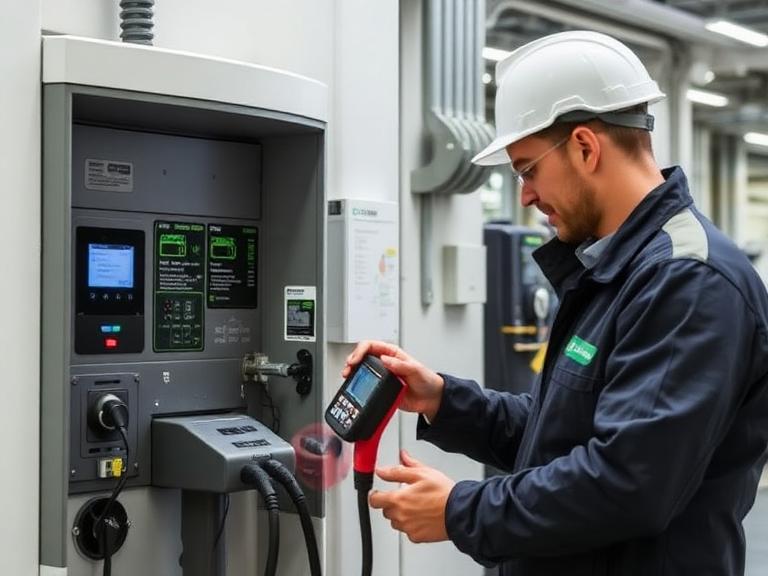
1. EV Home Charging Technologies Explained
Choosing the right charging equipment depends on your daily commute requirements, vehicle battery capacity, and existing home electrical infrastructure.
       +-------------------------------------------------------------------+
       |                    EV HOME CHARGING OPTIONS                       |
       +---------------------------------+---------------------------------+
                                         |
               +-------------------------+-------------------------+
               |                                                   |
               v                                                   v
     [ Level 1 / Portable AC ]                           [ Level 2 AC Wallbox ]
     * Power: 3.3 kW (15A/16A)                          * Power: 7.4 kW to 22 kW
     * Voltage: 230V Single-Phase                       * Voltage: 230V 1-Ph / 415V 3-Ph
     * Charge Speed: 10-15 km range/hr                  * Charge Speed: 35-100 km range/hr
     * Setup: Standard 16A Socket                       * Setup: Dedicated Hardwired Circuit
     * Best For: Emergency / Low Daily Distances         * Best For: Overnight Full Battery Fill
Level 1: Portable AC Chargers (3.3 kW)
- Power Output: 3.3 kW (15A / 16A single-phase at 230V).
- Charging Speed: Adds roughly 10–15 km of range per hour of charging.
- Full Charge Time: 12 to 18 hours for a mid-sized 40 kWh EV battery.
- Best Used For: Low daily mileage, plug-in hybrid electric vehicles (PHEVs), electric two-wheelers, or emergency backup charging.
- Technical Considerations: Standard 16A domestic sockets are not designed for sustained 10+ hour continuous full loads. Using portable chargers continuously on standard house wiring without dedicated heavy-gauge lines risks socket melting and insulation breakdown.
Level 2: Smart AC Wallbox Chargers (7.4 kW to 22 kW)
- 7.4 kW Single-Phase AC Charger: The gold standard for home charging in Hyderabad. Operating at 230V and 32 Amps, it adds 35–45 km of range per hour. It can fully replenish a 40 kWh battery (e.g., Tata Nexon EV, Punch EV) in approximately 6 hours.
- 11 kW / 22 kW Three-Phase AC Charger: Operating at 415V, these chargers require a dedicated 3-phase power supply. An 11 kW wallbox provides fast overnight charging for vehicles with larger 60–100 kWh battery packs (e.g., Kia EV6, Hyundai IONIQ 5, BMW iX, Mercedes-Benz EQE).
- Key Features: Hardwired installations, built-in RFID access control, Wi-Fi/Bluetooth app connectivity, schedule-based charging, and integrated earth leakage protection.
2. Technical & Electrical Infrastructure Requirements
Before ordering an AC wallbox, your property’s electrical framework must be thoroughly evaluated to ensure safety and code compliance under Central Electricity Authority (CEA) guidelines.
+-------------------------------------------------------------------------------------+
|                      TYPICAL EV WALLBOX HARDWARE ARCHITECTURE                        |
+-------------------------------------------------------------------------------------+
  [ TGSPDCL Service Meter ]
           |
           v
  [ Main Distribution Board ] ---> [ Dedicated 32A/40A MCB ]
                                           |
                                           v
                                [ Type B RCCB / RCD (30mA) ]
                                           |
                                           v
                                [ Surge Protection Device ]
                                           |
                                           +---> [ Dedicated Earth Pit (< 5Ω) ]
                                           |
                                           v
                                [ 6/10 sq mm Armored Cable ]
                                           |
                                           v
                                [ Smart AC Wallbox (7.4kW) ]
Sanctioned Load & TGSPDCL Grid Regulations
In Hyderabad, power distribution is governed by TGSPDCL (Telangana Southern Power Distribution Company Limited). Every domestic connection has a designated Sanctioned Load measured in kilowatts (kW).
- Calculate Connected Household Load: Sum your existing major appliances (air conditioners, geysers, induction cooktops, water pumps). If your current connected load is 5 kW and you plan to install a 7.4 kW charger, your combined peak requirement will reach 12.4 kW.
- Applying for Load Enhancement: You can submit an online request through the TGSPDCL consumer portal or mobile app to increase your sanctioned connected load. Running a 7.4 kW charger on an under-sanctioned load will cause frequent main service line trips at the distribution transformer and may attract regulatory penalties.
Electrical Line & Cable Specifications
- Conductor Sizing: For a 7.4 kW single-phase charger operating at 32A:
- Up to 20 meters cable distance: 6 sq mm 3-core copper armored cable.
- 20 to 50+ meters (common in high-rise basement parking): 10 sq mm or 16 sq mm 3-core copper armored cable to prevent voltage drops exceeding 3%.
- Armored Protection: Cables routed through basement cable trays or underground conduits must be steel-wire armored (XLPE insulation) to prevent physical wear, rodent damage, and moisture ingress.
Circuit Protection & Safety Devices
- Miniature Circuit Breaker (MCB): A dedicated 2-pole 40A C-curve MCB (for 7.4 kW chargers) installed in the primary distribution panel.
- Residual Current Circuit Breaker (RCCB/RCD): A Type B or AC/DC sensitive RCCB rated at 30mA trip threshold is required. Standard domestic Type A/AC RCCBs do not detect smooth DC residual currents leaked by EV traction batteries, which can blind standard protection systems.
- Surge Protection Device (SPD): Class II SPDs shield the sensitive onboard charger (OBC) of your electric car from voltage spikes caused by lightning or grid switching events on TGSPDCL lines.
- Dedicated Chemical Earthing: EV chargers continuously monitor ground impedance. A dedicated chemical pipe earthing pit filled with bentonite/marconite compound must be established, maintaining an earth resistance value strictly below 5 Ohms (ideally < 2 Ohms).
3. Installation Scenarios: Independent Houses vs. High-Rise Apartments
The physical layout of properties across Hyderabad introduces distinct installation requirements.
+------------------------------------------------------------------------------------+
|                         INSTALLATION PATHWAYS IN HYDERABAD                         |
+------------------------------------------------------------------------------------+
|                                         |                                          |
|  INDEPENDENT HOUSES / VILLAS            |  APARTMENTS & GATED COMMUNITIES          |
|  (e.g., Jubilee Hills, Kompally)        |  (e.g., Gachibowli, Financial District)  |
|                                         |                                          |
|  * Short cable runs (5m - 15m)          |  * Extended cable runs (30m - 100m+)     |
|  * Direct tap from main distribution    |  * Route from basement meter room        |
|  * Direct TGSPDCL load enhancement      |  * Requires RWA NOC approval             |
|  * Easy Rooftop Solar PV Net-metering   |  * Automated CMS or sub-metering setups  |
|                                         |                                          |
+-----------------------------------------+------------------------------------------+
Independent Houses & Villas (Jubilee Hills, Banjara Hills, Kompally, Manikonda)
- Wiring Complexity: Low to Moderate. Cable runs are short (typically 5 to 15 meters from the main distribution panel to the port/garage).
- Load Approval: Direct application with TGSPDCL for load enhancement on your existing domestic meter.
- Rooftop Solar Advantage: Homeowners can integrate rooftop solar PV arrays with net-metering. Daytime solar generation offsets night-time EV charging, bringing running costs down to near zero.
High-Rise Apartments & Gated Communities (Gachibowli, HITEC City, Kondapur, Tellapur)
- RWA Approval (NOC): Managing committees require formal approval covering safety standards, cabling aesthetic guidelines, and fire safety compliance before installation begins.
- Power Source Strategy:
- Direct Connection from Resident’s Meter: A dedicated heavy-duty armored cable is pulled from the individual meter panel in the basement meter room along suspended cable trays to the assigned parking bay.
- Common Grid Line with Sub-Meter / CMS: In newer high-rise societies, chargers connect to a common EV panel. Smart chargers equipped with OCPP (Open Charge Point Protocol) track energy usage per user and bill the resident automatically via a integrated app.
- Cable Tray Management: Extended cable runs (often 40 to 100 meters) require systematic labeling, fire-retardant coating, and secure clamp fixtures along shared basement ducts.
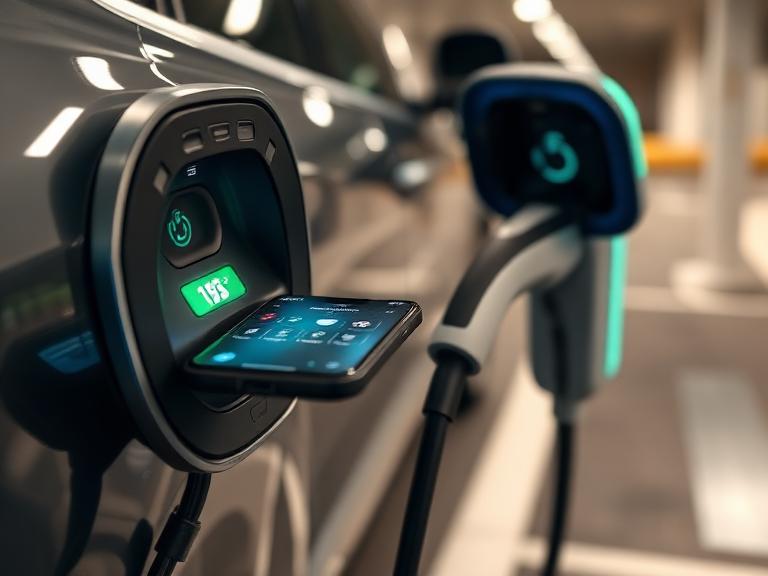
4. Step-by-Step Installation Process in Hyderabad
Executing a safe wallbox charger setup follows a structured technical workflow:
1.Site Audit & Load Feasibility Check:Mandatory first step.
A certified electrical engineer evaluates your home’s distribution board, existing sanctioned load, phase distribution, earthing quality (measuring earth-to-neutral voltage and ground resistance), and measures the cable distance to your parking slot.
2.TGSPDCL Load Enhancement & RWA Clearance:Regulatory compliance.
Submit an online application for load expansion on the TGSPDCL portal if necessary. For apartment owners, present the site audit report and wiring layout to your RWA to obtain the formal No Objection Certificate (NOC).
3.Chemical Earthing & Civil Work:Grounding safety setup.
Dig and install a dedicated chemical earth pit (< 5 Ohms resistance). Install weatherproof mounting pedestals or wall plates at your designated parking bay.
4.Armored Cable Routing & Protection Panel Setup:Heavy-duty electrical wiring.
Lay XLPE insulated copper armored cable along approved basement cable trays or conduits. Install an IP65 outdoor enclosure housing the dedicated MCB, Type B RCCB, and Surge Protection Device.
5.Wallbox Mounting & Hardwiring:Hardware integration.
Mount the AC wallbox charger securely at an ergonomic height (1.2m to 1.5m from floor level). Connect incoming power lines, dedicated ground wire, and configure network communication (Wi-Fi/4G/Ethernet).
6.Testing, Commissioning & Inspection:Final validation.
Perform dummy load tests, insulation resistance checks, earth fault simulation, and verify automatic trip functionality. Pair the charger with the mobile app for smart scheduling and power monitoring.
5. Cost Breakdown & Electricity Tariffs in Hyderabad (2026 Rates)
Turnkey Installation Cost Matrix
| Component / Item Description | Basic Setup (3.3 kW Portable) | Standard Setup (7.4 kW Wallbox) | Premium Setup (11 kW/22 kW 3-Phase) |
| Charger Hardware Unit | Included with Vehicle / ₹12,000 | ₹32,000 – ₹50,000 | ₹55,000 – ₹85,000 |
| Armored Copper Cable (per meter) | ₹120 – ₹180 (3-core 4 sq mm) | ₹220 – ₹350 (3-core 10 sq mm) | ₹350 – ₹550 (5-core 10/16 sq mm) |
| Safety Panel (MCB + Type B RCCB + SPD) | ₹2,500 – ₹3,500 | ₹4,500 – ₹7,000 | ₹7,500 – ₹12,000 |
| Chemical Earthing Pit | Optional (Uses house earth) | ₹4,500 – ₹6,500 | ₹5,500 – ₹8,000 |
| Installation Labor & Testing | ₹1,500 – ₹2,500 | ₹3,500 – ₹6,000 | ₹6,000 – ₹10,000 |
| Approximate Total Investment | ₹16,000 – ₹24,000 | ₹46,500 – ₹79,500 | ₹77,500 – ₹121,000+ |
TGSPDCL Domestic Electricity Tariff Slabs
When charging your EV through your primary domestic meter in Telangana, energy usage is billed under standard domestic LT-1 tariff slabs:
| Monthly Domestic Slab (Units / kWh) | Approximate Base Rate (₹ per kWh) | Effective Cost incl. Duties & Surcharges |
| 0 – 100 Units | ₹3.20 | ~₹3.80 |
| 101 – 300 Units | ₹5.50 – ₹7.20 | ~₹6.50 – ₹8.00 |
| 301 – 500 Units | ₹9.50 | ~₹10.50 |
| > 500 Units (Typical EV Owner Slab) | ₹10.50 – ₹11.80 | ~₹11.80 – ₹13.00 |
Real-World Savings Example:
A petrol SUV returning 12 km/L at ₹107.4/L costs ~₹8.95 per kilometer.
An EV consuming 1 kWh per 7 km billed at TGSPDCL’s highest slab rate of ₹11.50/kWh costs ~₹1.64 per kilometer.
Driving 1,500 km per month yields net savings of over ₹10,900 monthly (~₹1.3 Lakhs annually).
6. Indian Standards & Safety Regulations
Compliance with Indian and international safety standards prevents electrical hazards and protects vehicle battery warranty coverage:
- IS/IEC 61851-1: Mandatory standard governing conductive charging systems, specifying safety parameters, pilot signals, and fault detection protocols.
- IS/IEC 62196-2: Defines physical properties and safety parameters for the Type 2 AC connector plug, which is the universal standard for all electric cars sold in India.
- IP65 / IK10 Ratings: Wallbox enclosures installed outdoors in Hyderabad must feature IP65 dust and water ingress protection to handle monsoon downpours and an IK10 impact resistance rating against physical strikes.
- CEA Guidelines (2019/2023 Amendments): Mandates auto cutoff features during high thermal sensing, over-voltage, under-voltage, and ground fault conditions.
7. Popular EV Models & Compatible Home Chargers in Hyderabad
+------------------------------------------------------------------------------------+
|                         EV COMPATIBILITY MATRIX IN INDIA                           |
+------------------------------------------------------------------------------------+
| Vehicle Model             | Battery Size | Recommended Charger | 10-100% Time      |
+---------------------------+--------------+---------------------+-------------------+
| Tata Punch EV / Nexon EV  | 25 - 40.5 kWh| 7.4 kW Single-Phase | 4.5 to 6 Hours    |
| Mahindra XUV400 / BE 6e   | 34.5 - 59 kWh| 7.4 kW Single-Phase | 5.5 to 8 Hours    |
| MG ZS EV / Windsor EV     | 38 - 50.3 kWh| 7.4 kW Single-Phase | 5.5 to 7.5 Hours  |
| Hyundai IONIQ 5 / Kia EV6 | 72.6 - 77.4kWh| 11 kW Three-Phase   | 6.5 to 7.5 Hours  |
| BMW i4 / Mercedes EQE SUV | 80 - 90.6 kWh| 11 kW/22 kW 3-Phase | 7 to 8.5 Hours    |
+------------------------------------------------------------------------------------+
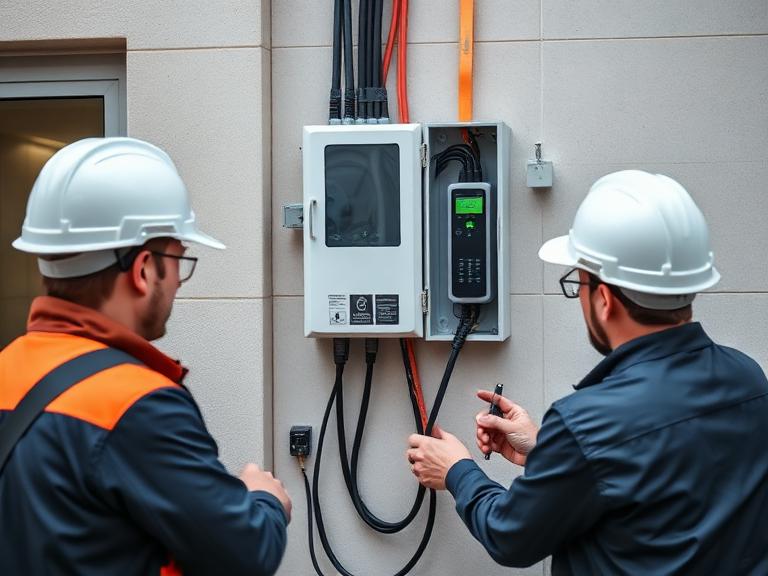
8. Frequently Asked Questions (FAQs)
Q1: Is permission required from TGSPDCL to install a home EV charging station in Hyderabad?
If your home’s existing sanctioned connected load with TGSPDCL covers the additional power draw of the EV charger, separate written permission is not strictly mandatory. However, if adding a 7.4 kW charger causes your overall peak usage to exceed your sanctioned limit, you must apply for a Sanctioned Load Enhancement online via the TGSPDCL consumer portal to ensure grid safety and avoid non-compliance penalties.
Q2: What is the total cost of installing a 7.4 kW home EV charger in Hyderabad?
The turnkey cost typically ranges between ₹45,000 and ₹80,000. This encompasses the 7.4 kW Smart AC Wallbox unit (₹30,000–₹55,000), heavy-duty copper armored cabling (₹220–₹350 per meter), a dedicated chemical earthing kit (₹4,500–₹6,500), dual-pole MCB + Type B RCCB protection panels (₹4,500–₹7,000), and expert installation labor.
Q3: Can I install an EV charger in my apartment basement in Gachibowli or Kondapur?
Yes. Apartment residents across Gachibowli, Kondapur, HITEC City, and Greater Hyderabad can install AC wallbox chargers. You must obtain a No Objection Certificate (NOC) from your Resident Welfare Association (RWA). Cabling is pulled either directly from your individual meter panel in the basement meter room or linked via a smart common-panel sub-meter system with automated billing.
Q4: What electrical connection is required for a 7.4 kW AC Wallbox charger?
A 7.4 kW wallbox operates on a single-phase AC supply (230V) but demands a dedicated 32A/40A circuit breaker paired with 6 sq mm or 10 sq mm 3-core copper armored cable. Your home must maintain a total sanctioned load of at least 8 kW to 10 kW.
Q5: How long does it take to charge a Tata Nexon EV or MG ZS EV at home using a 7.4 kW charger?
A 7.4 kW AC wallbox charges a 40.5 kWh battery (Tata Nexon EV Long Range) from 10% to 100% in roughly 5.5 to 6 hours. For a 50.3 kWh battery pack (MG ZS EV), charging takes approximately 7 to 7.5 hours.
Q6: What electricity tariff applies to home EV charging in Hyderabad?
Home EV charging in Telangana uses standard domestic LT-1 billing rates under TGSPDCL. Energy consumed by your charger is added to your home’s monthly billing cycle, ranging from ₹5.00 to ₹11.80 per unit (kWh) depending on your slab. Time-of-Day (ToD) tariff options offered by TGERC allow for lower off-peak rates during late-night hours.
Q7: Can I connect my home EV charger to a rooftop solar system in Hyderabad?
Yes. Telangana provides clear solar net-metering facilities through TGSPDCL. Installing a rooftop solar PV system (e.g., 5 kW to 10 kW) generates clean electricity during the day to offset night-time grid consumption, lowering your EV running cost to near zero.
Q8: Is single-phase supply enough, or do I need a 3-phase electricity connection?
Single-phase supply is suitable for portable 3.3 kW chargers and standard 7.4 kW AC wallboxes. However, if you wish to install an 11 kW or 22 kW wallbox, or run multiple air conditioners while charging your car simultaneously, upgrading to a 3-phase supply (415V) is necessary.
Q9: What safety protections are mandatory for an EV charger installation in Telangana?
According to Central Electricity Authority (CEA) guidelines, an EV charger installation must feature:
- Type B or AC/DC sensitive 30mA Residual Current Circuit Breaker (RCCB/RCD).
- Dedicated C-curve Miniature Circuit Breaker (MCB).
- Surge Protection Device (SPD).
- Dedicated chemical pipe earthing pit (< 5 Ohms resistance).
- IP65 ingress protection rating for outdoor locations.
Q10: Can I plug my EV directly into a regular 15A home socket in Hyderabad?
While a 15A socket can be used with a 3.3 kW portable trickle charger, standard domestic wall outlets are not built for continuous 10 to 15 hour high-current draws. Overuse risks terminal overheating, socket melting, and wiring insulation failure. Installing a dedicated industrial socket or hardwired Wallbox is strongly advised.
Q11: How does the RWA approval process work for EV chargers in Hyderabad societies?
Submit a written request to your RWA along with the charger’s technical specifications, wiring diagram, safety certificates, and earthing layout. The installer conducts a joint inspection with society facility managers to identify cable tray routes from the basement meter room to your assigned parking bay.
Q12: What is Dynamic Load Balancing (DLB) and do I need it for my home charger?
Dynamic Load Balancing is a smart energy management feature that monitors your home’s total real-time electrical draw. If heavy loads (e.g., central HVAC, water pumps, water heaters) are active, the DLB system reduces charger power to keep total usage within your TGSPDCL sanctioned limit, resuming full charging speed once domestic usage decreases.
Q13: Are there government subsidies for private home EV charger hardware in Hyderabad?
Under the updated Telangana Electric Vehicle Policy, primary incentives focus on 100% Road Tax and Registration Fee exemptions on vehicle purchases. Direct government cash subsidies for private personal wallbox hardware are generally not provided, although commercial or shared public charging infrastructure may qualify for specific incentives.
Q14: What cable size is recommended for a 50-meter cable run from a basement meter room?
For a 50-meter cable run in high-rise apartments, voltage drop must be carefully controlled. A minimum 10 sq mm or 16 sq mm 3-core copper armored cable is required for a 7.4 kW single-phase charger to keep voltage drop under 3% and avoid cable overheating.
Q15: What happens if my EV charger is exposed to heavy Hyderabad monsoon rains?
Quality wallboxes feature IP65 or IP66 weatherproofing ratings, ensuring protection against heavy rainfall and water jets. Installing a small protective canopy shade over outdoor chargers shields the unit from direct sunlight and rain, helping extend the operating lifespan of the equipment.

Leave a Reply