
Table of Contents
Outdoor Yoga vs Indoor Yoga – Which is Better?
The humid breeze of the Bay of Bengal or the climate-controlled stillness of a studio? For many in Chennai, the choice between practicing yoga outdoors and indoors isn’t just about convenience; it’s about how you want to connect with your practice.
Each environment offers a distinct energetic signature. Whether you are seeking the grounding raw energy of a beach sunrise in Besant Nagar or the disciplined, distraction-free sanctuary of a studio in Adyar, understanding your personal needs is the first step toward a sustainable practice.
Quick Comparison: Finding Your Flow
| Feature | Outdoor Yoga | Indoor Yoga |
| Primary Benefit | Nature connection & Vitamin D | Controlled, consistent focus |
| Distractions | Wind, sound, uneven ground | Minimal, controlled environment |
| Accessibility | Seasonal/Weather dependent | All-weather, climate-controlled |
| Best For | Mindfulness & Pranayama | Alignment & Deep Focus |
How to Choose the Right Yoga Environment
Choosing your practice space is a personal decision that should reflect your current state of mind and body. Here are the core criteria to evaluate:
- Your Current Goal: Are you looking to disconnect from technology and reconnect with nature? Outdoor settings are superior. If you are refining complex inversions, the stability of a studio is vital.
- The Climate Factor: In Chennai, mornings are often the only time for outdoor yoga. Always consider the humidity and heat index before committing to an outdoor session.
- Safety and Support: Does the location have flat, non-slip surfaces? Do you need a teacher to provide manual adjustments? These are non-negotiable for beginners.
The Outdoor Experience: Reconnecting with Nature
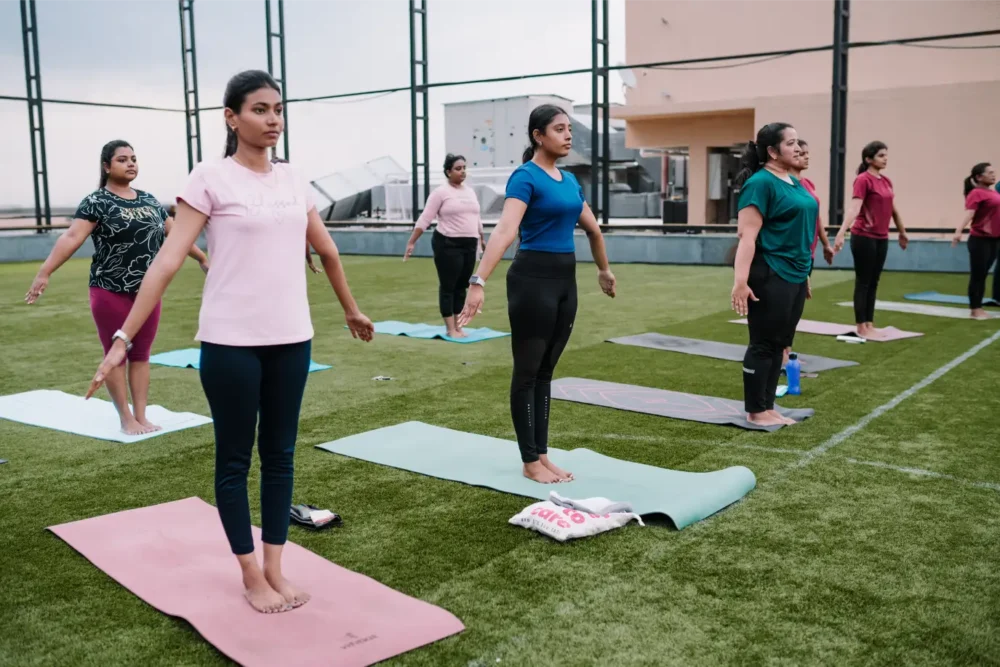
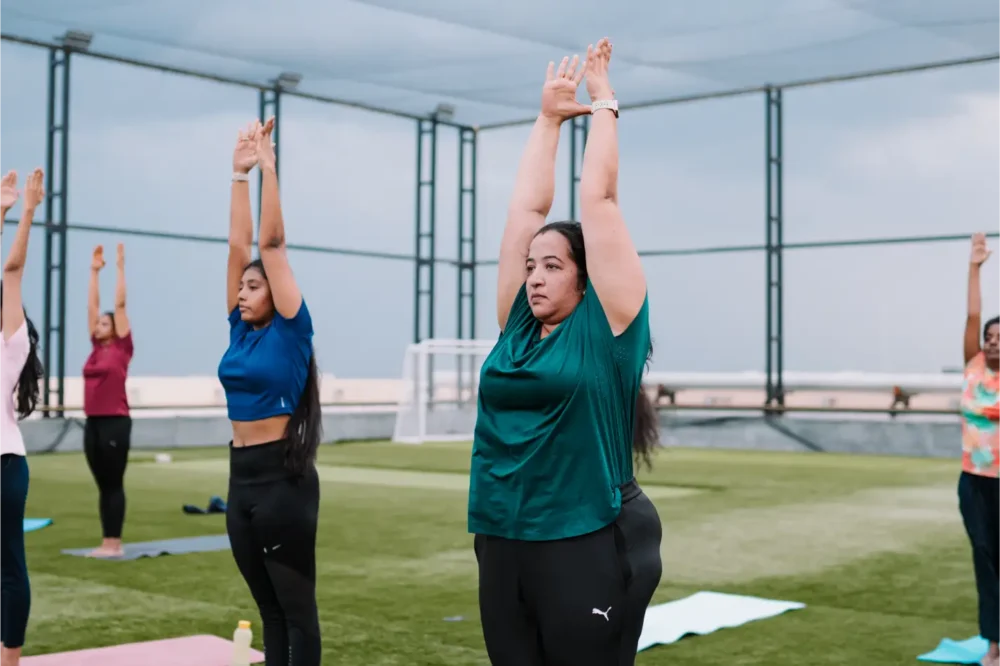
Outdoor yoga leverages the concept of Biophilia—our innate human tendency to seek connections with nature. When you practice on sand or grass, your body is forced to engage more stabilizers, increasing the physical challenge.
Pros & Cons
- Pros: Improved mood through natural sunlight, increased lung capacity, and a heightened sense of calm.
- Cons: Unpredictable insects, uneven surfaces that can challenge balance, and vulnerability to noise pollution.
Best Fit
This is ideal for intermediate practitioners who want to deepen their Pranayama (breathwork) or for those seeking stress relief after a long week of office work. It turns yoga into a sensory experience.
The Indoor Experience: Sanctuary and Precision
Indoor yoga provides a “contained” energy. By removing external variables like wind or passing traffic, you can direct your entire focus inward, which is essential for learning proper alignment.
Pros & Cons
- Pros: Climate control (essential for Chennai’s summers), consistent floor surface, and the ability to control lighting/sound.
- Cons: Can feel disconnected from the natural world; limited airflow unless the studio is well-ventilated.
Best Fit
This is the gold standard for beginners learning the basics and for advanced students working on technical arm balances or restorative flows that require total relaxation.
Real-World Scenarios
Scenario 1: The Corporate Burnout Recovery
An IT professional in OMR feels drained after sitting in an AC office for 10 hours. They choose outdoor morning yoga by the ECR coast. The exposure to early sunlight resets their circadian rhythm, and the sound of the ocean helps them clear their mental inbox before the workday starts.
Scenario 2: The Alignment Seeker
A student in Anna Nagar wants to master Sirsasana (headstand). They choose an indoor studio because the grip of the mat on the studio floor and the presence of a teacher to spot them provide the safety net required to build confidence and strength.
Cost vs. Value Considerations
Outdoor sessions are often community-led or lower cost, emphasizing collective energy. However, they may require you to invest in a heavy-duty mat that can withstand grit.
Indoor studios involve higher costs due to rent and electricity, but the “value” is in the curated environment. You are paying for a professional space where you can let go of the need to manage your surroundings.
Common Evaluation Mistakes
- Underestimating the Environment: Assuming outdoor yoga is easy because it’s “nature” can lead to injury. Always check your footing.
- Overestimating Consistency: Don’t commit to a year of outdoor practice without a “Plan B” studio membership, especially during the monsoon season.
- Ignoring Your Vibe: Sometimes you need the solitude of a studio, and sometimes you need the communal buzz of a beach class. Stay flexible with your needs.
FAQs
1. Is outdoor yoga harder than indoor yoga?
Yes, it can be. Uneven ground requires more core stability and focus, which naturally increases the intensity of the poses.
2. How do I protect my mat outdoors?
Use a dedicated outdoor mat or a towel topper. Never bring your high-end studio mat onto a beach, as the sand can be abrasive.
3. Is indoor yoga better for beginners?
Generally, yes. It offers fewer distractions and allows you to hear the instructor’s cues clearly while focusing on form.
4. What should I wear for outdoor yoga in Chennai?
Breathable, moisture-wicking fabrics are essential. Also, don’t forget an eco-friendly sunscreen and perhaps a natural insect repellent.
5. Can I practice indoor yoga without AC?
Absolutely. Many traditional studios in Chennai use high ceilings and cross-ventilation to keep the space cool without relying on AC.
6. Does outdoor yoga help with Vitamin D deficiency?
Yes, if done in the early morning sunlight, it can help boost your levels safely. Just be mindful of the UV index.
Summary and Next Steps
There is no “winner” in the outdoor vs. indoor debate. Your practice is a living, breathing thing that changes from day to day.
If you feel stagnant, try taking your mat outside. If you feel distracted and unaligned, return to the studio. Your next step: Look for a studio in your neighborhood that offers a trial week and try to book one outdoor beach class. Experience the contrast for yourself, and honor whichever environment brings you closer to your center.




Leave a Comment