
Table of Contents
Gestational Diabetes Care in Vizag | Advanced Prenatal Care
Managing blood sugar levels during pregnancy is essential for ensuring a safe delivery and a healthy baby. Gestational Diabetes Care in Vizag combines advanced endocrinology, maternal-fetal medicine, continuous glucose monitoring, and tailored medical nutrition therapy to protect both mother and child from potential hyperglycemia-related complications.
Gestational Diabetes Mellitus (GDM) is a temporary form of diabetes that develops during pregnancy, typically between the 24th and 28th weeks. With early screening, precise glycemic control, structured physical activity, and coordinated specialist care, expecting mothers in Visakhapatnam can navigate GDM safely and achieve excellent maternal and neonatal outcomes.

Understanding Gestational Diabetes Mellitus (GDM)
Gestational Diabetes occurs when pregnancy hormones—such as human placental lactogen (hPL), cortisol, and progesterone—produced by the placenta interfere with the action of maternal insulin. This creates a state of insulin resistance. While most expectant mothers produce additional insulin to compensate, those with GDM cannot synthesize enough, leading to elevated blood glucose levels.
[Placental Hormones (hPL, Cortisol)] ──► Increases Maternal Insulin Resistance
                                                    │
                                                    ▼
[Inadequate Maternal Insulin Response] ──► Elevated Blood Glucose (Hyperglycemia)
                                                    │
                                                    ▼
[Glucose Crosses Placenta to Fetus] ──► Risk of Fetal Macrosomia & Complications
Risk Factors for Developing GDM
- Pre-pregnancy overweight or obesity (BMI $\ge 25\text{ kg/m}^2$)
- Family history of Type 2 Diabetes Mellitus
- Previous history of Gestational Diabetes or giving birth to a baby weighing over 4 kg
- Maternal age over 30 years
- Polycystic Ovary Syndrome (PCOS) or metabolic syndrome history
Screening & Diagnostic Criteria for GDM
In India, screening for GDM follows the single-step test recommended by the Diabetes in Pregnancy Study Group in India (DPSI), alongside standard international criteria (IADPSG / WHO guidelines).
| Diagnostic Standard | Screening Test Method | Fasting Target | 1-Hour Post-Load Target | 2-Hour Post-Load Target |
| DIPSI Criteria (Single Step, Non-Fasting/Fasting) | 75g Oral Glucose Load (OGTT) | N/A | N/A | $\ge 140\text{ mg/dL}$ (Diagnostic) |
| IADPSG / WHO Criteria (Fasting 3-Sample OGTT) | 75g Oral Glucose Load (OGTT) | $\ge 92\text{ mg/dL}$ | $\ge 180\text{ mg/dL}$ | $\ge 153\text{ mg/dL}$ |
Testing is typically performed between 24 and 28 weeks of gestation. However, for women with high-risk factors, initial glucose screening is conducted during the first prenatal visit.
Core Pillars of Gestational Diabetes Management
1. Self-Monitoring of Blood Glucose (SMBG) & CGM
Regular blood glucose checking is the cornerstone of effective GDM management. Mothers are advised to test using a home glucometer or wear a Continuous Glucose Monitor (CGM):
- Fasting Blood Glucose: Target $< 95\text{ mg/dL}$
- 1-Hour Postprandial (After Meals): Target $< 140\text{ mg/dL}$
- 2-Hour Postprandial (After Meals): Target $< 120\text{ mg/dL}$
2. Medical Nutrition Therapy (MNT)
A specialized prenatal dietitian crafts a balanced Low Glycemic Index (GI) meal plan. Carbohydrates are distributed across 3 main meals and 3 light snacks to prevent rapid blood sugar spikes while avoiding starvation ketosis.
3. Pharmacotherapy (Insulin & Oral Hypoglycemic Agents)
When medical nutrition therapy and light exercise fail to maintain target glucose levels within 1 to 2 weeks, medical therapy is initiated:
- Insulin Therapy: The gold standard for GDM care. Multiple daily injections (basal-bolus regimens) or single nightly doses are prescribed to mimic physiological insulin release safely without crossing the placenta.
- Metformin: Considered in select clinical scenarios under strict endocrinological supervision.
4. Fetal Surveillance & Growth Scans
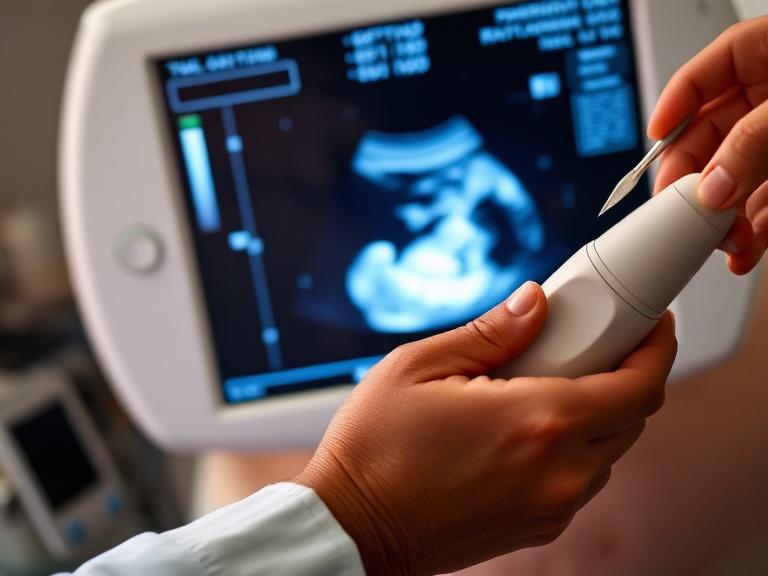
Babies of mothers with GDM require close ultrasonic monitoring to track growth velocity, abdominal circumference (AC), amniotic fluid levels (checking for polyhydramnios), and umbilical artery Doppler flows.
Patient Journey in Gestational Diabetes Care
1.Screening & Diagnosis:Weeks 24-28 (or Early Visit).
Undergo the 75g Oral Glucose Tolerance Test (OGTT). If diagnostic thresholds are exceeded, an immediate referral to an endocrinologist and specialized prenatal dietitian is arranged.
2.Lifestyle Modification & Daily Logging:First 1-2 Weeks Post-Diagnosis.
Adopt a personalized Low-GI diet plan, engage in 30 minutes of daily light physical activity (e.g., post-meal walking), and log blood glucose values 4 times daily.
3.Medical Therapy & Fetal Surveillance:Ongoing Care Phase.
If blood sugars remain elevated, insulin therapy is tailored. Bi-weekly or monthly fetal growth scans assess fetal biometry, placenta maturity, and amniotic fluid volume.
4.Delivery Planning & Postpartum OGTT:Peripartum & Postpartum.
Formulate a delivery timing strategy (typically weeks 38-39). Perform a repeat 75g OGTT 6 to 12 weeks postpartum to rule out persistent Type 2 Diabetes.
Accessing GDM Healthcare Centers in Vizag
Visakhapatnam offers a well-established network of specialized maternity hospitals, endocrinology clinics, and maternal-fetal medical centers across key zones:
- Health City, Arilova: Premier multi-specialty medical centers featuring integrated endocrinology departments, neonatal intensive care units (NICU), and maternal-fetal medicine specialists equipped for high-risk delivery care.
- Maharanipeta & KGH Road Hub: High-density medical cluster offering comprehensive diagnostic labs, expert obstetric care, and specialized diabetic prenatal clinics.
- Dwaraka Nagar & CBM Compound: Easily accessible outpatient diabetes clinics, diagnostic laboratories, and independent fetal imaging centers.
- MVP Colony & Gajuwaka: Local community maternity hospitals providing personalized prenatal care, routine glucose monitoring, and clinical dietary counseling.
Frequently Asked Questions (FAQs)
1. What is Gestational Diabetes Mellitus (GDM), and how does it differ from regular diabetes?
Gestational Diabetes is a form of high blood sugar that develops specifically during pregnancy in women who were not previously diagnosed with diabetes. Unlike Type 1 or Type 2 diabetes, GDM usually resolves after the baby is delivered, though it requires active management during pregnancy.
2. What are the target blood sugar levels for a pregnant woman with GDM?
Standard clinical targets for blood sugar management during pregnancy are:
- Fasting: Below $95\text{ mg/dL}$
- 1-Hour Post-Meal: Below $140\text{ mg/dL}$
- 2-Hour Post-Meal: Below $120\text{ mg/dL}$
3. Will having Gestational Diabetes harm my baby?
If properly managed and kept within target ranges, GDM does not prevent a healthy pregnancy and delivery. However, unmanaged high blood sugar can lead to complications such as excessive birth weight (macrosomia), premature delivery, low infant blood sugar at birth (hypoglycemia), and an increased likelihood of C-section delivery.
4. How is Gestational Diabetes diagnosed in Vizag clinics?
In Vizag, GDM is primarily diagnosed using the DIPSI or IADPSG 75g Oral Glucose Tolerance Test (OGTT). You will drink a solution containing 75 grams of anhydrous glucose, and your blood sugar levels will be measured after 1 and/or 2 hours to evaluate how efficiently your body processes sugar.
5. Can Gestational Diabetes be controlled without taking medicine or insulin?
Yes. A significant proportion of women with GDM manage their blood sugar successfully through Medical Nutrition Therapy (MNT)—a balanced low-glycemic diet—and regular moderate physical activity, such as 15–20 minutes of walking after meals.
6. Is insulin safe to take during pregnancy?
Yes, insulin is completely safe during pregnancy and remains the gold standard treatment for GDM. Insulin molecules do not cross the placenta, meaning they lower maternal blood sugar without harming or affecting the fetus.
7. Does Gestational Diabetes mean I must have a C-section delivery?
Not necessarily. Having GDM is not an automatic indication for a Cesarean section. If your blood sugar levels are well-controlled and the estimated fetal weight remains within a normal range, a vaginal delivery is fully achievable.
8. What causes Gestational Diabetes?
GDM is caused by pregnancy hormones released by the placenta (such as placental lactogen, estrogen, and cortisol) that make maternal cells more resistant to insulin. When the pancreas cannot produce enough additional insulin to overcome this resistance, blood sugar levels rise.
9. What foods should I eat and avoid if I have GDM?
- Foods to Eat: Complex carbohydrates (brown rice, ragi, oats, whole grains), lean proteins (lentils, paneer, eggs, chicken), fiber-rich green vegetables, and healthy fats (nuts, seeds).
- Foods to Avoid: Refined sugar, sweets, white bread, fruit juices, carbonated soft drinks, processed snacks, and high-GI simple carbohydrates.
10. How often do I need to test my blood sugar at home?
Typically, women with GDM test their blood sugar 4 times a day: once in the morning before eating (fasting) and 1 or 2 hours after breakfast, lunch, and dinner. Your care team will advise on the precise testing schedule.
11. What is Fetal Macrosomia, and why is it a risk in GDM?
Fetal macrosomia refers to a baby growing larger than normal (estimated fetal weight over 4 kg). When maternal blood glucose levels remain high, excess glucose crosses the placenta into fetal circulation. The baby’s pancreas responds by producing extra insulin, which stores the excess sugar as fat, leading to accelerated growth.
12. Does Gestational Diabetes go away after delivery?
In the vast majority of cases, GDM resolves shortly after the placenta is delivered and hormone levels return to baseline. However, women who had GDM have a higher long-term risk of developing Type 2 diabetes later in life and should undergo postpartum testing.
13. When should I get tested for diabetes after giving birth?
You should undergo a 75g Oral Glucose Tolerance Test (OGTT) 6 to 12 weeks postpartum to verify that blood sugar levels have normalized and to screen for persistent prediabetes or Type 2 diabetes.
14. What are the symptoms of Gestational Diabetes?
GDM often presents with no noticeable symptoms, which is why universal glucose screening between weeks 24 and 28 is critical. When symptoms do occur, they may include excessive thirst, frequent urination, unusual fatigue, or recurrent urinary tract infections.
15. How much does comprehensive Gestational Diabetes Care cost in Vizag?
Costs vary based on the level of care required:
- OGTT Glucose Screening Test: ₹300 – ₹800
- Endocrinologist / Diabetologist Consultation: ₹600 – ₹1,200 per visit
- Specialized Prenatal Dietitian Consultation: ₹500 – ₹1,500
- Comprehensive Monthly GDM Care Package: ₹3,000 – ₹7,500 (including consultations, diet plans, and ultrasound growth monitoring)


Leave a Reply