
Table of Contents
Electric Vehicle Charging Solutions: Complete Infrastructure & Software Guide
The global transition to sustainable transportation relies on robust, scalable electric vehicle charging solutions. Modern EV charging infrastructure extends beyond standalone wall boxes or roadside dispensers; it is a interconnected ecosystem comprising power electronics, embedded firmware, cloud-based Charge Point Operator (CPO) software, transmission grid balancing, and payment clearing networks.
Understanding this ecosystem requires categorizing hardware capabilities by power output, operational scope, and electrical current delivery.
Alternating Current (AC) Charging Frameworks
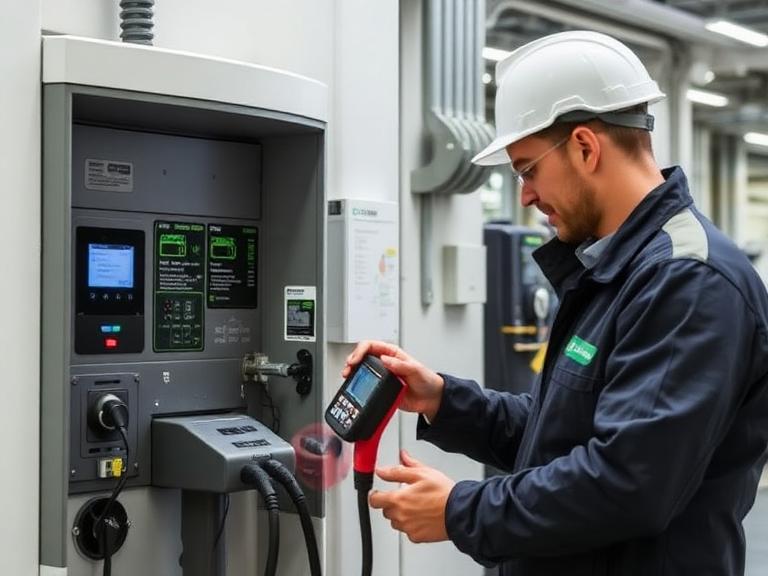
AC charging solutions utilize the vehicle’s internal On-Board Charger (OBC) to convert grid AC power into Direct Current (DC) for battery storage. Because the conversion occurs inside the vehicle, AC installations are cost-effective, compact, and ideal for long-dwell parking environments.
- Level 1 (1.2 kW to 1.9 kW AC): Plugs directly into standard single-phase household outlets (120V in North America, 230V in Europe/Asia). Delivering 3 to 5 miles of range per hour, Level 1 serves as an emergency or low-mileage residential backup option.
- Level 2 (3.7 kW to 22 kW AC): Operating across single-phase (208V–240V) or three-phase (400V) electrical connections, Level 2 is the primary residential, workplace, and commercial AC solution. Delivering between 12 and 80 miles of range per hour, Level 2 systems require dedicated circuit protection, Smart Grid communication protocols, and dynamic load-management capability.
Direct Current (DC) Fast Charging Frameworks
DC Fast Chargers bypass the vehicle’s internal OBC, injecting high-voltage direct current straight into the traction battery pack. This approach requires larger power cabinets, active liquid cooling, high-capacity grid drops, and safety interlocks.
- 50 kW to 150 kW DC Chargers: Designed for urban commercial plazas, retail destinations, and light-commercial fleet yards. A 100 kW DC fast charger can replenish an average passenger vehicle battery from 20% to 80% state-of-charge (SoC) in approximately 25 to 35 minutes.
- 150 kW to 400 kW Ultra-Fast Chargers: Deployed along high-speed transit corridors and heavy highway hubs. Utilizing 800V-to-1000V architecture and liquid-cooled cables, these systems deliver over 180 miles of range in 10 to 15 minutes.
- Megawatt Charging Systems (MCS – Up to 3.75 MW): Designed specifically for heavy-duty class 8 commercial vehicles, maritime transport, and electric aviation. MCS operates at up to 1,250 volts and 3,000 amperes, requiring automated robotic connection arms and site-level battery energy storage integration.
2. Hardware Architecture & Hardware-Software Interoperability
Building resilient electric vehicle charging solutions requires seamless interoperability between physical charging hardware and backend management platforms.
+-------------------+       OCPP 2.0.1       +--------------------+
|  EV Charging      |<---------------------->|  CPO Management    |
|  Hardware Hub     |  (ISO 15118 / Plug&Charge)|  Software Platform|
+-------------------+                        +--------------------+
         │                                              │
         │ Modbus / CAN Bus                             │ OCPI 2.2.1
         ▼                                              ▼
+-------------------+                        +--------------------+
| On-Site Battery & |                        | Roaming Partners & |
| Solar Management  |                        | Billing Gateways   |
+-------------------+                        +--------------------+
Essential Hardware Components
- Power Electronics Modules: Switch-mode rectifiers converting AC grid power into high-efficiency DC voltage with efficiency ratings above 965%.
- Liquid-Cooled Cable Assemblies: High-power DC charging (above 200A) generates thermal energy. Integrated synthetic oil or glycol-water cooling loops keep cable diameters manageable while preventing thermal throttling.
- Microcontrollers & Human-Machine Interfaces (HMI): Industrial-grade processors running embedded Linux operate the touchscreen displays, credit card terminals (PCI-DSS compliant), RFID readers, and internal metering hardware.
- Revenue-Grade Energy Meters: MID-certified (Europe) or NTEP-certified (USA) sub-meters ensuring legal-for-trade billing accuracy down to fractional kilowatt-hours.
Open Protocol Frameworks & Communication Standards
Proprietary closed networks increase long-term technical risk and vendor lock-in. Modern deployments utilize standardized, open communication protocols:
                  +-----------------------------------+
                  |      ISO 15118 / IEC 61851        |
                  |  (EV to Charging Station Comm.)   |
                  +-----------------------------------+
                                    │
                                    ▼
                  +-----------------------------------+
                  |            OCPP 2.0.1             |
                  |  (Charger to CPO Backend Software)|
                  +-----------------------------------+
                                    │
                                    ▼
                  +-----------------------------------+
                  |            OCPI 2.2.1             |
                  |  (CPO to CPO Roaming / Aggregator)|
                  +-----------------------------------+
- OCPP (Open Charge Point Protocol – 1.6J & 2.0.1): The universal application protocol between charging hardware and backend central systems. OCPP 2.0.1 enables advanced device management, ISO 15118 Plug & Charge support, enhanced security certificates, and smart charging control.
- OCPI (Open Charge Point Interface – 2.2.1): Facilitates peer-to-peer roaming connections between different Charge Point Operators and Mobility Service Providers (MSPs). OCPI enables drivers to charge on external networks using a single subscription or app.
- ISO 15118 (Plug & Charge): Defines the digital communication interface between the electric vehicle and the charger. ISO 15118 supports automated cryptographic handshake authentication, enabling charging and billing to initiate automatically upon plugging in, without requiring cards or apps.
3. Sector-Specific EV Charging Implementations
Different commercial and industrial contexts require tailored hardware, software, and deployment architectures.
| Market Sector | Primary Charger Types | Key Technical Requirements | Strategic Focus |
| Commercial Fleets | 50 kW–350 kW DC Depot Chargers | Telematics integration, route-based charging, automated prioritization | Maximizing vehicle uptime, minimizing peak demand charges |
| Multi-Unit Dwellings | 7 kW–22 kW Level 2 AC | Dynamic Load Balancing (DLB), localized billing allocation | Preventing panel overloads, shared-cost accounting |
| Public & Highway Hubs | 150 kW–400 kW DC Ultra-Fast | Integrated payment readers, liquid cooling, high visibility | High throughput, turn-rate velocity, network uptime |
| Workplace & Corporate | 11 kW–22 kW Level 2 AC | Corporate SSO login, scheduled access, green energy matching | Employee perk, ESG compliance goals |
Commercial Fleet Electrification
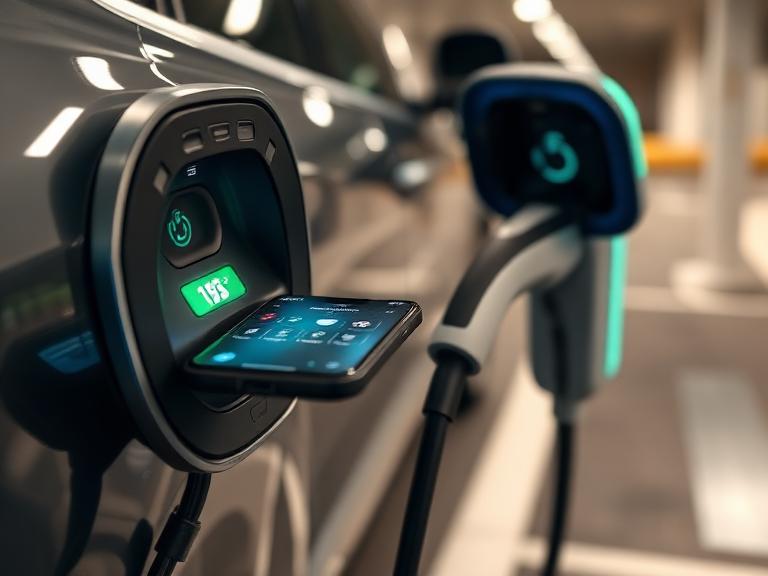
Commercial fleets require high operational uptime. Charging software must connect via APIs with Fleet Management Systems (FMS) to synchronize route schedules, battery degradation states, and time-of-use energy tariffs. Fleet depots utilize sequential charging profiles, directing maximum available kilowatts to vehicles departing on early shifts while maintaining trickle charges on lower-priority vehicles.
Multi-Unit Dwellings (MUDs) & Residential Complexes
Installing chargers in multi-tenant buildings often faces electrical panel capacity limits. Retrofitting transformer infrastructure can be cost-prohibitive. Dynamic Load Management (DLM) panels actively monitor real-time building energy consumption, diverting surplus electrical capacity to charging stations during off-peak hours and throttling charging speed during peak domestic usage.
Public Retail & Highway Express Corridors
Public charging hubs prioritize site throughput and reliable uptime. Operating sites require redundancy, modular power cabinets (where power module failures trigger automatic failover to adjacent modules), integrated battery buffers, and clear driver HMIs.
4. Software Platforms: Operating Systems for Charging Networks
The central software layer of an electric vehicle charging network manages billing, operational monitoring, energy optimization, and driver experience.
+-----------------------------------------------------------------------+
|                       CPO BACKEND MANAGEMENT SYSTEM                   |
+-----------------------------------------------------------------------+
|  1. Asset Management   | Remote Diagnostics, Firmware Over-the-Air    |
|  2. Energy Engine      | Dynamic Load Balancing, Vehicle-to-Grid (V2G) |
|  3. Monetization Core  | Multi-Currency Billing, Dynamic Tariffs        |
|  4. Driver Interface   | iOS/Android Apps, Roaming Integration         |
+-----------------------------------------------------------------------+
Real-Time Monitoring & Predictive Maintenance
Modern Charge Point Operator (CPO) software platforms monitor device health via heartbeat telemetry. Advanced platforms use machine learning models on telemetry metrics (such as internal temperatures, insulation resistance values, voltage fluctuations, and contactor wear) to detect hardware anomalies before failure. Automatic self-healing scripts reset charging controllers remotely, reducing unnecessary field repair dispatch costs.
Dynamic Energy Management & Smart Charging
Unmanaged EV charging can generate significant demand spikes, leading to high utility capacity fees. Smart Charging engines resolve this through automated dynamic adjustments:
                            [ Smart Charging Engine ]
                                        │
        ┌───────────────────────────────┼───────────────────────────────┐
        ▼                               ▼                               ▼
[ Peak Shaving ]               [ Time-of-Use (ToU) ]            [ Green Power Sync ]
Throttles output during        Shifts charging loads to         Aligns energy draw with
peak building energy draw.     cheaper, off-peak hours.         local solar/wind output.
- Peak Shaving: Automatically limits total site power draw below strict utility threshold limits.
- Time-of-Use (ToU) Optimization: Shifts heavy charging sessions to low-cost overnight energy tariff windows.
- Renewable Energy Integration: Aligns fleet charging rates in real time with local solar photovoltaic (PV) generation curves.
Vehicle-to-Grid (V2G) and Vehicle-to-Building (V2B) Integration
Bi-directional charging technology transforms electric vehicles from energy consumers into flexible grid resources. Utilizing ISO 15118-20 standards, bi-directional DC chargers allow utility operators and fleet managers to extract energy stored in vehicle batteries during severe grid strain, generating revenue through grid ancillary services while reducing facility peak demand fees.
5. Site Planning, Grid Integration & Financial ROI Modeling
Deploying commercial electric vehicle charging infrastructure requires systematic planning across site assessment, grid interconnection, hardware installation, and long-term financial modeling.
1.Feasibility & Grid Capacity Analysis:Weeks 1–4.
Conduct on-site engineering surveys to assess existing panel headroom, transformer capacity, and distance to primary electrical service. Request utility load capacity studies for high-power DC fast charging sites.
2.Permitting, Design & Structural Engineering:Weeks 5–10.
Develop precise single-line diagrams (SLDs), civil foundation engineering plans, and accessibility layouts (such as ADA or local disability access compliance). Submit documentation to local authorities for municipal permitting.
3.Hardware Procurement & Civil Infrastructure:Weeks 11–16.
Execute trenching, conduit placement, pad pouring, and utility transformer upgrades. Procure OCPP-compliant chargers, switchgear, liquid-cooled cabling, and optional Battery Energy Storage Systems (BESS).
4.Commissioning, Integration & Network Go-Live:Weeks 17–20.
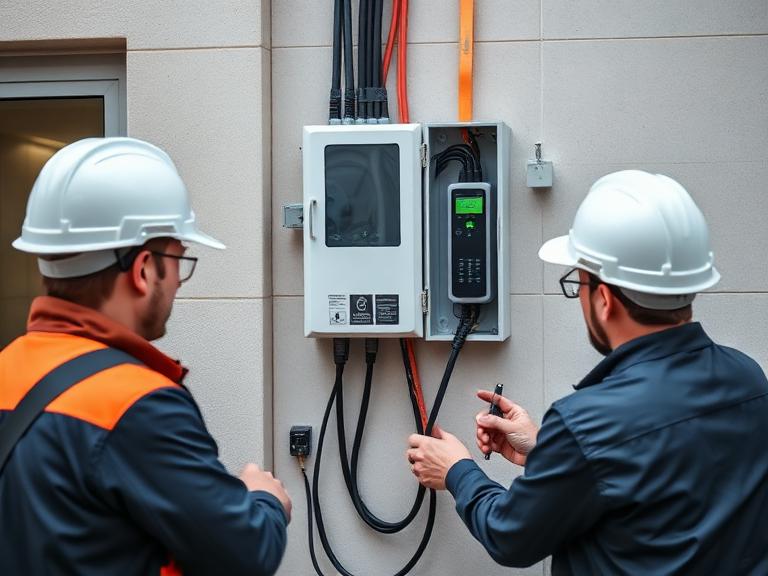
Mount charging hardware, pull sub-feed conductors, establish cellular/ethernet network communication, verify OCPP backend connections, and perform load-bank testing prior to public launch.
Economic Financial Modeling & ROI Drivers
Commercial EV charging deployment economics depend on balanced capital expenditures (CapEx) and operating expenses (OpEx) offset by multiple revenue streams.
                          [ Total Cost of Ownership (TCO) ]
                                          │
        ┌─────────────────────────────────┴─────────────────────────────────┐
        ▼                                                                   ▼
 [ Capital Expenditures (CapEx) ]                                   [ Operating Expenses (OpEx) ]
  • Charger Hardware Procurement                                     • Software CPO Subscriptions
  • Civil Trenching & Electrical Wiring                              • Cellular Data Connectivity
  • Utility Transformer Upgrades                                     • Scheduled Preventative Maintenance
  • Permitting & Engineering Fees                                    • Utility Demand Charges
Revenue Generation Models
- Direct Energy Margin: Charging per kilowatt-hour ($\text{kWh}$) supplied, incorporating a markup over wholesale utility costs.
- Time-Based & Idle Fees: Charging per-minute parking fees while active, alongside penalizing idle fees once charging reaches 100% SoC to encourage station turnover.
- Media & Digital Advertising: Integrating digital signage screens into public-facing DC fast charging pedestals to generate programmatic ad revenue.
- Carbon Credit Monetization: Trading Low Carbon Fuel Standard (LCFS) or carbon offset credits based on clean energy delivered to electric transport fleets.
7. Comprehensive Industry FAQs
Q1: What is the primary operational distinction between Level 2 AC and DC Fast Charging solutions?
Level 2 AC charging delivers alternating current directly to the electric vehicle’s onboard converter, which transforms AC electricity into direct current (DC) to replenish the battery cell chemistry. Level 2 solutions generally operate between 3.7 kW and 22 kW, making them suitable for overnight residential parking, long-dwell corporate employee lots, and hotel facilities.
Conversely, DC Fast Charging solutions house rectifiers within the station cabinet itself. By delivering direct current directly to the vehicle’s traction battery at power levels ranging from 50 kW to over 400 kW, DC fast chargers bypass onboard conversion limitations, making them essential for high-throughput commercial fleet depots, logistics yards, and highway service stations.
Q2: Why is the OCPP protocol vital when choosing commercial charging software?
The Open Charge Point Protocol (OCPP) serves as the open communication link between physical charging station hardware and central cloud-based management systems (CPMS). Adopting open standards like OCPP 1.6J or OCPP 2.0.1 prevents vendor lock-in. If a hardware vendor ceases operations, shifts pricing structures, or stops providing firmware updates, an operator can migrate their existing hardware to a different OCPP-compliant management platform without incurring hardware replacement expenses.
Q3: How does ISO 15118 Plug & Charge technology function?
ISO 15118 is an international standard governing digital communications between electric vehicles and charging hardware. Its Plug & Charge functionality uses public key cryptography (PKI) to establish automated, secure handshakes between the vehicle and the charging station upon physical cable connection.
The charger automatically reads the vehicle’s encrypted digital certificate, authenticates account details, initiates the charging session, and bills the driver’s registered account—eliminating the need for secondary RFID cards, smartphone apps, or manual credit card terminals.
Q4: How does dynamic load management (DLM) prevent electrical infrastructure overload?
Dynamic Load Management software uses site-level energy meters to continually monitor total building power consumption. When primary electrical loads spike—such as HVAC units turning on during warm weather—the DLM software automatically throttles charger output to keep total building demand within safe electrical panel limits.
When facility power consumption drops off-peak, the system automatically restores full charging power to connected vehicles. This eliminates the need for capital-intensive utility transformer upgrades while protecting sites from expensive demand charge penalties.
Q5: What are utility demand charges, and how do smart charging solutions mitigate them?
Utility demand charges are additional fee structures applied to commercial electricity accounts based on the highest peak threshold of electric power drawn within a single billing interval (typically 15 minutes). Simultaneous high-power DC fast charging can trigger substantial demand charges that exceed the cost of the actual energy consumed.
Smart charging platforms mitigate these charges using automated peak shaving algorithms, staggered vehicle charging queues, scheduled time-of-use (ToU) delivery, and localized Battery Energy Storage System (BESS) discharges during peak demand periods.
Q6: What electrical infrastructure upgrades are required for DC Fast Charger installations?
Deploying high-power DC Fast Chargers generally requires dedicated medium-voltage utility service connections, step-down transformers, switchgear assemblies, structural trenching, heavy-gauge copper wiring, and integrated safety shutoff controls.
Facilities must coordinate closely with regional utilities during the early planning stages to confirm localized grid capacity, evaluate local feeder circuit margins, and determine whether site upgrades or localized energy storage systems are needed.
Q7: What is the operational lifespan of commercial EV charging hardware?
Commercial-grade EV chargers typically offer an operational life cycle of 7 to 10 years, provided they receive regular scheduled preventative maintenance. Component longevity depends on environmental conditions, system utilization rates, and active cooling system upkeep.
Purchasing hardware with modular component architectures—where modular power units, screen modules, and cable assemblies can be swapped independently—helps maximize system longevity and simplifies ongoing maintenance.
Q8: What features should site hosts look for in CPO management software?
Key features for enterprise CPO management software platforms include:
- Full compliance with OCPP 1.6J and 2.0.1 protocols
- Automated fault monitoring and remote diagnostic tools
- Dynamic tariff configuration (time-of-use, session fees, idle penalties)
- Integrated payment processing gateways with PCI-DSS compliance
- Custom API access for Fleet Management System (FMS) integration
- Native ISO 15118 Plug & Charge support
- Multi-tenant access control and white-label branding options
Q9: How can commercial fleet operators minimize overall charging downtime?
Maximizing fleet reliability requires combining modular hardware design, high-uptime service level agreements (SLAs), and predictive maintenance software. CPO management platforms track real-time telemetry—including operational temperatures, insulation resistance values, and voltage variations—to spot potential failures before they disrupt operations. Fleet operators should also maintain routine on-site preventative maintenance schedules, inspect cables regularly, and ensure high-priority spare components are stored locally.
Q10: What is Vehicle-to-Grid (V2G) technology, and when will it see widespread deployment?
Vehicle-to-Grid (V2G) technology uses bi-directional power conversion to allow parked electric vehicles to export excess battery energy back into the power grid or connected facilities during peak demand hours. Managed under the ISO 15118-20 protocol standard, V2G helps balance grid demand, offers ancillary support services, and opens new revenue opportunities for commercial fleet operators. Full commercial deployment is accelerating as utilities update inter-connection frameworks and vehicle manufacturers roll out bi-directional warranty support across standard production models.
Q11: How do environmental conditions impact high-power DC fast charging performance?
Extreme cold or heat directly affects battery reception rates and charging hardware performance. Cold weather increases internal battery cell resistance, requiring the vehicle’s thermal management system to warm the battery before it can accept high currents.
High ambient temperatures generate extra heat within power electronics, requiring liquid-cooled charging cables and active cabinet refrigeration to prevent thermal throttling. Modern charging systems use thermal management controls to optimize output across varying environmental conditions.
Q12: How do roaming protocols benefit public EV charging networks?
Roaming protocols (most notably OCPI) allow drivers to use charging stations across different operator networks using a single mobile app, RFID card, or account subscription. For site hosts and network operators, joining roaming aggregators increases charger visibility, drives foot traffic, improves station utilization rates, and expands total network billing volume.
Q13: What measures keep physical payment terminals and user data secure?
Securing payment transactions and driver data across charging networks involves multiple layers of defense:
- PCI-DSS compliant hardware terminals for point-of-sale credit card processing
- End-to-end TLS/SSL encryption across OCPP communications between chargers and cloud backends
- Cryptographic PKI certificate management under ISO 15118 protocols
- Regular Over-The-Air (OTA) firmware security patches
- Physical tamper-detection sensors on terminal enclosures to protect against unauthorized physical access
Q14: What is the function of Battery Energy Storage Systems (BESS) in charging solutions?
Battery Energy Storage Systems (BESS) store low-cost energy from the grid during off-peak hours or from local solar PV panels. When high-power DC fast chargers experience peak vehicle demand, the BESS discharges energy to supplement grid input.
This approach reduces grid power connection requirements, bypasses utility transformer upgrades, minimizes demand charge penalties, and maintains fast charging speeds even on constrained electrical grids.
Q15: How can property owners monetize commercial EV charging installations?
Property owners can monetize charging assets through several flexible business models:
- Direct Energy Markup: Charging drivers a per-kWh rate above local utility supply costs.
- Session & Time-Based Parking Fees: Setting fixed session entry fees alongside per-minute charges during active plug times.
- Idle Penalties: Charging per-minute fees when vehicles stay plugged in after completing a full charge, encouraging turnover.
- Subscription Models: Offering flat-rate monthly charging subscriptions for workplace employees or multi-family residents.
- Programmatic Ad Monetization: Displaying video advertisements on integrated station digital displays.

Leave a Reply