
Table of Contents
DC Fast Charger Repair Hyderabad | Commercial EVSE Engineering Services
As public transit fleets, commercial EV operators, and highway charging corridors expand across Telangana, maintaining maximum uptime for Direct Current Fast Chargers (DCFC) is essential. Delivering direct current at voltages ranging from 200V to 1000V DC and power capacities from 30 kW to 360 kW, a DC fast charging station functions as a high-power grid-tied substation paired with an industrial computing stack.
Unlike low-voltage AC home wallboxes that rely on the vehicle’s onboard converter, a DC fast charger converts grid AC power directly into high-voltage DC using modular power rectifiers. Operating under extreme continuous thermal stress, high-frequency SiC/IGBT switching, and heavy outdoor exposure, these systems face unique failure modes. A breakdown at a public charging hub in HITEC City or along the Outer Ring Road (ORR) halts commercial operations and disrupts EV travel corridors.
This comprehensive technical guide outlines component-level failure modes, field diagnostic frameworks, cooling system overhauls, CCS2/GB/T protocol troubleshooting, and emergency restoration procedures for professional DC fast charger repair Hyderabad services.
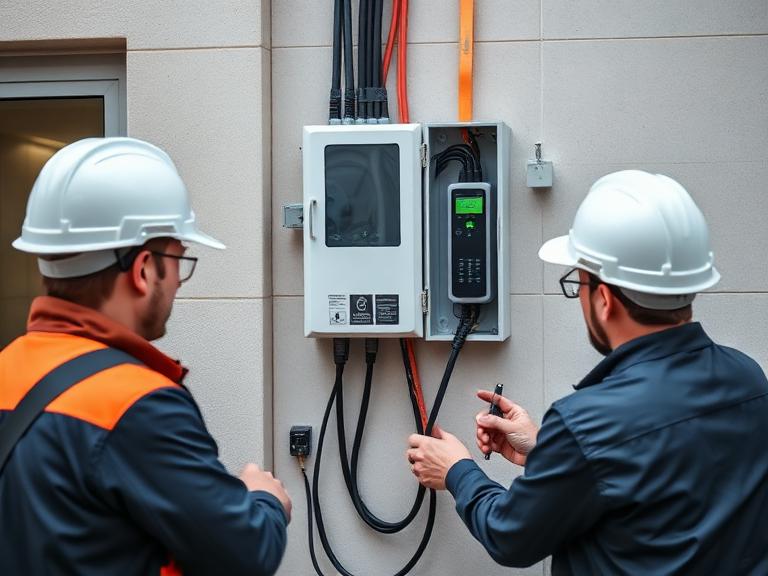
Architectural Breakdown of Commercial DC Fast Chargers
Understanding the functional layout of a commercial DC Fast Charger (DCFC) is essential for effective fault diagnosis and component-level repair.
                               ┌──────────────────────────────────────────────┐
                               │       DC FAST CHARGER TOPOLOGY & FLOW        │
                               └──────────────────────┬───────────────────────┘
                                                      │
         ┌────────────────────────────────────────────┼────────────────────────────────────────────┐
         │                                            │                                            │
┌────────┴───────────┐                       ┌────────┴───────────┐                       ┌────────┴───────────┐
│ 415V 3-Phase AC    │                       │ Power Electronics  │                       │ Output & Vehicle   │
│ Ingress & Safety   │                       │ Conversion Rack    │                       │ Communications     │
└────────┬───────────┘                       └────────┬───────────┘                       └────────┬───────────┘
         │                                            │                                            │
         ├─ Main AC Motorized MCCB / ACB              ├─ Modular AC-DC Rectifiers (SiC/IGBT)       ├─ High-Voltage DC Contactors
         ├─ Type 1+2 Heavy Surge Arrestors            ├─ Inter-Module Parallel Busbars             ├─ Pre-Charge Relay & Resistors
         ├─ Active Power Factor Correction (PFC)      ├─ High-Frequency Isolation Transformers     ├─ Insulation Monitoring Device (IMD)
         └─ 24V Auxiliary Power Supply Unit (PSU)     └─ Forced-Air / Liquid Chiller Loop          └─ SECC Controller & CCS2/GBT Gun
Technical Diagnostic Matrix: Failure Modes and Field Protocols
When a DC fast charger displays alarm flags or halts charging sessions, field engineers run diagnostic routines to pinpoint the faulty subsystem.
| Diagnostic Fault / Alarm Code | Root Cause Mechanics | Affected Components | Engineering Field Repair Protocol |
| Power Module Red Light / Derating | Thermal degradation, MOSFET breakdown, or fan failure | 15 kW / 20 kW / 30 kW Power Rectifier Module | Extract module; inspect cooling fans; replace blown SiC MOSFETs / driver ICs or hot-swap with a calibrated unit. |
| Insulation Alarm / IMD Trigger | DC positive/negative bus isolation to ground $<500\,\Omega/\text{V}$ | CCS2/GB/T cable head, terminal busbar, or DC contactor housing | Megger test ($1000\text{V DC}$) isolated sections; replace moisture-damaged cable heads or degraded insulation barriers. |
| PLC Communication Timeout | HomePlug Green PHY chip lockup or CP line signal distortion | Supply Equipment Communication Controller (SECC) / CP Line | Oscilloscope scan of $1.0\text{ kHz}$ PWM signal; replace SECC communication board or restore shielding ground. |
| DC Contactor Weld Alarm | Contact erosion or arcing during under-load emergency shutdown | Main 250A–600A heavy-duty DC Contactors | Discharge DC bus; remove contactor stack; replace pitted contactor unit and verify arc-suppression diode circuit. |
| Pre-Charge Failure Alarm | Pre-charge voltage fails to reach $\pm 20\text{V}$ of vehicle battery voltage within $2\text{s}$ | Pre-charge power resistor or pre-charge auxiliary relay | Test pre-charge resistor continuity; replace open power ceramic resistors and high-voltage reed relays. |
| Liquid Cooling System Fault | Coolant pressure drop, pump lock, or high fluid temperature | Liquid chiller unit, coolant pump, or heat exchanger | Check coolant level; flush ethylene-glycol loop; replace pressure transducers or circulating pump. |
| OCPP Offline / Network Error | Cellular gateway lockup, antenna fault, or corrupted TLS certificates | 4G/5G Industrial Modem / Main Gateway Logic Controller | Reset gateway firmware; replace external high-gain antenna; re-issue TLS security certificates and re-align APN. |
Deep-Dive Diagnostic & Repair Engineering Protocols
┌────────────────────────────────────────────────────────────────────────────────────────┐
│                        DCFC FIELD SERVICE & REPAIR WORKFLOW                            │
└───────────────────────────┬────────────────────────────────────────────────────────────┘
                                │
  Step 1: Substation LOTO & Discharge ──┼──> Open 415V Breaker & Verify Bus Voltage <10V DC
                                │
  Step 2: Component Diagnostic Scans ───┼──> Scan Module Status via CAN Bus Diagnostic Tool
                                │
  Step 3: Component Repair / Swapping ──┼──> Hot-Swap Rectifiers or Re-Terminated Cable Heads
                                │
  Step 4: Calibration & Load Testing ───┼──> Run Variable DC Load Bank Test up to Max Amperage
Protocol 1: Power Converter Module Repair and Load Balancing
High-power DC rectifiers convert 415V 3-phase AC into variable 200V–1000V DC power using Silicon Carbide (SiC) MOSFETs or IGBTs operating at high switching frequencies ($>20\text{ kHz}$).
                                  ┌──────────────────────────────────────────┐
                                  │   POWER MODULE DIAGNOSTIC FLOWCHART      │
                                  └────────────────────┬─────────────────────┘
                                                       │
                                        Scan Sub-Rack Status via CAN Bus
                                                       │
                           ┌───────────────────────────┴───────────────────────────┐
                           │                                                       │
               If Individual Module Alarm                             If Entire Rack Offline
                           │                                                       │
              ┌────────────┴────────────┐                             ┌────────────┴────────────┐
              │ Converter Module Fault  │                             │ System Control Fault    │
              └────────────┬────────────┘                             └────────────┬────────────┘
                           │                                                       │
     • Isolate individual unit from DC busbar                    • Test 24V DC Auxiliary Power Supply Unit
     • Inspect internal cooling fan rotation                     • Check main CAN bus termination resistors
     • Swap blown SiC MOSFETs and gate drivers                   • Verify AC input contactor coil voltage
- Isolation & Removal: Isolate the faulting module using software commands or the physical sub-rack breaker. Discharge internal DC bus capacitors down to safe limits ($<10\text{V DC}$) before extraction.
- Component Repair: Open the module casing in an ESD-safe workspace. Test input bridge rectifiers, SiC MOSFET gate drive circuits, and output diodes. Replace shorted switching components, repair burnt PCB traces, and swap degraded cooling fans.
- Current-Sharing Calibration: Re-insert the module into the charger rack. Using a CAN bus diagnostic tool, calibrate current-sharing settings across all active modules to ensure equal power distribution during high-current sessions.
Protocol 2: CCS2 & GB/T Heavy-Duty Cable & Gun Reconstruction
Public fast charger cables suffer severe physical wear from dropped connector heads, vehicle run-overs, and pin degradation caused by repeated high-current arcing.
┌────────────────────────────────────────────────────────────────────────────────────────┐
│                        HEAVY-DUTY CCS2 CONNECTOR ARCHITECTURE                          │
└───────────────────────────┬────────────────────────────────────────────────────────────┘
                                │
  DC+ / DC- Power Contacts ─────┼──> Handles up to 250A Continuous (500A Liquid-Cooled)
                                │
  Control Pilot (CP) Pin ───────┼──> High-Speed PLC Communication (HomePlug Green PHY)
                                │
  Proximity Pilot (PP) Pin ─────┼──> Signals Connector Engagement & Latch State
                                │
  Temperature Sensors (PT100) ──┼──> Monitors Real-Time Pin Thermal Profile (Max 90°C)
- Terminal Pin Refurbishment: Inspect silver-plated solid copper DC contacts for pitting, arc burns, or oxidation. High pin resistance under a 200A load creates extreme localized heat:$$P_{loss} = I^2 \times R_{pin}$$$$P_{loss} = (200)^2 \times 0.005 = 200\text{ Watts}$$Excessive thermal accumulation triggers the PT100 temperature sensor inside the gun handle, causing premature session termination. Cut back damaged wire leads, hydraulic-crimp new silver-plated pins, and replace thermal interface compound around PT100 sensors.
- Liquid-Cooling Loop Servicing (Ultra-Fast Chargers >150 kW): For 250kW+ chargers, inspect the internal coolant lines. Test the coolant pump for adequate flow rates ($>3.5\text{ L/min}$), flush degraded coolant, eliminate air locks in the loop, and pressure-test heat exchanger fittings at 3.0 bar to prevent leaks into electrical bays.
Local Grid Challenges in Telangana and Protective Solutions
DC fast chargers installed near industrial areas or along major travel corridors in Telangana encounter severe power quality issues from the grid.
┌────────────────────────────────────────────────────────────────────────────────────────┐
│                        GRID ANOMALIES & DCFC PROTECTION                                │
└───────────────────────────┬────────────────────────────────────────────────────────────┘
                                │
  Voltage Harmonics (THD > 8%) ─┼──> Causes Overheating in Power Factor Correction (PFC) Stage
                                │
  Transient Voltage Spikes ─────┼──> Blows Class 1 High-Energy Heavy Industrial Surge Arrestors
                                │
  Phase Unbalance (>2%) ────────┼──> Triggers Automatic Rectifier Trip & Asymmetric Heating
- High Total Harmonic Distortion (THD): Industrial areas like Patancheru and Uppal often exhibit high harmonic distortion on the grid. Voltage harmonics cause elevated heat buildup within the active Power Factor Correction (PFC) circuitry of DC rectifiers. Installing active harmonic filters (AHF) at the sub-station level mitigates these thermal loads.
- Grid Transients & Lightning Surges Along Highway Corridors: Fast chargers along the Outer Ring Road (ORR) and national highways are susceptible to direct and indirect lightning surges. Field technicians inspect Class 1 and Class 2 Surge Protection Devices (SPDs) monthly, replacing spent MOV modules and verifying main earth pit impedance remains below $1.0\,\Omega$.
                                  ┌──────────────────────────────────────────┐
                                  │   GRID PROTECTION RESTORATION ROADMAP    │
                                  └────────────────────┬─────────────────────┘
                                                       │
                                        Diagnose Grid Input Parameters
                                                       │
                           ┌───────────────────────────┴───────────────────────────┐
                           │                                                       │
              Volts THD > 8% or Unbalanced                             Transient Voltage Spikes
                           │                                                       │
              ┌────────────┴────────────┐                             ┌────────────┴────────────┐
              │ Power Quality Correction│                             │ Surge Suppression Overhaul│
              └────────────┬────────────┘                             └────────────┬────────────┘
                           │                                                       │
     • Integrate Active Harmonic Filters (AHF)                   • Replace spent Class 1 heavy-duty SPDs
     • Adjust phase balance on primary transformer               • Upgrade gas discharge tubes (GDT)
     • Tune PFC switching frequency parameters                   • Re-bond main substation earth mat
Cost Breakdown: Commercial DC Fast Charger Component Repair
Repairing individual components in a DC fast charger significantly reduces downtime and capital expenditure compared to total cabinet replacement.
┌────────────────────────────────────────────────────────────────────────────────────────┐
│                        REPAIR COST DISTRIBUTION ANALYSIS                               │
└───────────────────────────┬────────────────────────────────────────────────────────────┘
                                │
  Emergency On-Site Industrial Diagnostics & Testing ───┼──> ₹3,500 – ₹6,000
                                │
  30 kW Converter Power Module Repair / Refurbishment ──┼──> ₹18,000 – ₹32,000
                                │
  High-Current CCS2 Cable & Connector Gun Overhaul ─────┼──> ₹28,000 – ₹55,000
                                │
  Main DC Contactor Assembly (300A – 500A) Replacement ─┼──> ₹22,000 – ₹42,000
                                │
  SECC Logic Controller / PLC Board Replacement ────────┼──> ₹15,000 – ₹28,000
Note: Component repairs typically include a comprehensive 90-day to 12-month field service warranty covering parts and labor.
Preventive Maintenance Schedule for Commercial Charging Hubs
A structured preventive maintenance schedule maximizes charger uptime and extends equipment life across public and fleet charging stations.
┌────────────────────────────────────────────────────────────────────────────────────────┐
│                    QUARTERLY PREVENTIVE MAINTENANCE SCHEDULE                           │
└───────────────────────────┬────────────────────────────────────────────────────────────┘
                                │
  Air Filter & Heat Sink Flush ─┼──> Clean High-Flow Intake Filters & Blow Out Module Dust
                                │
  DC Busbar Torque Verification ┼──> Retorque Power Connections to Spec using Torque Wrenches
                                │
  Liquid Cooling Loop Audit ────┼──> Test Ethylene-Glycol pH, Check Pump Flow Rate, & Inspect Hoses
                                │
  High-Voltage Insulation Test ─┼──> Run 1000V Megger Isolation Scan across DC Buses and Earth
- Air Filter & Heat Sink Maintenance: Forced-air cooling fans pull high volumes of ambient air through power racks. Quarterly cleaning of intake dust filters and blowing out heatsink fins prevents thermal throttling during peak summer months.
- Infrared Thermal Busbar Scan: Scanning power busbars, DC contactor terminals, and cable terminations with an infrared thermal camera under full 200A+ load identifies loose connections before they cause arc failures or terminal meltdowns.
- Emergency Stop & Interlock Testing: Testing emergency stop buttons, door interlock switches, and insulation monitoring circuits ensures immediate power isolation in the event of a fault or accident.
Frequently Asked Questions (FAQs)
1. What causes a 120 kW / 240 kW DC fast charger to throw a “Power Module Failure” alarm?
Power module alarms are caused by internal IGBT/SiC MOSFET thermal breakdown, high dust accumulation inside forced-air cooling channels, DC bus over-voltage spikes from local transformer switching, or internal electrolytic capacitor degradation.
2. How quickly can emergency field technicians respond to a DC fast charger breakdown in Hyderabad?
Field units respond within 2 hours across HMDA zones, including Gachibowli, HITEC City, Shamshabad, and key Outer Ring Road (ORR) toll plazas, equipped with diagnostic tools and spare power modules.
3. Why does a DC fast charger fail during the initial PLC communication handshake with an EV?
Handshake failures stem from signal noise on the Control Pilot (CP) wire, damaged HomePlug Green PHY modem ICs on the SECC board, corrupted ISO 15118/DIN 70121 software stacks, or worn CCS2 gun pins.
4. Can individual 15 kW or 30 kW power converter modules be repaired instead of replacing the entire rack?
Yes. Individual power modules can be unbolted from the sub-rack, repaired at the component level (replacing MOSFETs, driver ICs, and control logic), and re-installed without replacing the main cabinet.
5. What maintenance is required for ultra-fast liquid-cooled DC charging cables?
Liquid-cooled cable service involves inspecting coolant pump pressure, topping up ethylene-glycol dielectric fluid, purging air pockets, verifying flow sensors, and replacing worn outer thermal jackets.
6. What causes high-voltage DC contactors inside a fast charger to weld shut?
DC contactors weld shut when opened under heavy current flow during emergency stops, due to high arc energy across the main contacts, or when internal pre-charge circuit resistors fail.
7. How do extreme summer temperatures in Hyderabad (>45°C) affect DC fast charger performance?
High ambient temperatures force rectifiers into thermal derating, reducing output current (e.g., throttling 150 kW down to 60 kW). Prolonged heat also accelerates fan bearing failures and coolant breakdown.
8. Why does a DC fast charger show an Insulation Resistance Monitoring (IMD) fault?
An IMD fault triggers when isolation resistance between positive/negative DC buses and earth drops below 500 Ohms/Volt, usually caused by moisture ingress in cable heads or insulation breakdown.
9. Are spare parts available for Chinese and European DC fast chargers installed across Telangana?
Yes. Certified engineers maintain inventory for common OEM parts, including Infypower, Tonehe, Star Charge, ABB, and Delta units—covering power modules, SECC boards, IMDs, and DC contactors.
10. What safety procedures are mandatory before opening a 360 kW DC fast charger cabinet?
Technicians must execute Lockout/Tagout (LOTO) on the upstream 415V AC sub-station breaker, verify zero voltage using calibrated high-voltage probes, and allow DC bus capacitors to discharge.
11. What causes the CCS2 DC fast charging connector handle latch to break frequently?
Frequent mechanical impacts from being dropped by users damage the top mechanical latch. Technicians replace damaged handle shells and locking pins using reinforced aftermarket kits.
12. How do technicians resolve OCPP 1.6J / 2.0.1 network disconnected errors on public fast chargers?
Network errors are fixed by replacing failed 4G industrial routers, repairing damaged internal SIM antennas, resetting corrupted gateway logic, or re-configuring TLS security certificates.
13. What is the function of the Pre-Charge circuit in a DC fast charger, and how does it fail?
The pre-charge circuit uses a power resistor to equalize charger output voltage with battery pack voltage before main DC contactors close. Failed pre-charge resistors prevent session startup.
14. How do you test a DC fast charger after performing board or module repairs?
Repairs are validated using a mobile high-voltage DC load bank combined with an EVSE test analyzer to simulate real vehicle handshake states up to full rated power.
15. What warranty covers commercial DC fast charger field repair services in Hyderabad?
Field service includes a 90-day to 12-month warranty on newly installed power modules, contactors, cables, and control boards, backed by emergency response SLAs.


Leave a Reply