
Table of Contents
Full-Service Event Organisers in Hyderabad | Turnkey Event Management
Executing a major event—whether an enterprise corporate conference, an international B2B trade exposition, a high-tech product launch, a prestigious award gala, or a luxury social gathering—demands an operational structure that unifies strategic creative design with heavy technical execution. Professional Full-Service Event Organisers in Hyderabad provide complete end-to-end management for live productions. By consolidating spatial 3D CAD blueprinting, custom stage fabrication, fine-pitch LED display engineering, digital line-array sound dispersion, 3-phase electrical power distribution grids, loading dock freight logistics, and split-second Run-of-Show stage calling into a single management framework, full-service organizers eliminate the friction, risks, and cost inflation associated with unaligned multi-vendor setups.
Hyderabad has firmly established itself as an international business hub and technology capital. Across primary commercial corridors—including HITEC City, Gachibowli, the Financial District in Nanakramguda, Jubilee Hills, Banjara Hills, Gandipet, and Secunderabad—the expectations for live event execution are exceptionally high. Organizing a convention at HITEX Exhibition Centre, an international product reveal at HICC-Novotel, a multi-hall trade show, or an executive summit at Taj Falaknuma Palace leaves zero margin for technical failure. A single unhandled power outage, an audio frequency clash, an entry turnstile bottleneck, or a mistimed stage cue can compromise corporate credibility. Full-service event organizers deliver the structural discipline, physical infrastructure, and on-ground crisis control required to turn complex event plans into zero-defect live productions.
The Operational Division: Partial Vendor Management vs. Turnkey Full-Service Event Organization
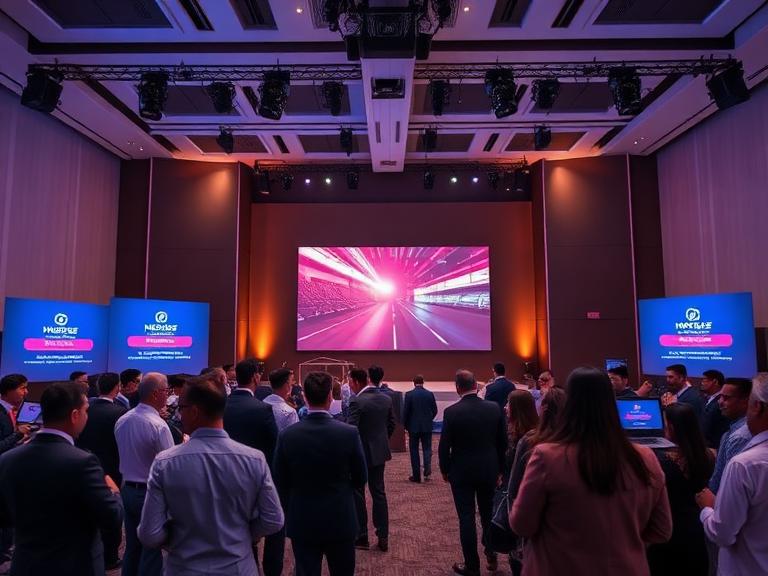
A fundamental operational division separates partial vendor coordination from turnkey full-service event organization. In partial vendor setups, event hosts are forced to act as their own general contractors, negotiating separately with staging carpenters, audio-visual providers, generator suppliers, registration agencies, catering managers, and security teams. This fragmented approach frequently leads to misaligned arrival schedules, loading dock congestion, electrical overload conflicts, uncoordinated presentation transitions, and zero single-point accountability when technical glitches occur during live execution.
Turnkey full-service event organizers replace fragmented vendor management with a unified technical command structure. Under this model, every operational discipline is coordinated through a central project director and a master Front-of-House show caller. Full-service organization in Hyderabad relies on four primary operational pillars to guarantee execution consistency across all departments.
The first pillar is spatial CAD blueprinting and heavy logistics management. Technical leads design precise 2D and 3D floor plans that map stage dimensions, fine-pitch LED screen resolutions, acoustic speaker coverage, lighting truss rigging points, electrical main distribution boards, and emergency egress paths. Logistics marshals manage transport vehicle arrival schedules, dock unloading passes, hydraulic forklift movement, and floor load capacities to prevent loading bay bottlenecks at major convention centers.
The second pillar centers on technical audio-visual, display, and power grid engineering. Engineers deploy fine-pitch P1.8 or P2.5 indoor LED video displays, digital line-array sound systems, and DMX-controlled intelligent profile lighting setups. Power systems utilize twin silent Auto Mains Failure diesel generators connected to online double-conversion UPS backbones, ensuring an automatic 3-second switchover during municipal grid failure.
The third pillar involves master Run-of-Show stage calling and real-time execution. Stationed at the Front-of-House control desk, an experienced show caller directs lighting operators, sound engineers, video server technicians, and stage ushers via closed-circuit headsets to trigger every audio, video, lighting, and presentation cue in real time.
The fourth pillar covers digital registration, audience analytics, and safety compliance. Full-service teams deploy automated self-service QR kiosks, rapid thermal badge printers, RFID turnstiles, and live attendance dashboards while strictly enforcing National Disaster Management Authority safety standards across all public aisles and gangways.
Comprehensive Service Pillars of Full-Service Event Organisers
Full-service event organization in Hyderabad encompasses six distinct operational domains:
Freight Logistics, Loading Dock Management & Structural Load-In
Operations leads coordinate loading dock passes for transport trucks to prevent vehicle gridlock at high-density convention centers. They deploy hydraulic forklifts, pallet jacks, crane operators, and rigging labor crews to unload staging materials safely. Furthermore, teams perform joint pre-event walkthroughs alongside venue facility managers to document existing floor and wall conditions, protecting organizers from improper damage claims during post-show teardown.
Technical Staging Fabrication, Fine-Pitch LED & Power Grids
Production crews erect custom wooden and steel stage structures, craft raised sub-floors, and hoist structural box trusses. Fine-pitch P1.8 or P2.5 indoor LED video displays are integrated seamlessly into stage backdrops to deliver crisp 4K visual content without frame gaps. Electrical engineers build temporary 3-phase power distribution networks, laying heavy rubber-armored cable ramps across all gangways to eliminate trip hazards. Certified riggers perform structural point-load audits and chain hoist tests before elevating heavy lighting and screen structures overhead.
Master Run-of-Show (ROS) Directing & Backstage Command
Production leads author minute-by-minute master cue sheets mapping every presentation slide, video clip, lighting wash, walk-on stinger, and microphone activation. The master show caller sits at the Front-of-House control console, directing technical operators across all departments via closed-circuit headsets. Backstage managers oversee green room holding suites, fit wireless lapel microphones, review teleprompter scripts, and control presenter stage entrance timing.
Digital Registration, Turnstile Access & Crowd Flow Control
Full-service teams deploy automated self-service QR kiosks, rapid thermal badge printers, RFID wristband scanners, and dedicated check-in lanes. Live digital dashboards track venue capacity, hall density, and crowd movement across halls, preventing entrance queues during peak arrival hours.
Catering Synchronization & Hospitality Floor Control
Operations controllers send 30-minute and 10-minute advance timing alerts to banquet managers, ensuring buffet lines or plated meals are hot, fully set, and staffed before delegates exit session halls. Dedicated janitorial shifts maintain continuous sanitation across dining zones, coffee stations, and public restrooms throughout live show hours.
Post-Event Teardown, De-Rigging & Venue Restoration
Operations supervisors direct staggered vendor equipment dismantling sequences to prevent hall structural damage during packing. Teams complete joint post-event walkthroughs alongside facility owners to confirm complete site restoration and secure full security deposit returns.
Regional Venue Matrix Across Hyderabad’s Key Belts
Executing technical event organization requires adapting on-site logistics to venue-specific layouts across Hyderabad’s key corridors:
HITEC City & Kondapur Commercial Belts
In high-density technology corridors housing venues like HITEX Exhibition Centre and HICC-Novotel, full-service event organization focuses on heavy freight dock management, multi-hall 3-phase power grids, fine-pitch LED display setups, and high-capacity turnstile registration foyers.
Financial District & Nanakramguda Hubs
Serving global tech headquarters and financial institutions at venues like ITC Kohenur, Sheraton, and Oakwood, operations emphasize sleek C-suite stage setups, high-definition presentation servers, fine-pitch LED displays, and precision acoustic tuning.
Banjara Hills & Jubilee Hills Luxury Belts
In premier residential and luxury hospitality zones housing Taj Krishna, Taj Deccan, and Park Hyatt, full-service management focuses on corporate galas, high-profile award ceremonies, and private celebrations requiring elevated VIP escort protocols, ambient profile lighting, and custom spatial styling.
Central Hyderabad & Old City Heritage Zones
At iconic heritage locations including Chowmahalla Palace and Taj Falaknuma Palace, technical execution emphasizes non-invasive structural staging, outdoor weatherproofing, specialized acoustic tuning, and local municipal permissions to preserve historical architecture.
Secunderabad Commercial Corridors
In commercial and residential hubs housing venues like Classic Gardens and Imperial Gardens, full-service teams direct multi-hall corporate meets and trade fairs requiring structured parking logistics and multi-zone layout planning.
Master Sequential Full-Service Event Execution Workflow
Specialized full-service event organization teams follow a disciplined chronological workflow to deliver zero-defect productions:
Phase 1: Spatial CAD Mapping, Power Grid Auditing & Freight Dock Scheduling (T-Minus 60 to 30 Days)
Engineers audit venue access paths, draft 2D/3D spatial CAD floorplans, map 3-phase power drops, calculate total wattage demands, and publish vendor load-in dock pass schedules.
Phase 2: Technical AV Contracting, Crew Booking & ROS Authoring (T-Minus 30 to 7 Days)
Teams finalize technical equipment contracts, issue crew call sheets, author minute-by-minute run-of-show cue sheets, and configure digital registration portals.
Phase 3: Loading Dock Control, Stage Build & Power Grid Wiring (T-Minus 3 to 1 Days)
Dock marshals manage transport vehicle flows while staging crews erect stage structures, wire main distribution power boards, route sub-floor cable ramps, and assemble registration kiosks.
Phase 4: Generator Switchover Tests, Rigging Audits & Rehearsals (T-Minus 24 to 2 Hours)
Technicians test backup generator switchovers, verify truss rigging load points, test ticket turnstiles, align wireless microphone frequencies, and execute full dress rehearsals with presenters.
Phase 5: Master Show Calling & Real-Time Floor Command (Live Event Hours)
The master show caller directs stage lighting, audio feeds, and video playbacks from the FOH console while floor managers monitor turnstile entry queues, sync catering breaks, manage green rooms, and ensure floor safety.
Phase 6: Staggered Teardown, Site Inspection & Final Settlement (Post-Event)
Production leads direct staggered equipment de-rigging, oversee venue cleaning, conduct final inspections alongside facility managers, and complete financial reconciliations.
Estimated Expenditure Allocation Models for Full-Service Event Organization
Full-service event management budgets scale based on venue square footage, technical AV complexity, structural fabrication needs, and delegate headcount:
Enterprise Corporate Summit (300 Delegates)
For a high-level corporate conference, freight dock logistics and labor management range from 150,000 to 350,000 INR. Fine-pitch LED video displays, digital line-array sound, and lighting rigs range from 400,000 to 950,000 INR. Power distribution panels and backup generator grids range from 200,000 to 450,000 INR. Turnstile entry badging technology ranges from 100,000 to 250,000 INR, with an operational management retainer ranging from 200,000 to 450,000 INR.
B2B Trade Expo (100 Exhibitor Stalls)
For a multi-hall trade exhibition, freight dock logistics and material handling labor scale from 450,000 to 950,000 INR. Shell booth fabrication and gangway carpeting range from 600,000 to 1,400,000 INR. Power distribution panels and generator grids range from 650,000 to 1,400,000 INR. Turnstiles, badging, and RFID lead retrieval tech range from 300,000 to 700,000 INR, with a master production management retainer ranging from 500,000 to 1,200,000 INR.
Mega Public Convention / Outdoor Festival (2,000+ Delegates)
For large-scale public assemblies, heavy structural stage fabrication, truss rigging, and ground builds range from 1,200,000 to 2,800,000 INR. Outdoor IP65 fine-pitch LED walls, delay speaker towers, and broadcast units range from 1,000,000 to 2,500,000 INR. Industrial 3-phase power distribution and multi-generator grids range from 800,000 to 1,800,000 INR. Turnstile entry gates, RFID badging, and crowd control setups range from 550,000 to 1,200,000 INR, with a master execution management retainer ranging from 1,000,000 to 2,200,000 INR.
Technical Risk Management & On-Ground Contingency Protocols
In live event environments, technical risk mitigation relies on pre-planned protocols executed in real time across common risk vectors:
Main Grid Electrical Power Blackout
Teams deploy twin silent AMF diesel generators running parallel with online double-conversion UPS backbones. In the event of an unexpected power drop, an automatic 3-second ATS switchover holds LED screens and audio signal processors online without frame drops.
Presenter Wireless Microphone Frequency Interference
Engineers perform RF frequency spectrum scans beforehand and deploy digital UHF lapels with active directional antenna paddles. If a channel experiences noise, the FOH sound engineer instantly activates a color-coded handheld wireless backup mic staged at the podium.
Loading Dock Vehicle Gridlock During Build-Out
Logistics marshals issue time-slotted freight passes and assign dedicated traffic marshals at loading bay gates. Overflow transport trucks are held in remote staging lots and called in systematically based on bay availability.
Live Stage Schedule Delays When Presentations Run Long
Full-service managers author minute-by-minute ROS scripts with built-in buffer windows. The show caller instructs the emcee via headset or confidence screen alerts to trim filler scripts or adjust Q&A segments to maintain the hard finish time.
Frequently Asked Questions (FAQs)
Q1: What do Full-Service Event Organisers in Hyderabad cover?
Full-Service Event Organisers in Hyderabad manage every single stage of an event lifecycle. This includes concept strategy, 3D spatial CAD rendering, venue sourcing, custom structural stage fabrication, fine-pitch LED video displays, digital line-array sound engineering, 3-phase electrical power distribution grids, digital turnstile registration, catering synchronization, live Run-of-Show stage directing, VIP hospitality, and statutory permit acquisitions.
Q2: How does hiring a full-service organizer differ from managing partial vendors?
Managing partial vendors forces organizers to coordinate separate contractors for staging, sound, lighting, power, registration, and catering, leading to misaligned schedules, technical clashes, and budget overruns. Full-service event organizers consolidate all operational disciplines under a single master command structure, providing single-point accountability, seamless technical alignment, and complete cost efficiency.
Q3: How far in advance should full-service event organizers be engaged in Hyderabad?
For major corporate conventions, B2B trade expos, high-tech product reveals, or luxury galas (300 to 5,000+ delegates) across Cyberabad hubs, engaging full-service organizers 6 to 12 weeks in advance is recommended. This provides adequate time for spatial CAD rendering, freight dock scheduling, electrical wattage auditing, and securing local permissions.
Q4: Which major event venues across Hyderabad and Secunderabad are fully supported?
Teams fully organize and manage operations across premier venues including HITEX Exhibition Centre, HICC-Novotel, ITC Kohenur, Taj Falaknuma Palace, Taj Krishna, Park Hyatt, Vivanta Begumpet, Classic Gardens, Imperial Gardens, and JRC Convention Centre.
Q5: What is a “Show Caller” and why is this role critical during live events?
A Show Caller is the master execution director stationed at the Front-of-House console who communicates with sound engineers, lighting operators, video server technicians, and stage leads via closed-circuit headsets to trigger every video, light, audio, and stage transition cue in real time.
Q6: How do full-service organizers prevent total power grid failures during keynotes?
Organizers deploy twin silent Auto Mains Failure diesel generators running parallel with online double-conversion UPS backbones, providing an automatic 3-second switchover that keeps AV signal processors and LED video servers powered without dropping frames.
Q7: How are delegate check-in queues managed during peak arrival hours?
Teams deploy self-service QR kiosks, rapid thermal badge printers, turnstile scanner gates, and separate pre-registered B2B buyer lanes to process attendees in under 3 seconds per person.
Q8: What safety and risk standards are enforced on the event floor?
Floor management adheres strictly to National Disaster Management Authority safety guidelines: maintaining minimum 3-meter gangway clearances, placing heavy rubber cable ramps over power drops, performing pre-show structural truss load tests, and stationing certified medical triage staff.
Q9: How do organizers handle stage schedule delays when presentations run long?
The show caller communicates with the emcee via in-ear monitors or confidence screen alerts to trim transition scripts, adjust Q&A segments, or shift non-critical video clips to preserve the overall hard finish time.
Q10: What statutory permissions are secured by full-service organizers in Hyderabad?
Organizers handle filings for Cyberabad/Hyderabad Police Law & Order NOCs, Traffic Police clearances, Fire Safety Department sign-offs, GHMC municipal permits, and commercial music performance licenses such as PPL, IPRS, and NOVEX.
Q11: Can full-service event organizers execute multi-camera 4K hybrid webcasting?
Yes, teams operate multi-camera 4K broadcast rigs, multi-line bonded cellular and fiber internet pipelines, lower-third graphics operators, and low-latency virtual stream encoders for global remote delegates.
Q12: How are loading dock congestion and freight delays handled during tight setup windows?
Teams issue time-slotted freight passes, deploy dock marshals, enforce vehicle dwell-time limits, assign hydraulic forklifts, and hold overflow transport trucks in remote staging lots to prevent loading bay gridlock.
Q13: How is catering service synchronized with main hall event schedules?
Floor managers issue 30-minute and 10-minute advance timing alerts to banquet managers, ensuring buffet lines or plated meals are hot, fully set, and staffed before delegates exit the main auditorium.
Q14: What pricing models apply to Full-Service Event Organisers in Hyderabad?
Pricing is structured transparently: a turnkey production execution fee based on square footage and technical density, a fixed daily show-directing retainer, or an itemized bill of quantities covering fabrication, AV, catering, and management.
Q15: Why hire a Full-Service Event Management company instead of relying on venue staff?
Venue staff only manage basic house facility operations. A full-service event management company protects the client’s interests—managing custom third-party AV setups, directing split-second stage cues, building redundant power grids, and guaranteeing zero technical downtime.
Summary
Executing a successful event in Hyderabad—whether an enterprise conference in HITEC City or a luxury gala at Taj Falaknuma—demands structural discipline, technical integration, and complete floor control. Partnering with specialized Full-Service Event Organisers in Hyderabad guarantees that every detail—from freight dock logistics and 3-phase power grids to fine-pitch LED displays, split-second Run-of-Show calling, and statutory compliance—is delivered with absolute precision.

Leave a Reply