
Table of Contents
EV Charger Maintenance Services | Expert Guide
EV charger maintenance, EV charging station maintenance, EV charger maintenance services Hyderabad, EV charging station maintenance Hyderabad, EV charger repair services, EV charger servicing, EV charger AMC services, EV charging station AMC, EV
Electric vehicle charging infrastructure is becoming an increasingly important part of homes, offices, commercial properties, residential communities, fleets, highways, and public charging networks. As the number of EVs increases, reliable charging equipment becomes essential for keeping vehicles available and reducing charging downtime.
However, installing an EV charger is only the beginning. Like other electrical and electronic infrastructure, EV chargers require regular inspection, servicing, testing, software checks, and preventive maintenance.
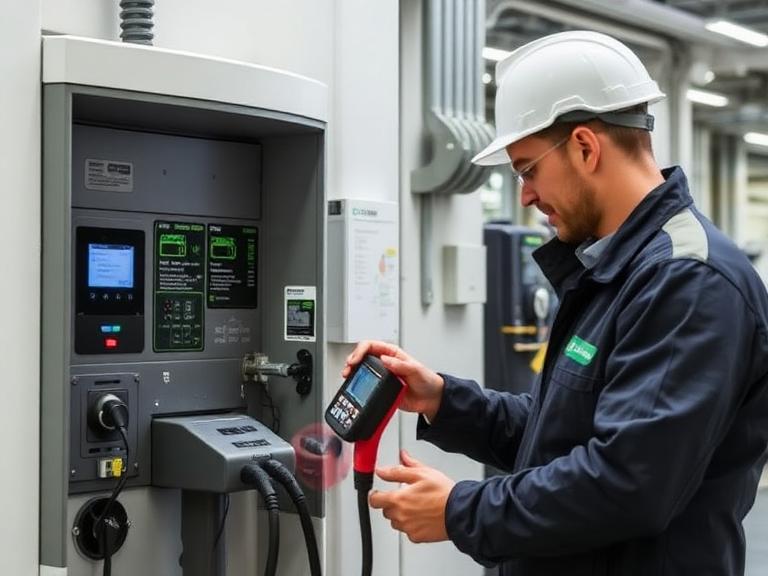
EV Charger Maintenance Services are designed to help property owners, businesses, fleet operators, charging-point operators, and other infrastructure owners maintain their charging equipment in reliable operating condition.
Maintenance can cover everything from checking cables and connectors to inspecting electrical protection systems, reviewing error logs, checking communication systems, and verifying charging performance.
This guide explains what EV charger maintenance involves, why it matters, what is included in professional servicing, how AC and DC chargers differ, and when businesses should consider an Annual Maintenance Contract (AMC).
What Are EV Charger Maintenance Services?
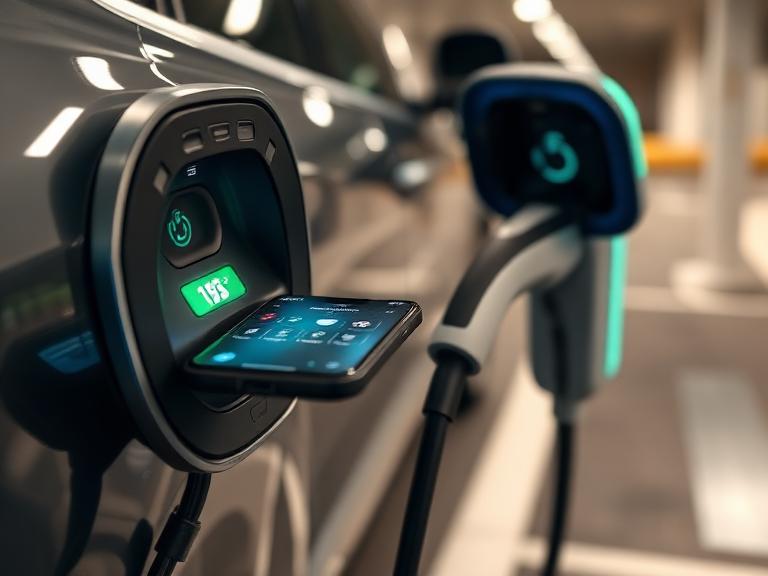
EV Charger Maintenance Services involve scheduled inspection, testing, servicing, troubleshooting, and repair of electric vehicle charging equipment.
Depending on the charger and installation, maintenance may include:
- Physical inspection
- Electrical testing
- Charging connector inspection
- Cable inspection
- Earthing and protection checks
- Performance testing
- Error-code analysis
- Software and firmware checks
- Network connectivity testing
- RFID and authentication checks
- Cooling-system inspection
- Preventive component replacement
- Cleaning
- Fault diagnosis
- Corrective repairs
The exact maintenance procedure depends on the charger manufacturer, charger type, power rating, installation environment, usage frequency, and applicable technical requirements.
Why Is EV Charger Maintenance Important?
An EV charging station can experience thousands of charging sessions over its operating life. Public and commercial chargers may experience significantly higher usage than residential equipment.
Without appropriate maintenance, small problems can develop into operational failures.
Regular maintenance can help organizations:
Reduce Unexpected Downtime
Identifying developing faults early can help reduce unexpected interruptions.
Support Charging Reliability
Regular inspection helps ensure important charger components remain in appropriate operating condition.
Identify Electrical Problems
Electrical connections, protective devices, earthing, and other infrastructure can be checked as part of scheduled servicing.
Protect Charging Equipment
Early identification of physical or environmental problems can help prevent avoidable equipment deterioration.
Maintain User Experience
For public and commercial charging stations, an unavailable charger can affect drivers, employees, customers, or fleet operations.
Improve Maintenance Planning
Scheduled inspections make it easier to identify recurring problems and plan repairs or component replacement.
What Does EV Charger Maintenance Include?
Professional maintenance can be divided into several areas.
1. Visual Inspection
A technician may inspect:
- Charger enclosure
- Display
- Indicator lights
- Charging cable
- Connector
- Mounting
- Ventilation
- Physical damage
- Signs of moisture
- Signs of overheating
Visual inspection is often an important first step because physical damage can provide clues about developing problems.
2. Electrical Inspection
Electrical testing is an important part of maintaining charging infrastructure.
Depending on the equipment and applicable requirements, technicians may assess:
- Electrical connections
- Voltage
- Current
- Earthing
- Protection systems
- Circuit breakers
- Residual-current protection
- Cable condition
- Electrical load
- Connection integrity
Electrical work should be performed by appropriately qualified professionals using suitable testing equipment.
3. Charging Cable and Connector Inspection
Charging cables and connectors are frequently handled by users, making them susceptible to mechanical wear.
Technicians can inspect for:
- Physical damage
- Cracks
- Cuts
- Connector wear
- Loose connections
- Contamination
- Moisture
- Abnormal heating
- Mechanical damage
Damaged charging cables or connectors should be appropriately repaired or replaced rather than continuing to operate them in an unsafe condition.
4. AC EV Charger Maintenance
AC EV chargers are commonly installed at:
- Homes
- Apartments
- Offices
- Hotels
- Shopping facilities
- Commercial properties
- Parking areas
Maintenance may include inspecting the charger, cable, connector, electrical supply, protection devices, communication systems, and charging performance.
Because AC chargers are frequently installed in locations where vehicles remain parked for longer periods, maintaining dependable operation is important for users who rely on overnight or workplace charging.
5. DC Fast Charger Maintenance
DC fast chargers operate at higher charging power and can involve more complex electrical, thermal, and control systems.
Maintenance may include:
- Power-system inspection
- Cooling-system checks
- Connector inspection
- Cable inspection
- Communication testing
- Error-log analysis
- Thermal monitoring
- Software checks
- Electrical testing
- Charging-performance verification
Because of their higher power levels and more complex systems, DC fast charger servicing should be handled by appropriately trained professionals.
6. Software and Firmware Maintenance
Modern EV chargers can include software-controlled functions and network connectivity.
Maintenance may therefore involve checking:
- Firmware versions
- Error logs
- Network communication
- Backend connectivity
- Charging-session records
- Remote monitoring
- Configuration
- Authentication systems
Software and firmware updates should follow the equipment manufacturer’s recommendations and compatibility requirements.
7. Network and Connectivity Checks
Connected charging stations may communicate with cloud platforms or charging-management systems.
Network problems can affect:
- Remote monitoring
- User authentication
- Charging-session management
- Mobile applications
- Payment systems
- Usage reporting
- Remote diagnostics
During maintenance, technicians can investigate whether connectivity problems originate from the charger, network connection, configuration, or backend system.
8. RFID and Authentication Testing
Public and commercial charging stations may use RFID cards, applications, QR codes, or other authentication methods.
Maintenance can verify whether the authentication process is functioning properly.
This can include checking:
- RFID readers
- User authentication
- Network communication
- Account synchronization
- Session authorization
Authentication problems should be distinguished from physical charger faults because the charging hardware may be working correctly.
9. Thermal and Cooling-System Inspection
Heat management is particularly important for high-power charging equipment.
Technicians may inspect:
- Cooling systems
- Fans
- Airflow
- Temperature readings
- Ventilation
- Thermal warnings
- Cooling-related error logs
A charger that repeatedly overheats or reduces charging output may require further technical investigation.
Preventive vs Corrective EV Charger Maintenance
EV charger maintenance generally involves two broad approaches.
Preventive Maintenance
Preventive maintenance is performed before a major failure occurs.
Examples include:
- Scheduled inspections
- Cable checks
- Connector checks
- Electrical testing
- Cleaning
- Firmware checks
- Performance testing
The objective is to identify potential issues early.
Corrective Maintenance
Corrective maintenance is performed after a fault has been identified.
Examples include:
- Repairing damaged components
- Replacing defective parts
- Resolving communication faults
- Fixing electrical problems
- Replacing damaged cables
- Correcting software-related issues
A good maintenance program can combine preventive inspections with responsive corrective servicing.
EV Charger Annual Maintenance Contracts
For organizations operating multiple chargers, an EV Charging Station AMC can provide a structured maintenance arrangement.
An AMC may include services such as:
- Scheduled inspections
- Preventive maintenance
- Fault diagnosis
- Technical support
- Emergency service
- Performance checks
- Electrical inspection
- Software checks
- Maintenance reporting
The exact scope depends on the service agreement.
Before selecting an AMC, businesses should clarify response times, covered equipment, exclusions, replacement-part policies, visit frequency, reporting, and emergency support.
How Often Should EV Chargers Be Maintained?
There is no single maintenance interval suitable for every charger.
The appropriate schedule depends on:
- Charger type
- Manufacturer recommendations
- Usage volume
- Installation environment
- Weather exposure
- Public or private operation
- Power rating
- Number of charging sessions
- Site conditions
A low-use residential charger and a high-utilization public DC fast charger should not necessarily have identical maintenance schedules.
Commercial operators can establish maintenance schedules based on equipment recommendations and actual operating data.
Signs That an EV Charger Needs Maintenance
Several warning signs may indicate that a charger requires inspection.
These include:
- Charging repeatedly stops
- Charger does not start
- Unusual charging speeds
- Repeated error messages
- Connector overheating
- Physical cable damage
- Circuit breaker trips
- Display problems
- Network disconnection
- RFID authentication failures
- Unusual noises
- Repeated system restarts
A single temporary issue does not necessarily indicate major equipment failure. However, recurring problems should be investigated.
Common Problems Found During EV Charger Maintenance
Professional inspections may identify problems such as:
Loose Electrical Connections
Connections can require inspection when abnormal electrical behavior is observed.
Damaged Cables
Mechanical damage can make continued use inappropriate.
Connector Wear
Repeated connection and disconnection can contribute to wear.
Network Failures
Connected chargers may lose communication with backend systems.
Software Issues
Configuration or firmware problems can affect operation.
Cooling Problems
High-power chargers may experience thermal-management issues.
Protection-System Issues
Electrical protection systems require appropriate testing and maintenance.
Environmental Damage
Outdoor chargers may be exposed to dust, moisture, heat, and other environmental conditions.
EV Charger Maintenance for Businesses
Businesses increasingly install EV chargers for:
- Employees
- Customers
- Company vehicles
- Fleet operations
- Commercial parking
- Hospitality facilities
- Retail locations
For these organizations, charger availability can become part of the overall property or fleet infrastructure.
A structured maintenance program can help businesses monitor charger performance, schedule inspections, manage faults, and plan equipment servicing.
EV Charger Maintenance for Fleets
Fleet operators have a particular need for charging reliability because charging downtime can affect vehicle availability.
Fleet charging maintenance can include:
- Charger inspections
- Charging-performance checks
- Cable and connector checks
- Electrical testing
- Software monitoring
- Fault reporting
- Preventive maintenance
- Emergency support
Maintenance planning can be integrated with fleet operating schedules to reduce disruption.
EV Charging Station Maintenance in Hyderabad
Hyderabad has a growing ecosystem of electric vehicles, commercial properties, residential developments, businesses, and charging infrastructure.
For charging operators in Hyderabad, maintenance requirements can vary based on whether equipment is installed indoors, outdoors, at commercial properties, in parking facilities, or at high-use public locations.
Local service support can be useful for businesses that require timely inspection, troubleshooting, repair, and ongoing maintenance of their EV charging infrastructure.
Factors Affecting EV Charger Maintenance Cost
The cost of EV charger maintenance can vary considerably.
Important factors include:
- Charger type
- Charger power rating
- Number of chargers
- Site location
- Equipment condition
- Usage frequency
- Required inspection frequency
- Replacement components
- Emergency service requirements
- Network and software support
- AMC coverage
A single residential AC charger generally has different maintenance requirements from a multi-port commercial DC fast charging station.
Businesses should request a service scope rather than comparing maintenance based only on a quoted price.
How to Choose an EV Charger Maintenance Company
When evaluating an EV charger service provider, consider:
Technical Capability
The provider should understand the relevant charger types and infrastructure.
AC and DC Experience
If a site includes both AC and DC chargers, broader technical capability can be useful.
Preventive Maintenance
Look for a structured inspection and maintenance approach rather than repair-only support.
Response Process
Understand how service requests and emergency faults are handled.
Reporting
Maintenance reports can help organizations track recurring issues and service history.
Spare Parts Support
Ask how replacement components are sourced and handled.
Remote Monitoring
For connected chargers, remote diagnostics can help identify problems more quickly.
Why Choose ZyCharge Energies Pvt. Ltd.?
ZyCharge Energies Pvt. Ltd. provides EV charging infrastructure solutions including AC chargers, DC fast chargers, charging-station setup, installation, maintenance, and Charge Point Operator (CPO) services.
Its solutions are designed for applications including businesses, commercial properties, fleet operators, residential communities, and highway locations.
For organizations operating EV charging infrastructure, maintenance can form an important part of the overall charging strategy. Professional inspection, preventive servicing, troubleshooting, and technical support can help operators manage equipment throughout its operating life.
17 Frequently Asked Questions About EV Charger Maintenance Services
1. What are EV Charger Maintenance Services?
EV Charger Maintenance Services include inspection, testing, preventive servicing, troubleshooting, software checks, repairs, and other technical activities required to maintain EV charging equipment.
2. Why is EV charger maintenance important?
Regular maintenance can help identify developing electrical, mechanical, software, connectivity, and thermal problems before they cause unexpected equipment downtime.
3. How often should an EV charger be serviced?
The appropriate frequency depends on charger type, manufacturer recommendations, usage level, environmental conditions, and installation requirements.
4. Do home EV chargers need maintenance?
Yes. Home chargers can also benefit from periodic inspection, particularly when they experience charging interruptions, physical damage, electrical problems, or other recurring issues.
5. What is included in EV charging station maintenance?
Maintenance may include visual inspection, electrical testing, connector and cable inspection, software checks, network diagnostics, performance testing, cleaning, and fault diagnosis.
6. What is an EV charger AMC?
An EV charger Annual Maintenance Contract is a service agreement covering defined maintenance and technical-support activities over a specified period.
7. What is the difference between preventive and corrective maintenance?
Preventive maintenance is performed proactively to identify potential problems, while corrective maintenance addresses faults that have already occurred.
8. Do DC fast chargers require special maintenance?
DC fast chargers can require more comprehensive servicing because they operate at higher power and may include complex cooling, electrical, communication, and control systems.
9. Can EV charger maintenance prevent breakdowns?
Preventive maintenance can help identify developing faults and reduce some avoidable failures, although no maintenance program can guarantee that equipment will never fail.
10. Why does an EV charger keep stopping during charging?
Possible causes include electrical faults, communication problems, thermal protection, vehicle-side issues, connector problems, or charger faults. Recurring interruptions should be professionally diagnosed.
11. Can damaged EV charging cables be repaired?
Depending on the type and extent of damage, a cable may require professional repair or complete replacement. Damaged cables should not be used until appropriately assessed.
12. Does EV charger maintenance include software updates?
It can, depending on the service scope and charger manufacturer. Firmware and software should be updated according to manufacturer requirements.
13. Can network problems affect an EV charging station?
Yes. Network problems can affect authentication, remote monitoring, charging-session management, payment processing, and communication with backend platforms.
14. What should I do if an EV charger overheats?
Stop using equipment that shows signs of unsafe overheating and follow the manufacturer’s safety instructions. Repeated overheating should be investigated by a qualified professional.
15. How much does EV charger maintenance cost?
Costs depend on charger type, power rating, number of chargers, site conditions, usage, maintenance frequency, replacement components, and service requirements.
16. Can businesses get EV charger AMC services?
Yes. Businesses and charging operators can arrange maintenance contracts covering specified inspection, servicing, troubleshooting, and technical-support requirements.
17. When should I call an EV charger technician?
Professional support is appropriate when a charger repeatedly fails, shows persistent error codes, overheats, trips electrical protection, has damaged cables or connectors, or develops recurring charging problems.
Conclusion
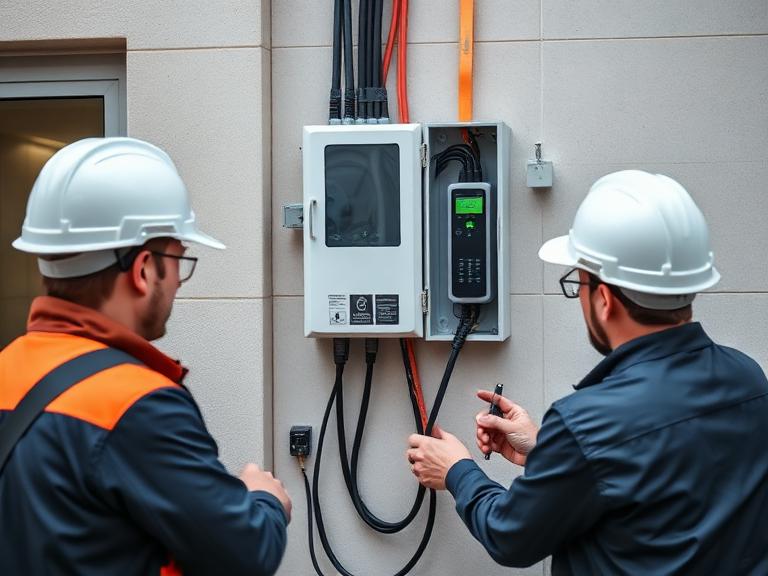
EV Charger Maintenance Services are an important part of managing reliable EV charging infrastructure. Installing chargers without establishing an appropriate maintenance plan can leave businesses and charging operators vulnerable to unexpected equipment faults and downtime.
Regular inspections can cover electrical systems, cables, connectors, software, communication networks, cooling systems, and overall charger performance. Preventive maintenance can also help identify developing issues before they become larger operational problems.
The right maintenance strategy depends on the charger type, location, usage level, environment, and manufacturer’s requirements. Residential AC chargers, commercial charging stations, fleet infrastructure, and high-power DC fast chargers may each require different maintenance approaches.
For businesses operating EV charging infrastructure in Hyderabad and across India, professional maintenance and AMC support can provide a structured way to manage inspections, troubleshooting, repairs, and ongoing technical requirements.

Leave a Reply